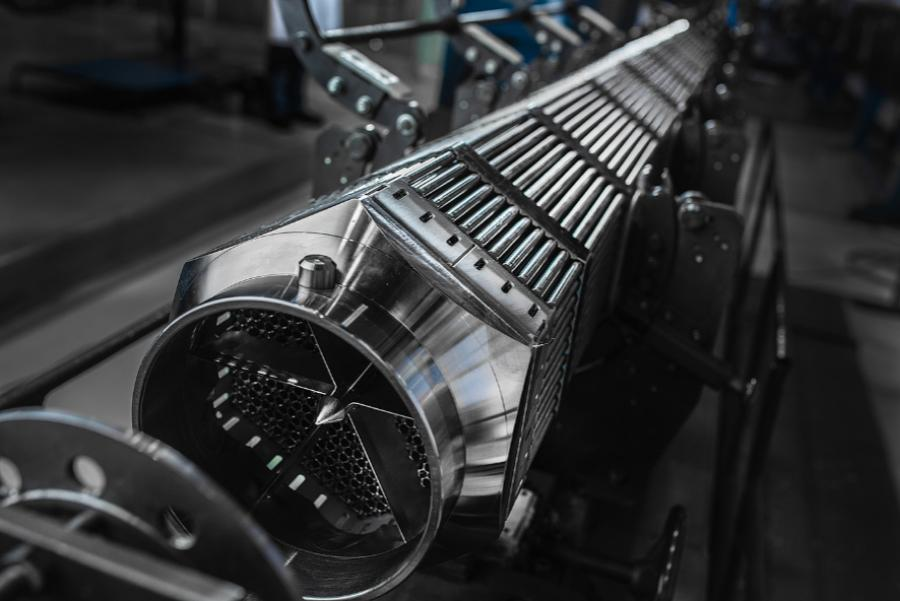
Germany wants independence from Russian nuclear fuel, using Rosatom as a bridge
Europe’s effort to break its dependence on Russian nuclear fuel has a paradox in Germany: making Russian-designed fuel without buying it from Russia ...
News

Publish date: November 16, 2021
News
With today’s €1.1bn Innovation Fund decision, the EU moves the goalpost for climate action in industry – to where it needs to be
As a European NGO that has worked ceaselessly toward such a development for decades, Bellona is very pleased to see the European Commission today moving the goal post for industrial decarbonisation in a number of EU countries including France, Italy and the Nordic countries, across a number of key industry sectors.
Bellona would like to congratulate the Commission on today’s decision on the first Innovation Fund Call for Large-Scale projects, which includes funds for large-scale decarbonisation of major emitters in the steel, cement, chemicals and CHP sectors, at a scale unseen for all those sectors.
Notably, a scale that occurs with a timeline that induces hope for the rapid, scalable industrial decarbonisation Europe needs, to stay within its carbon budget. This decision is a crucial signal to industry and its employees that climate ambition does not mean tens of thousands of jobs lost; that the EU is prepared to enable the operation of key economic activities in a carbon-constrained world.
Once those projects become operational, there is nowhere left to hide for those who fail to act.
For years, Bellona has worked, in particular, to get the first CO2 stores deployed in Europe, with the argument that the prospect of CO2 storage availability is what will enable investments into large-scale decarbonisation efforts, create a new dynamic and drive industry climate action innovation into a far higher gear. Following Norway’s approval of the Longship project a year ago, we have been proven correct – the project’s initial storage capacity is already oversubscribed by various European industries; many are now looking to the Netherlands and beyond. In short, a development at a scale previously assumed to occur only in the 2040s is now becoming possible in the 2020s.
Strategic, large-scale renewable energy investments for Europe
Industrial decarbonisation with CCS is possible now. The space for excuses is rapidly shrinking for carbon-intensive industries to continue dumping CO2 into our atmosphere.
Four CCS projects were announced in Cement (France), Chemicals (Belgium),Grey to Green & Blue H2 (Finland), CO2 removals (Sweden). All four projects have flexible CO2 transport and storage in the North Sea: the Northern Lights CO2 transport and storage project funded by the Norwegian state, with shipping as a flexible transport solution, has enabled others to engage in decarbonising industrial production
Future zero fossil industrial production will become a reality
Europe’s effort to break its dependence on Russian nuclear fuel has a paradox in Germany: making Russian-designed fuel without buying it from Russia ...
Nearly four and a half years after Russia’s full-scale invasion of Ukraine, July offered fresh evidence of how difficult it remains to disentangle Ru...
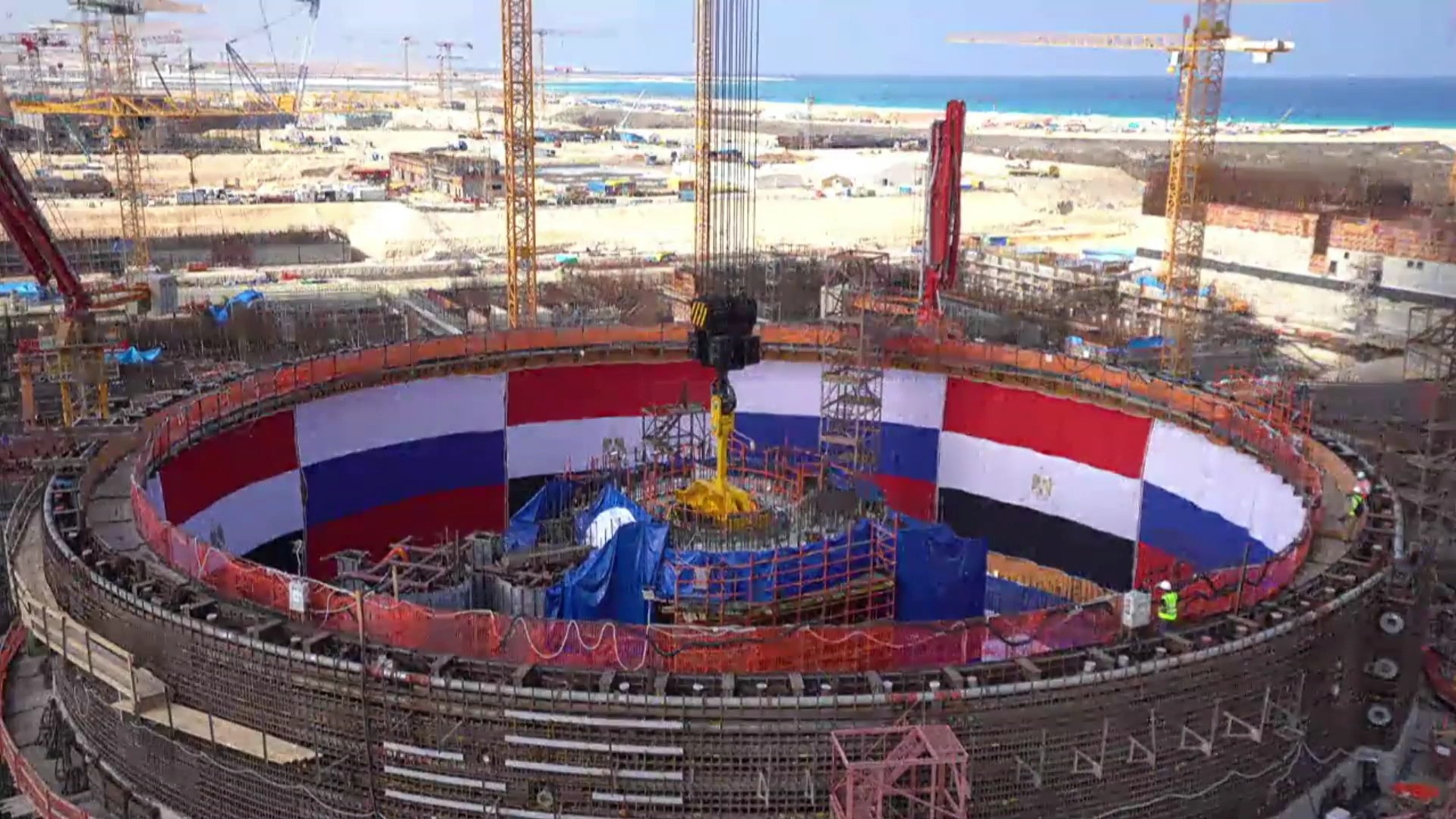
Just days after Egyptian nuclear authorities reportedly accused Rosatom of construction defects, poor management and vi...
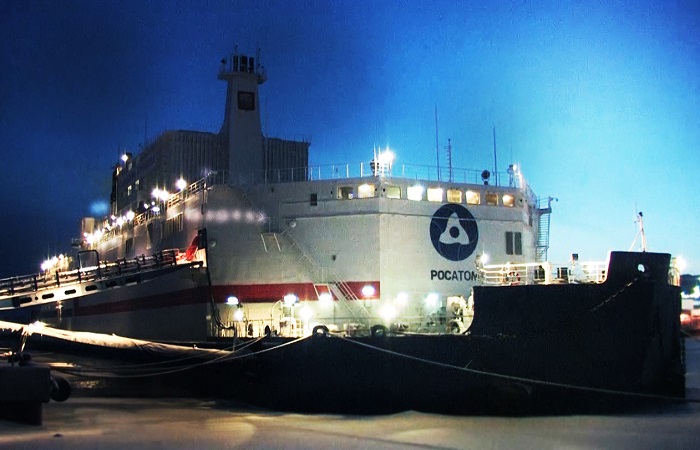
For years, the Akademik Lomonosov looked like one of the nuclear industry’s more eccentric experiments: two reactors mounted on a barge and tow...