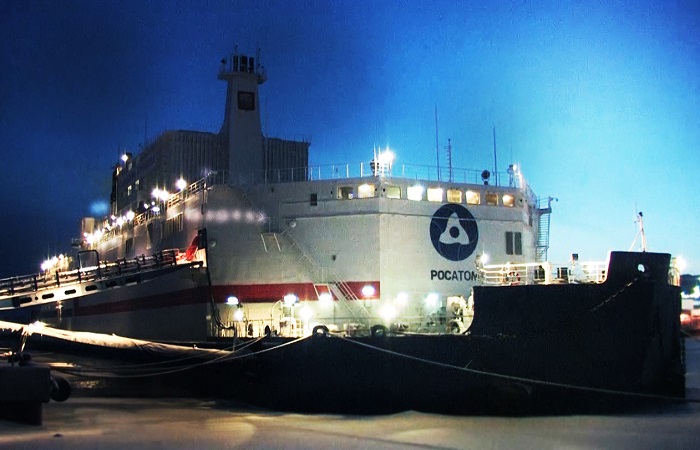
Floating nuclear power was a Russian curiosity. Now others want to give it a shot
For years, the Akademik Lomonosov looked like one of the nuclear industry’s more eccentric experiments: two reactors mounted on a barge and tow...
News

Publish date: May 12, 2014
News
In light of the current situation in Ukraine, the group expressed extreme concern by the energy security implications of recent developments. As a result, it is “committed to initiate a systematic and enduring step change to improve energy security at national, regional and global levels”.
As regards fossil fuels, the group recognised that they will still remain an important element of our energy mix, but that “reducing emissions from fossil fuels is necessary to tackle climate change”. The Joint Statement names CCS as one of the low carbon technologies that can contribute to this goal.
European countries are relying heavily on Russian gas, which has been a main reason for their reluctance in imposing stronger sanctions on Russia, following the Kremlin’s actions towards Ukraine. The G7 meeting put forward the need for a broader energy security strategy, in a market that has become globalised and shared among energy consumers, producers and transit countries.
The path to energy security is built on a number of core principles, according to the group, including the reduction of greenhouse gas emissions, and accelerating the transition to a low-carbon economy, as well as the deployment of clean and sustainable energy technologies and continued investment in research and innovation.
The meeting’s conclusions are assumed to serve as a basis for further discussions at the G7 summit scheduled for 4-5 June in Brussels.
Read the complete Joint Statement from the meeting here.
For years, the Akademik Lomonosov looked like one of the nuclear industry’s more eccentric experiments: two reactors mounted on a barge and tow...
Russia’s war against Ukraine continues to reshape the global nuclear industry in ways that extend beyond the battlefield. Western governments a...
Despite sweeping Western sanctions, Russia’s ambitions in the Arctic continue to advance—albeit in increasingly different ways. Novatek’s...
Even as the war grinds on, Ukraine continues to expand its civilian nuclear ambitions. Britain has tightened sanctions on Russia’s nuclear sect...