
Germany wants independence from Russian nuclear fuel, using Rosatom as a bridge
Europe’s effort to break its dependence on Russian nuclear fuel has a paradox in Germany: making Russian-designed fuel without buying it from Russia ...
News

Publish date: October 13, 2011
Written by: Charles Digges
News
Belarus’s state-owned Directorate for Construction of Nuclear Power Plants signed the contract with Atomstoriexport, the foreign construction wing of the Russia’s state nuclear corporation, Rosatom, for the construction of a 2400 megawatt plant of the untested AES 2006 (NPP -2006) design.
The site for the plant is in Ostrovets in the Grodno region, close to Lithuania – which has vociferously protested the building of the nuclear power plan.
The cost with infrastructure is put at $9.4 billion. Russia has pledged financing, but discussions continue on the amounts and terms and Moscow has yet to issue any clear idea of the loans and credits it is willing to extend to Minsk.
The road to building the nuclear power plant has been paved with abuse and arrests of environmental activists and flagrant violations of international conventions requiring Belarus to submit its building plans to neighboring nations for approval.
The vice grip on public opinion against the plant has only been tightened since Belarusian President Alexander Lukashenko’s reelection a little over a year ago.
The new contract was denounced Wednesday by over 50 environmental organizations from Belarus and Russia as being dubious and opaque.
The groups said in a joint statement that, “[The deal] was struck without regard to the opinion of the public and in violation of applicable regulations to cater for the interests of a narrow circle of people occupying positions in the government and directly in state-controlled corporation Rosatom,” as quoted by the Naviny news agency.
The new contract is all the stranger as the plant is already under construction, as confirmed by Lukashenko in a Tuesday news conference, and because Russian and Belarus already reached an agreement to build the plant during the first quarter of 2011.
The Belarusians broke ground on the plant in March amid a hail of controversy from environmentalists, and an official reproach from the Espoo Convention’s Implementation Committee.
Espoo guarantees countries neighboring a state where an environmentally significant project is underway to review environmental impact assessments of the project and to participate in public discussions of the project in equal measure to the citizens in the country where the project is taking place.
But experts and representatives of the affected countries – which include Lithuania, Russia, Poland, Austria and Ukraine – have still not been presented with the entire version of the environmental impact study for the Ostrovet’s nuclear power plant, which numbers over 3,500 pages.
According to Vladimir Slivyak, co-chair of Russia’s Ecodefense, numerous documents that give legal, financial and technological basis for continuing to build the plant are lacking.
He said the document signed by Lukashenko with Atomstroiproekt earlier this week was window dressing against a tide of political difficulties and post-Fukushima backlash.
“I would say this is a rather symbolic demonstration that the deal between Russia and Belarus is still alive despite various political troubles and Fukushima legacy,” he told Bellona in an email interview.
“The signed document itself is kind of secondary and not principal. There are many more important papers that still have not been developed and signed between countries,” he wrote.
Indeed, the impact of the March 11 earthquake and tsunami in Japan that destroyed the Fukushima Daiichi nuclear power plant, constitution the world’s most serious nuclear accident since Chernobyl, has rattle environmental nerves and fundamentally changed the international discussion of nuclear power.
“[The contract for the Belarus nuclear power plant] is a political signal that Lukashenko still alive and counting on help from Russia, including financial and technological,” said Slivyak.
The International Atomic Enegy Agency on Wednesday further legitimized what is by all accounts an extremely rag-tag project by promising to cooperate with Belarus in the Ostrovets plant’s safe operation, the the Interfax Russian news agency reported.
“The IAEA position is that we do not interfere with another country’s decision, since this decision must be made by the sovereign state without foreign intervention,” IAEA Director General Yukiya Amano told Interfax news agency.
“Whether Belarus will work in the nuclear power sector and build its own NPP will entirely depend on the decision of the Belarusian government,” Amano said.
“If Belarus decides to do so, then the IAEA is ready to help Belarus use nuclear power as safely and steadily as possible,” he said.
The IAEA made no mention of the myriad violations of international public opinion represented by the Espoo Convention.
Europe’s effort to break its dependence on Russian nuclear fuel has a paradox in Germany: making Russian-designed fuel without buying it from Russia ...
Nearly four and a half years after Russia’s full-scale invasion of Ukraine, July offered fresh evidence of how difficult it remains to disentangle Ru...

Just days after Egyptian nuclear authorities reportedly accused Rosatom of construction defects, poor management and vi...
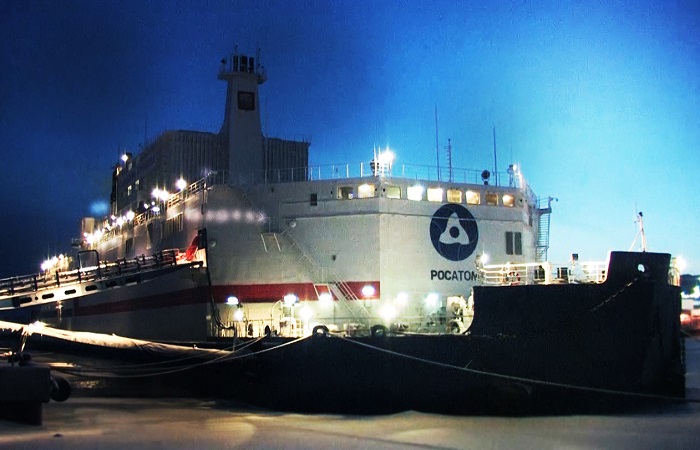
For years, the Akademik Lomonosov looked like one of the nuclear industry’s more eccentric experiments: two reactors mounted on a barge and tow...