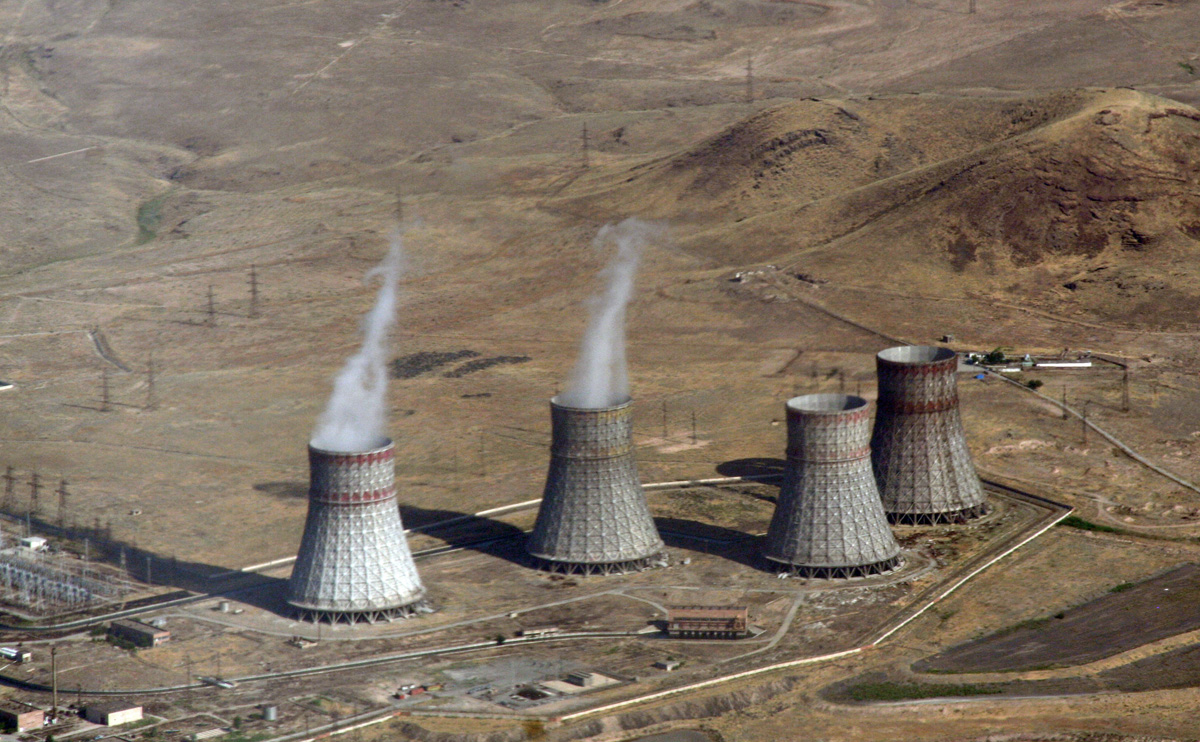
Armenia reconsiders nuclear future as Rosatom offers replacement for aging Soviet reactor
Armenia is reconsidering its plans for a new nuclear power plant after a fresh proposal from Russia’s state nuclear corporation Rosatom and a s...
News
Publish date: October 27, 2026
News
Russia’s state nuclear corporation Rosatom made progress on two of its international reactor projects in recent weeks, bringing new generating units closer to commercial operation in Bangladesh and China. Yet the contrasting experiences of those two countries illustrate the uneven fortunes of Russia’s nuclear exports.
Meanwhile, efforts by Germany and the United States to reduce their nuclear sectors’ exposure to Russia have been complicated by existing commercial dependencies and political decisions that leave important channels of cooperation intact.
And new reporting on a Rosatom-owned carbon fiber plant in Tatarstan has raised further questions about the corporation’s involvement in Russia’s war against Ukraine, including its access to Chinese industrial materials used in military drone production.
Together, these developments illustrate the competing pressures shaping Rosatom’s international business as it seeks to expand its overseas presence while facing sanctions, logistical obstacles and growing scrutiny of its military connections.
On October 11, the first reactor at Bangladesh’s Russian-built Rooppur nuclear power plant reached minimum controlled power, a crucial step toward eventual electricity generation.
The milestone followed months of commissioning difficulties. During testing in July, engineers discovered that two of three pressure relief valves in the reactor’s primary cooling circuit were not functioning properly. Repeated tests failed to resolve the problem, forcing Rosatom to dispatch additional specialists. The malfunction delayed commissioning and affected work on the second reactor, after components originally intended for that unit were transferred to the first.
The project also encountered logistical problems in September when a shipment of Russian nuclear fuel was delayed because its aircraft lacked permission to cross Pakistani airspace. The shipment eventually reached Bangladesh in early October using an alternative route.
China, meanwhile, presented a markedly different picture. On October 8, Unit 7 of the Tianwan nuclear power plant, outfitted with a Russian-designed VVER-1200 reactor, was connected to China’s electricity grid. Construction there began in May 2021, making it the fastest Russian-designed VVER-1200 project to reach grid connection, including those built in Russia itself.
Bellona nuclear expert Dmitry Gorchakov attributes much of the difference to how the projects are organized.
“The key difference in Rosatom’s Chinese projects is the high degree of localization,” Gorchakov writes in the September Nuclear Digest. “The Chinese side takes responsibility for most of the construction, supplies, project management and financing, while Rosatom provides the main nuclear island equipment and technological support.”
In Bangladesh, by contrast, Rosatom bears responsibility for a far larger share of the project, making delays in equipment supplies, financing and logistics more difficult for the customer to overcome.
For Gorchakov, the contrast illustrates how the success of Russian nuclear exports increasingly depends on the capabilities of the countries purchasing them.
Even as Rosatom advances its overseas projects, Western efforts to limit cooperation with the corporation remain inconsistent.
In Germany, environmental organizations have challenged a decision allowing Advanced Nuclear Fuels, a subsidiary of France’s Framatome, to expand its fuel fabrication plant in Lingen to manufacture fuel for Russian-designed VVER reactors using Rosatom technology.
The environmental organization BUND filed suit in September, citing concerns about security risks, Russian influence and shortcomings in the environmental review. Yet on October 5, authorities in Lower Saxony permitted the project to proceed immediately, despite the ongoing legal challenge.
Gorchakov sees the decision as evidence of a broader contradiction in European policy.
“The story of the nuclear fuel plant in Lingen shows the gap between political statements about the risks of cooperation with Russian companies and decisions that allow such cooperation to develop in practice,” he writes. The United States has displayed similar contradictions.
On September 18, President Donald Trump signed the Lindsey O. Graham Sanctioning Russia and Iran Act of 2026, which includes measures targeting Rosatom’s leadership and reaffirms restrictions on Russian uranium imports. But sanctions against Rosatom executives will not take effect until January 2028, and the legislation allows presidential exemptions on national security grounds.
The final law is also considerably weaker than earlier proposals, which contemplated sanctions against foreign purchasers of Russian uranium and sweeping tariffs against countries trading in Russian energy products. Gorchakov questions whether the measures will meaningfully reduce Rosatom’s international business.
“The weakening of the original proposals during the legislative process, together with the Trump administration’s unwillingness to use the available instruments of pressure on the Kremlin, calls into question the effectiveness of the new sanctions against Rosatom,” he says.
The question of Rosatom’s place in Russia’s war economy has become increasingly difficult to separate from its civilian nuclear business.
In September, Politico published two investigations based on internal Russian documents obtained by the Ukrainian Center for Security and Cooperation concerning Alabuga-Volokno, a carbon fiber manufacturer in Tatarstan belonging to Rosatom’s UMATEX composites division.
According to the documents, China’s state-owned Jilin Chemical Fiber Group arranged shipments of up to 46 tonnes of polyacrylonitrile precursor, a raw material used to manufacture carbon fiber. Carbon fiber has numerous civilian applications, but it is also used in Russian attack drones.
The plant is already subject to Western sanctions and export restrictions. Rosatom has denied violating applicable laws.
A subsequent investigation revealed plans to expand Alabuga-Volokno’s production capacity by as much as 500 tonnes annually by 2029. According to Politico, internal project documents identified import substitution for dual-use products and supplying Russia’s aviation and defense industries among the reasons for the expansion.
The findings do not establish that every shipment of Chinese precursor is destined for military production. They do, however, highlight the difficulty of separating Rosatom’s civilian industrial operations from supply chains that support Russia’s armed forces.
Bellona expert Alexander Nikitin has argued that Russia’s invasion of Ukraine has fundamentally altered the place of nuclear infrastructure in international security.
“Nuclear energy facilities have become a factor in war,” Nikitin writes in his commentary on the Ukrainian nuclear situation. “They have begun to influence military planning, political decision-making, the nature of the use of force and assessments of the limits of acceptable risk.”
The Alabuga disclosures extend that concern beyond nuclear facilities themselves to the wider industrial activities of Russia’s state nuclear corporation.
Taken together, Rosatom’s overseas construction milestones, the limitations of Western sanctions and its connections to military supply chains reveal a corporation operating as an international nuclear supplier, an instrument of Russian industrial policy and a participant in sectors supporting the country’s war effort—all at the same time.
For governments seeking to reduce dependence on Russian nuclear technology, the challenge is no longer simply finding alternative reactor designs or fuel suppliers. It is determining how far Rosatom’s commercial relationships extend into the broader economic and strategic interests of the Russian state.
Armenia is reconsidering its plans for a new nuclear power plant after a fresh proposal from Russia’s state nuclear corporation Rosatom and a s...

Russia’s state nuclear corporation Rosatom has taken full control of one of the country’s largest logistics companies, consolidating an expanding tra...
August brought signs of growing pressure on several fronts for Russia’s state nuclear corporation Rosatom, from questions surrounding major construct...
The International Atomic Energy Agency has suspended one of its most senior Russian officials — but for reasons largely unrelated to the questions ab...