
From reactors to shipping: Rosatom tightens its grip on Russian transport
Russia’s state nuclear corporation Rosatom has taken full control of one of the country’s largest logistics companies, consolidating an expanding tra...
News
Publish date: October 22, 2026
Written by: Charles Digges
News
Armenia is reconsidering its plans for a new nuclear power plant after a fresh proposal from Russia’s state nuclear corporation Rosatom and a sharp revision of the country’s future electricity needs, potentially opening the door to decades of continued dependence on Russian nuclear technology.
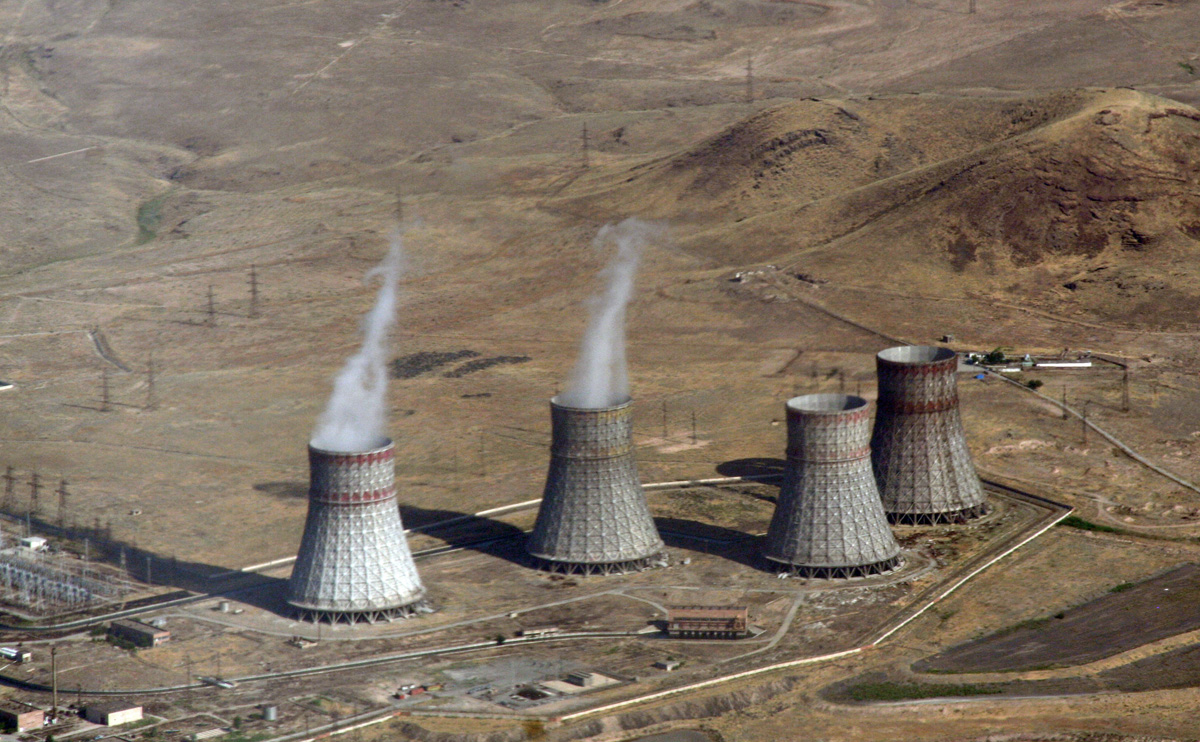
The discussions come as Armenia works to extend the operating life of its aging Metsamor nuclear power plant, whose sole functioning reactor was commissioned in 1980 and is now expected to remain in service until at least 2036.
During a September 29 meeting in Yerevan, Rosatom Director General Alexey Likhachev presented Armenian Prime Minister Nikol Pashinyan with proposals for new nuclear generating capacity, including a Russian-designed VVER-1000 reactor capable of producing approximately 1,000 megawatts of electricity.
The proposal is one of several under consideration by Armenia, which has also explored nuclear cooperation with the United States, France, South Korea and China.
Pashinyan emphasized that no decision had been made and that the government would evaluate competing proposals on economic and technical grounds, including their cost, safety, construction schedules and guarantees.
But according to Bellona nuclear expert Alexander Nikitin Armenia’s eventual decision will be shaped as much by geopolitics as by its electricity requirements.
Until recently, Armenia had favored replacing Metsamor with one or more small modular reactors, whose relatively modest generating capacity appeared better suited to the country’s limited electricity market.
But on October 1, Pashinyan acknowledged that the government’s calculations had changed.
According to the prime minister, new investment projects, including facilities associated with artificial intelligence, have substantially increased Armenia’s anticipated electricity requirements.
Just over a year ago, he said, Armenia had an electricity surplus. Now, investment commitments have created the prospect of a deficit.
“I have said dozens of times before that we need nothing more than a modular nuclear power plant,” Pashinyan said. “But now, due to this change, we have to understand that, most likely, a modular plant will not be enough for us.”
He suggested that a reactor with a capacity of 1,000 megawatts might prove a more practical alternative, although experts are still examining the question.
The shift could improve Rosatom’s prospects. Unlike many proposed small modular reactor designs, Russia’s conventional VVER technology has an established operating history, something Moscow has emphasized in promoting its nuclear exports.
Yet a large reactor would also present challenges for Armenia’s relatively small electricity grid, requiring careful consideration of how the country would manage the sudden loss of such a substantial generating unit.
Nikitin, however, believes Armenia should continue exploring smaller reactors rather than concentrating its future nuclear generating capacity in one large facility.
“Given Armenia’s heightened seismic activity, I believe the country would be better served by establishing several power-generation centers using small modular reactors based on designs currently being offered by nuclear companies from the United States, South Korea, France or even China,” he said.
He also suggested that Armenia could establish an international consortium to develop small modular reactors, potentially including Rosatom, since cooperation with the Russian corporation will remain necessary as long as Metsamor continues operating.
Meanwhile, Armenia remains dependent on its existing nuclear plant.
Metsamor’s second reactor, a Soviet-designed VVER-440 unit, began operating in 1980. Both of the plant’s reactors were shut down following the devastating 1988 Armenian earthquake, but the second was restarted in 1995 amid severe electricity shortages.
Today, it supplies a substantial share of Armenia’s electricity, estimated by Nikitin at approximately 30 to 40 percent.
Rosatom is participating in a modernization program intended to extend the reactor’s operation until 2036, when it will have been in service for 56 years, excluding its period of shutdown.
Likhachev has said he sees no technical obstacles to reaching that target. He also disclosed that Armenian officials are examining the possibility of a further extension until 2046.
Such an undertaking would require extensive additional investment in safety systems, equipment modernization and spent-fuel storage. Likhachev acknowledged that the necessary expenditures could substantially increase the cost of electricity generated by the plant.
Nikitin describes the extension as an interim measure driven by Armenia’s difficult energy circumstances rather than a desirable long-term solution.
“Extending the operating lives of nuclear power plants has become common practice in virtually every country. There is nothing unusual about it in itself, although aging equipment can certainly be expected to cause problems, particularly when subjected to external stresses such as earthquakes,” he said.
He warned that Armenia’s seismic conditions and the limitations of Metsamor’s original Soviet-era design make replacing the plant particularly important.
“The sooner Armenia develops a new nuclear power infrastructure, the less likely it will be to encounter problems with a plant built to an outdated design that did not incorporate many of today’s safety requirements,” Nikitin said.
For Armenia, choosing a replacement reactor involves more than selecting generating capacity.
In recent years, Pashinyan’s government has moved toward closer relations with the European Union while effectively freezing its participation in the Russian-led Collective Security Treaty Organization. Armenia has also discussed the possibility of withdrawing from the Eurasian Economic Union.
Nikitin argues that Moscow views these developments with concern and regards nuclear cooperation as one means of maintaining its influence over Armenia.
“Russia is doing everything it can to preserve the country’s dependence on Rosatom, pursuing various initiatives and offering proposals through the nuclear corporation that appear attractive at first glance,” he said.
In Nikitin’s assessment, the strategic purpose of these offers is to discourage Armenia from moving further away from Russian-led institutions and toward the European Union.
Russia already supplies Metsamor’s nuclear fuel and provides technical services. Awarding Rosatom the contract for a replacement plant could preserve that relationship for decades through fuel deliveries, maintenance, specialized equipment, personnel training and nuclear safety support.
“If Armenia agrees to build another Russian nuclear power plant, it will effectively become dependent on Rosatom — and therefore Russia — for nearly a century,” Nikitin warned.
He pointed out that the long-term relationship between a nuclear plant and its technology supplier extends well beyond construction, encompassing fuel supplies, spent-fuel management and the maintenance of specialized equipment.
Choosing a Western or Asian supplier could diversify Armenia’s nuclear partnerships, although alternative technologies would bring their own financing, licensing and construction challenges. Pashinyan has said Armenia expects to select its new reactor technology by the end of 2027, perhaps sooner.
With construction likely to take many years, the government faces a narrowing window in which to replace Metsamor before its planned retirement. For Nikitin, the choice goes to the heart of Armenia’s relationship with Russia.
“The decision to build a new nuclear power plant in Armenia will undoubtedly be driven more by politics than by energy considerations,” he said.
Russia’s state nuclear corporation Rosatom has taken full control of one of the country’s largest logistics companies, consolidating an expanding tra...
August brought signs of growing pressure on several fronts for Russia’s state nuclear corporation Rosatom, from questions surrounding major construct...
The International Atomic Energy Agency has suspended one of its most senior Russian officials — but for reasons largely unrelated to the questions ab...
Europe’s effort to break its dependence on Russian nuclear fuel has a paradox in Germany: making Russian-designed fuel without buying it from Russia ...