Germany wants independence from Russian nuclear fuel, using Rosatom as a bridge
Europe’s effort to break its dependence on Russian nuclear fuel has a paradox in Germany: making Russian-designed fuel without buying it from Russia ...
News
Publish date: June 8, 2026
News
The shipping industry has a harmful secret—hiding just beneath the waterline. Barnacles, algae and microbial slime covering ship hulls may seem like a minor maintenance issue, but they drag on vessels, drive up fuel use and quietly add to global emissions while also spreading invasive species across oceans. Now, Bellona is contributing to a growing international campaign that is putting a spotlight on this overlooked frontier of climate and ocean policy: keeping hulls clean.
It sounds absurdly simple. Clean ships more often, burn less fuel, move fewer harmful species across ecosystems. But that straightforward fix is drawing serious interest from regulators, scientists and the maritime industry, who increasingly see regular hull cleaning as a unique environmental solution with multiple payoffs. In ports around the world, new standards, technologies and cooperative efforts are reframing what was once routine upkeep as something much larger—a practical tool for protecting biodiversity, cutting carbon and making global shipping cleaner from the bottom up.
For years, though, the idea remained invisible—even to people working in maritime sustainability. “I had also never heard about in-water cleaning,” Irene Øvstebø Tvedten, a senior advisor at the Bellona Foundation and project leader of the Clean Hull Initiative, said recently. “So it’s the environmental solution that has come completely under the radar.”
That obscurity is part of what makes the current shift so striking. Biofouling—the accumulation of marine life on ship hulls—has long been treated primarily as a technical or economic concern. Shipowners worried about fuel efficiency; engineers experimented with coatings; ports occasionally imposed restrictions from an environmental standpoint. But the issue rarely commanded sustained attention as a broader environmental solution. “It’s not been something that’s been promoted from an environmental standpoint previously,” Tvedten noted. “Mostly from a fuel-saving standpoint.”
According to the International Maritime Organization’s Third Greenhouse Gas Study, shipping accounts for roughly 2.5 percent of global greenhouse-gas emissions. Yet something as mundane as marine growth on a ship’s hull can have an outsized impact. The study estimated that biofouling imposes a roughly 9 percent resistance penalty on vessels, forcing them to burn more fuel and produce approximately 9 percent more emissions than they otherwise would. The Clean Hull Initiative says that finding underscores a simple point: cleaner hulls represent one of the most immediate opportunities to reduce emissions from one of the world’s most difficult industries to decarbonize.
Bellona has been chief among the organizations helping change that framing. Through years of research, policy work and advocacy—published in both English and Norwegian—the organization began connecting what had often been treated as separate problems: emissions, invasive species and marine pollution. The logic was simple. A fouled hull increases drag; increased drag requires more fuel; more fuel means more emissions. At the same time, those same layers of marine growth act as transport systems for organisms that would otherwise never cross oceans.
That shift has also become increasingly visible within the shipping industry itself. “The conversation has clearly broadened,” said Heine Stangeby, the global communications specialist for Jotun, a Norwegian firm that specializes in paints and coatings for ship hulls. “When Jotun launched its Hull Performance Solutions 15 years ago, it was a small revolution as it moved the shift over to performance—meaning measurable speed loss avoidance. This soon became translated to avoided emissions.” More recently, he added, the industry’s understanding has expanded further, with “more awareness on the biodiversity issue” and growing recognition that maintaining clean hulls can both reduce emissions and limit the spread of invasive species.
The scale of the problem is easy to underestimate precisely because it is so diffuse. According to figures cited by the Clean Hull Initiative, biofouling contributes tens of millions of tons of additional carbon dioxide emissions annually—an impact spread thinly across the global fleet but immense when taken together. Meanwhile, it remains “the main vector for the transfer of invasive aquatic species,” as Tvedten put it, quietly reshaping ecosystems far from where ships first set sail.
Yet if the problem is global, the obstacles to solving it are often local. Ports and regulators—those with the authority to allow or ban hull cleaning—have historically been wary of the practice, particularly when it takes place in the water. The concern is intuitive: cleaning a hull might release pollutants or organisms into the surrounding environment. The result, in some cases, has been outright prohibition.
“The main bottleneck here are the ports and other regulators that just ban in-water cleaning,” Tvedten explained. “Often because they don’t have enough knowledge about it and they think it’s just harmful to the environment.”
Bellona’s intervention has been to challenge that assumption—not by dismissing the risks, but by reframing the balance of them. “What we try to communicate is that in-water cleaning is primarily a solution,” Tvedten said. “It’s a solution to the spread of invasive species, because if you don’t have biofouling, the organisms won’t spread.”
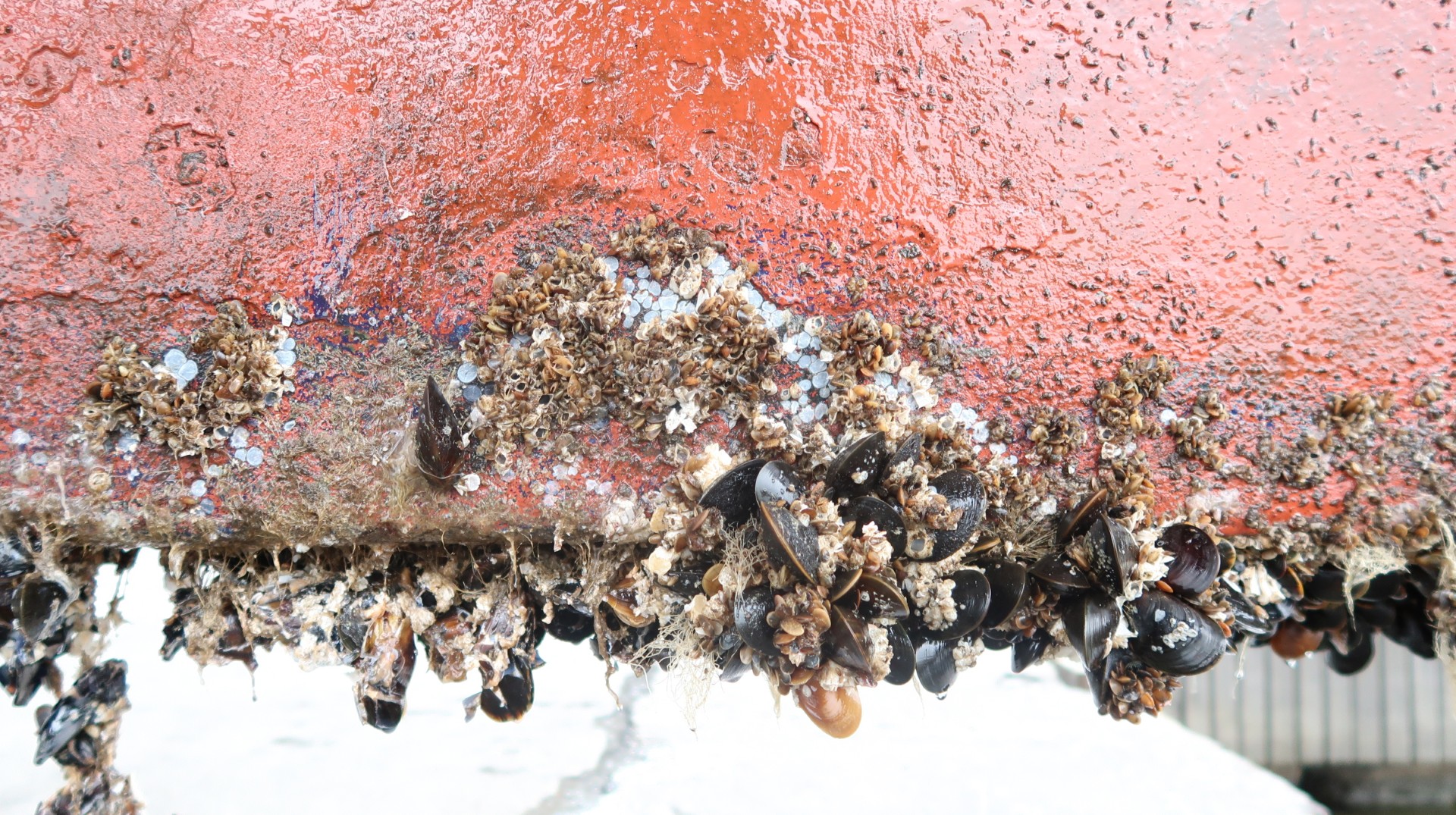
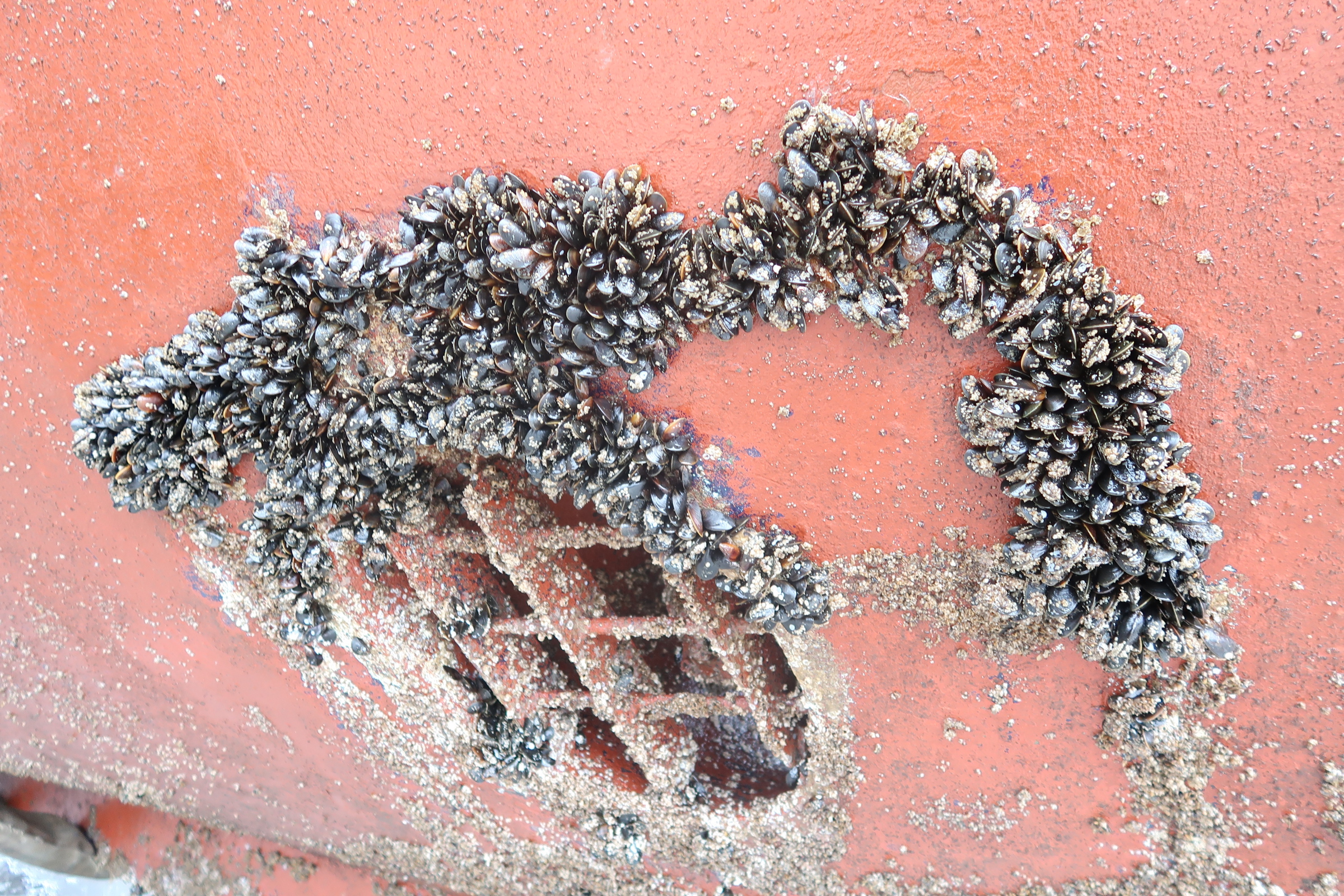
That argument, while straightforward, runs up against a more complicated reality. Not all cleaning is equal. Removing thick layers of barnacles and mussels—and what practitioners sometimes refer to, less delicately, as “sea vomit,” or more formally, carpet sea squirt—can release significant biological material into the water if not properly captured. By contrast, removing early-stage growth—thin films of slime or algae—poses far less risk.
This distinction has become central to Bellona’s approach. Rather than treating hull cleaning as a binary—allowed or banned—the organization has advocated for more nuanced, risk-based standards. Clean early, before fouling becomes severe; differentiate between levels of growth; require capture technologies where risks are highest, but not necessarily in all cases. The goal is not perfection, but practicality: a system that encourages frequent, preventive cleaning rather than infrequent, reactive intervention.
Industry participants increasingly frame the issue in much the same way. “Would you rather prevent a fire or put out a fire that has already started?” Jotun’s Stangeby said. “We are working on the preventive side of the industry.” Waiting until heavy macrofouling develops, he said, makes cleaning more difficult, more invasive and ultimately less effective than maintaining what he described as “an always clean hull.” Early cleaning, he added, not only lowers fuel consumption and emissions, but can also reduce the likelihood that larger organisms are carried between ecosystems.
“A lot of the cleanings that occur today are reactive,” Tvedten observed—performed only after fouling has already become a significant problem. Bellona’s Clean Hull Initiative, by contrast, promotes proactive cleaning: addressing buildup when it is still minimal, when both environmental and operational costs are lowest.
Turning that philosophy into policy, however, requires more than persuasion. It requires standards—shared frameworks that ports, shipowners and service providers can trust. That is where Bellona’s work with the International Organization for Standardization (ISO) has become especially significant.
The Clean Hull Initiative helped draft a proposal for an ISO standard on in-water cleaning, with Tvedten serving as project leader. The aim was not to dictate specific environmental thresholds, but to establish a common language and process: how cleaning operations should be documented, how their impacts should be measured, and how ports might evaluate them. “If you have an environmental solution that’s new, you need to also create the systems and routines around it,” she said.

According to Stangeby, collaboration between environmental groups and industry has been essential in bringing the issue into mainstream maritime policy discussions. “Biofouling represents a threat to the environment both in terms of emissions and biodiversity, and no single stakeholder can address it alone,” he said. Environmental organizations such as Bellona, he added, “have helped raise awareness and push the topic onto the policy agenda, while industry contributes operational insight and practical solutions.”
The Clean Hull Initiative, he said, has helped “create a more informed dialogue and build the trust needed to develop workable standards,” including the recently adopted ISO 6319 framework.
In practice, that means enabling regulators to make more informed decisions—moving beyond blanket bans toward conditional approvals based on evidence. Service providers, whether diver teams or remotely operated vehicle operators, are expected to document what they plan to do and what effects their methods have on water quality. Ports, in turn, can assess whether those practices meet their environmental criteria.
Industry participants say cleaning technologies themselves have also evolved rapidly in response to regulatory concerns. “There is a clear shift towards more controlled and proactive approaches, supported by monitoring and data,” Stangeby said.
The influence of that work is already beginning to ripple outward. The International Maritime Organization has finalized guidelines on biofouling and hull maintenance, and many of the same experts contribute to both IMO and ISO processes. What began as a technical standard is gradually helping shape broader international policy discussions around environmentally sound hull cleaning.
Meanwhile, the practical case for more frequent cleaning continues to strengthen. Many operators still wait two or three years before conducting in-water cleaning, allowing significant biofouling to accumulate in the meantime. From Tvedten’s perspective, that is often far too late. Cleaning should begin “much earlier,” as a preventive measure, Tvedten said—before buildup becomes a hazard rather than a minor inconvenience.
The implications extend beyond environmental protection. Cleaner hulls mean less drag, which means lower fuel consumption and reduced costs for shipowners. In an industry defined by tight margins and global competition, that economic incentive may prove as important as any regulation.
For now, the shift remains uneven. Some ports are experimenting with new rules and technologies; others remain cautious. But the direction of travel is becoming clearer.
What was once an obscure technical issue is moving onto the international agenda. And in that transition, Bellona’s work offers a reminder that not all environmental solutions require sweeping technological breakthroughs. Some, it turns out, involve paying closer attention to what has been there all along: a thin, stubborn layer of life clinging to the underside of the global economy.
Europe’s effort to break its dependence on Russian nuclear fuel has a paradox in Germany: making Russian-designed fuel without buying it from Russia ...

Nearly four and a half years after Russia’s full-scale invasion of Ukraine, July offered fresh evidence of how difficult it remains to disentangle Ru...

Just days after Egyptian nuclear authorities reportedly accused Rosatom of construction defects, poor management and vi...
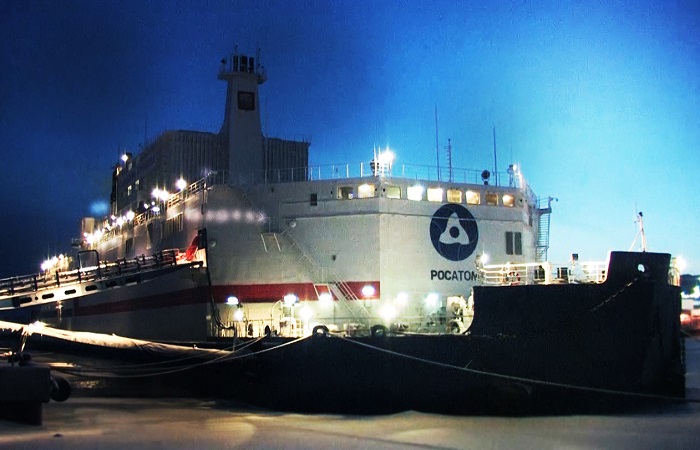
For years, the Akademik Lomonosov looked like one of the nuclear industry’s more eccentric experiments: two reactors mounted on a barge and tow...