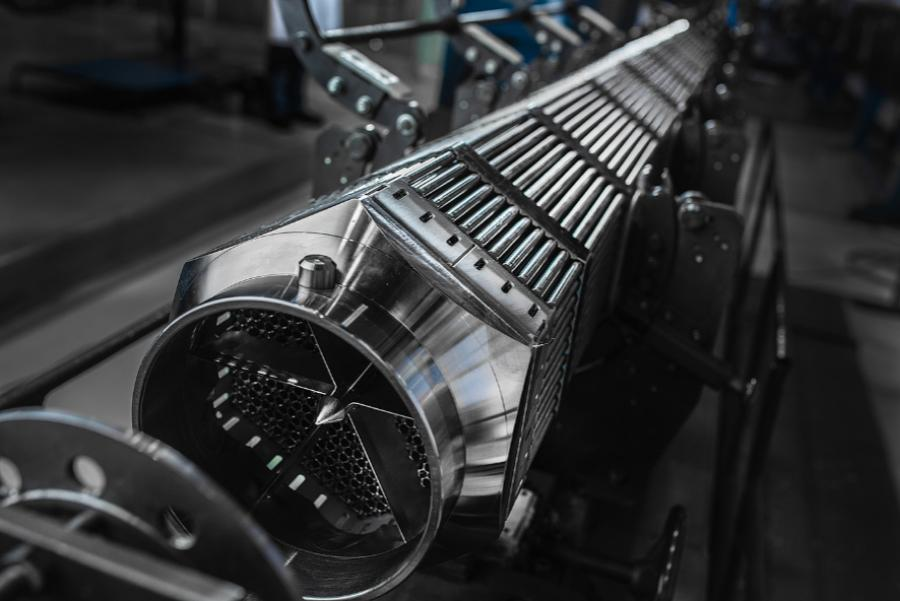
Germany wants independence from Russian nuclear fuel, using Rosatom as a bridge
Europe’s effort to break its dependence on Russian nuclear fuel has a paradox in Germany: making Russian-designed fuel without buying it from Russia ...
News
Publish date: May 28, 2026
News
Russia’s nuclear ambitions abroad are increasingly colliding with geopolitical reality. In Armenia, Moscow’s once-dominant position in the nuclear sector is beginning to erode as Yerevan turns toward Europe. Across the EU, governments are still struggling in fits and starts to reduce their dependence on Russian nuclear fuel. And in Russia itself, Rosatom appears strangely reluctant to publicize the arrival from China of a major component for one of its flagship Arctic energy projects.
These are among the trends highlighted in Bellona’s April 2026 Nuclear Digest.
Armenia’s nuclear drift away from Moscow
Nowhere is the political dimension of nuclear energy clearer than in Armenia. Rosatom remains deeply involved in extending the life of the Metsamor nuclear power plant, whose second VVER-440 reactor was shut down in April for an unusually long five-month maintenance and modernization campaign. The work—carried out with the participation of multiple Rosatom subsidiaries—is intended to extend the plant’s operational life to 2036.
But while Russia still services Armenia’s aging Soviet-built reactor fleet, its chances of building Armenia’s future reactors appear increasingly slim.
“Russia and Rosatom traditionally play an important role in servicing the Metsamor nuclear power plant,” Bellona nuclear analyst Dmitry Gorchakov writes in the digest, noting Moscow’s continued role in supplying fuel, components, and modernization work. Yet he adds that “the prospects for Rosatom’s participation in Armenia’s new nuclear program remain extremely uncertain.”
That uncertainty is largely political. Armenia has accelerated discussions over building a new nuclear plant focused on small modular reactors, considering proposals from the United States, France, South Korea, and China alongside Russia’s. At the same time, relations between Moscow and Yerevan have deteriorated sharply as Armenia pivots toward the European Union.
“The current political dynamic and the likelihood of pro-European forces winning upcoming elections make the prospects for Rosatom building a new Armenian nuclear plant extremely low,” Gorchakov writes.
Europe’s sluggish nuclear divorce
Europe, meanwhile, continues its own uneasy disentanglement from Russia’s nuclear industry—though progress remains uneven.
Bellona’s digest shows that EU countries operating Soviet-designed VVER reactors are slowly introducing alternative fuel suppliers, primarily Westinghouse and Framatome. Westinghouse now has fuel supply contracts with every European VVER operator, while countries including Finland and the Czech Republic have already begun receiving non-Russian fuel deliveries.
But despite the political rhetoric surrounding energy independence after Russia’s invasion of Ukraine, Russian nuclear fuel continues flowing into Europe in substantial quantities.
“After peaking in 2023, purchases of Russian nuclear fuel have begun declining, and that trend continued in 2025,” Gorchakov writes. “But overall procurement levels still remain above prewar levels.”
Indeed, Bellona’s analysis notes that between 2022 and 2025, EU countries paid Rosatom roughly 70 percent more for nuclear fuel than during the previous four-year period.
The result, Gorchakov argues, is two distinct European strategies. The first includes countries such as Finland and the Czech Republic, which are shifting toward Westinghouse fuel and actively reducing Russian purchases. The second includes countries such as Hungary and Slovakia, which remain reluctant to break with Rosatom and instead are gravitating toward France’s Framatome as an alternative supplier.
Yet even that alternative comes with caveats. Framatome still lacks a fully independent fuel-production chain for VVER reactors and is preparing to assemble Russian-designed fuel under license at facilities in France and Germany. “This effectively preserves dependence on Russian technology in a more indirect form,” Gorchakov writes.
In other words, Europe’s nuclear decoupling from Russia remains partial, politically fragmented, and technologically incomplete.
Rosatom’s Quiet Dependence on China
If Armenia and Europe illustrate Rosatom’s geopolitical vulnerabilities abroad, developments in Russia’s Arctic suggest another problem: growing dependence on China.
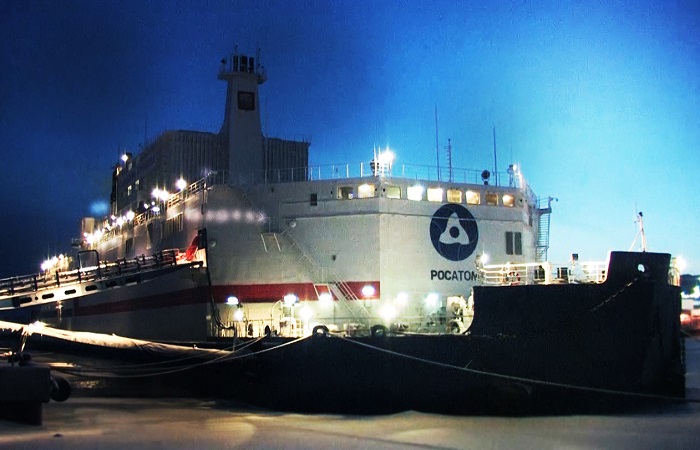
In late March, according to industry publication SeaNews, the hull for a new floating nuclear power unit arrived from China at St. Petersburg’s Baltic Shipyard. The floating reactor platform is part of Rosatom’s ambitious plan to power the remote Baimskaya mining region in Chukotka using a fleet of floating nuclear reactors equipped with RITM-200S reactors.
But Rosatom itself said almost nothing publicly about the delivery.
“The arrival of the first hull for the floating nuclear power unit from China took place in an atmosphere of complete informational silence from Rosatom and its subsidiaries,” Gorchakov writes.
The silence is striking because the project is both strategically important and deeply symbolic. Rosatom has long promoted floating nuclear plants as a showcase of Russian technological prowess. But the first hulls are being built not in Russia, but at the Chinese shipyard Wison Heavy Industry because Russian shipyards lacked the capacity to complete the order on schedule.
The delays have been substantial. Under the original contract, the first hull was supposed to arrive in Russia by October 2023. Instead, it arrived roughly two and a half years late.
Why Rosatom has chosen not to highlight the delivery remains unclear. Gorchakov suggests several possibilities: security concerns, reluctance to expose Chinese partners to sanctions risks, or discomfort with publicly acknowledging that a major “prestige project” for Russia was substantially built in China.
Taken together, the stories in Bellona’s latest digest point toward a broader reality facing Rosatom in 2026. Russia’s nuclear industry remains globally active and technically capable. But geopolitical fragmentation, sanctions pressure, and shifting political alliances continue to complicate Moscow’s ability to dominate the nuclear landscape as confidently as it once did.
Europe’s effort to break its dependence on Russian nuclear fuel has a paradox in Germany: making Russian-designed fuel without buying it from Russia ...
Nearly four and a half years after Russia’s full-scale invasion of Ukraine, July offered fresh evidence of how difficult it remains to disentangle Ru...
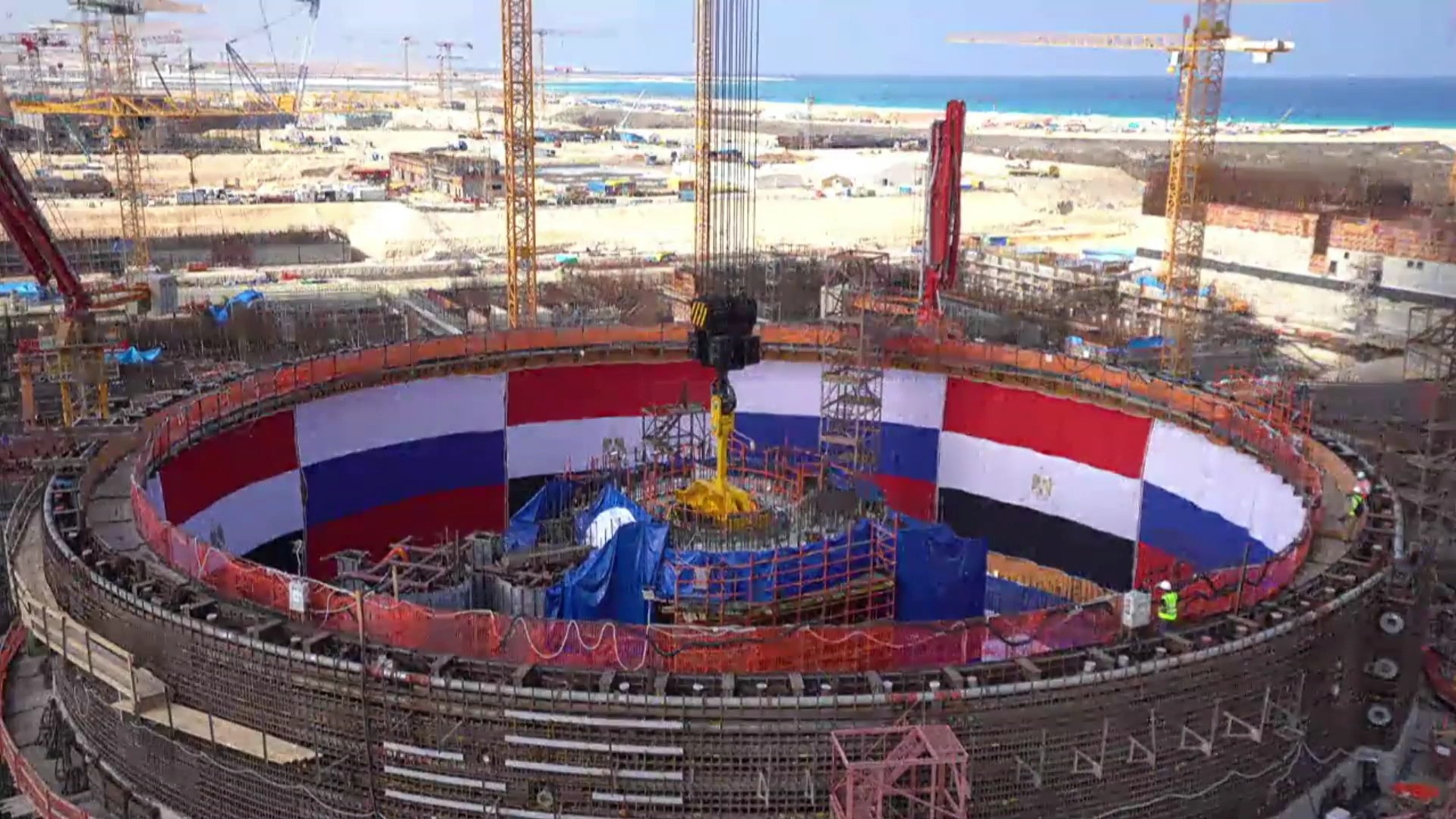
Just days after Egyptian nuclear authorities reportedly accused Rosatom of construction defects, poor management and vi...
For years, the Akademik Lomonosov looked like one of the nuclear industry’s more eccentric experiments: two reactors mounted on a barge and tow...