
Germany wants independence from Russian nuclear fuel, using Rosatom as a bridge
Europe’s effort to break its dependence on Russian nuclear fuel has a paradox in Germany: making Russian-designed fuel without buying it from Russia ...
News
Publish date: June 15, 1999
Written by: Thomas Jandl
News
Washington D.C. (Bellona Web): The Co-operative Threat Reduction (CTR) umbrella agreement governing legal issues between the United States and Russia is due to expire June 16 at midnight. With the Kosovo conflict, which put all official military contacts for a while on ice, a renewal of the agreement was in doubt for a time. The Pentagon even prepared for a program shutdown.
CTR was launched in 1991, when the U.S. Congress directed the Department of Defence to help secure former Soviet weapons of mass destruction. Since 1991, Congress has provided $2.3 billion to support CTR efforts. The program is also known as the Nunn-Lugar program. Since 1992, CTR developed a specific program for dismantling ballistic missile submarines (SSBN) required under START- 1 arms reduction treaty.
Where there is a will there is a way, even in U.S.-Russian relations. While officially defence department contacts between the two nations were on hold until further notice, the roughly $440 million the Co-operative Threat Reduction (CTR) program has to spend each year were incentive enough to keep the Russian side flexible.
The Pentagon was not always sure about the prospects to renew the umbrella agreement that governs the all-important legal questions that come with a co-operative agreement between two nations. For a long while, contractors were preparing for a shutdown.
But now the Russian negotiators have initiated a draft agreement renewing the umbrella agreement, and the text is being readied for final signature in Moscow.
At the Pentagon, expectations are that the text will be signed June 14, with ample two days overlap before the expiration date of the present agreement. Nevertheless, contractors will receive a stop-work notice June 10, in order top allow for a seven-day notice. But the Pentagon says this is just routine.
"It looks like everything is on track, although it comes down to the wire," said Capt. Dieter Rudolph, project manager for the Arctic Military Environmental Co-operation (AMEC) program, a U.S.-Norwegian-Russian military co-operation initiative. "Everything is pointing to that it will be signed on stay track."
Europe’s effort to break its dependence on Russian nuclear fuel has a paradox in Germany: making Russian-designed fuel without buying it from Russia ...
Nearly four and a half years after Russia’s full-scale invasion of Ukraine, July offered fresh evidence of how difficult it remains to disentangle Ru...

Just days after Egyptian nuclear authorities reportedly accused Rosatom of construction defects, poor management and vi...
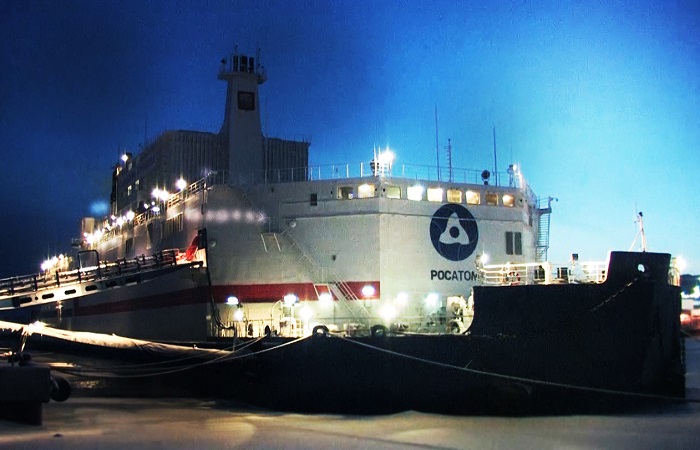
For years, the Akademik Lomonosov looked like one of the nuclear industry’s more eccentric experiments: two reactors mounted on a barge and tow...