
From reactors to shipping: Rosatom tightens its grip on Russian transport
Russia’s state nuclear corporation Rosatom has taken full control of one of the country’s largest logistics companies, consolidating an expanding tra...
News

Publish date: March 3, 2014
News
ST. PETERSBURG – After the disaster at Japan’s Fukushima-Daiichi nuclear power plant in 2011, nuclear experts worldwide agreed to stress-test their own reactors and called for the evaluation of European nuclear power plants in terms of their capability to withstand natural disasters and technical and human-error snafus. Russian nuclear power stations were also subjected to safety assessments, the results of which Bellona’s Russian offices have analyzed in a working document devoted to the subject.
The consequences of the disaster at Fukushima Daiichi, which was destroyed by a powerful earthquake and tsunami on March 11, 2011, invoked a far-reaching re-evaluation of safety requirements for all European atomic power plants. The stress tests established by the EU were intended to verify the ability of nuclear power plants to endure extreme natural disasters and possible combinations of catastrophic events. In September of that same year, the IAEA approved an action plan aimed at increasing nuclear power plant safety, which took the lessons of Fukushima into account.
As a result of these recommendations, Russia has developed its own safety program for implementing the IAEA action plan. In spring 2011, the Federal Service for Environmental, Technological, and Nuclear Oversight of the Russian Federation carried out unplanned inspections of the country’s operational nuclear power plants, the details results of which remain unpublished.
After inspections were completed, stress tests modeled on European methodology were conducted. However, independent European experts were not invited to take part in conducting these stress tests. The results of these tests were released in the national report of the Russian Federation to the convention on nuclear safety.
Bellona’s analysis shows that Russia has formally followed the international community’s recommendations on re-assessing safety issues surrounding atomic energy. However, the report does not include enough expert information about all possible nuclear safety risks. For example, the report states that Russian nuclear power plants are, on the whole, earthquake resistant, but additional measures must be taken in order to improve some components of auxiliary equipment safety.
At the same time, the report fails to outline any plans for investigating the earthquake resistance of the buildings, structures, and equipment of spent fuel storage pools. Moreover, the report does not provide any test results on the potential effects of earthquakes paired simultaneously with other natural disasters, such as severe flooding.
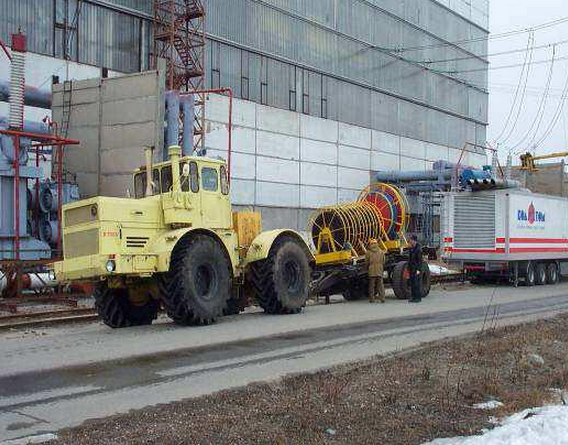
Solving these same problems was the number one priority in containing the Fukushima disaster. It was absolutely critical for emergency responders to ensure that spent fuel storage conditions remained safe, and the bulk of their efforts were focused on restoring cooling to the cores of the shut-down reactors as quickly as possible.
Stress tests on Russian atomic power plants also showed that all units under operation need to be equipped with additional emergency water delivery systems; these systems are essential in the case of interrupted cooling to the reactor core, storage pools, and nuclear waste depositories. The bottom line is that before the Fukushima accident Russian power plants were often not equipped with such systems, or they were absent entirely.
Serious questions remain as to whether or not the vulnerabilities in nuclear power plant safety exposed by experts will be corrected in practice, and only time will tell whether or not the world will come to completely grasp Fukushima’s lessons. For more detailed information on the Russian atomic power plant stress tests, you can read Bellona’s working document (in Russian).
Meagan Dunham translated this article from Russian.
Russia’s state nuclear corporation Rosatom has taken full control of one of the country’s largest logistics companies, consolidating an expanding tra...
August brought signs of growing pressure on several fronts for Russia’s state nuclear corporation Rosatom, from questions surrounding major construct...
The International Atomic Energy Agency has suspended one of its most senior Russian officials — but for reasons largely unrelated to the questions ab...

Europe’s effort to break its dependence on Russian nuclear fuel has a paradox in Germany: making Russian-designed fuel without buying it from Russia ...