
Germany wants independence from Russian nuclear fuel, using Rosatom as a bridge
Europe’s effort to break its dependence on Russian nuclear fuel has a paradox in Germany: making Russian-designed fuel without buying it from Russia ...
News
Publish date: July 8, 2002
Written by: Jon Gauslaa
News
The European Parliament is deeply concerned by the jailing of Grigory Pasko, a military reporter convicted for high treason in Vladivostok, on December 25, 2001. The Military Collegium of the Russian Supreme Court upheld the conviction on June 25, 2002.
Freedom of expression undermined
In resolution No. 2002/0377 (p. 147) adopted on July 4, the Parliament refers to the fact that Pasko’s lawyers have stressed that the conviction is a punishment for his reports on environmental abuses by the Russian navy. The Parliament also underlines that Pasko had written articles on the pollution emitted by badly maintained Russian submarines and the secret services’ implication in nuclear waste trafficking.
The Parliament points out that the conviction shows that freedom of expression in Russia is deeply undermined and that the situation, with regard also to the independence of the judiciary, should be closely monitored.
It also stresses that the development of a genuine partnership and the stepping-up of relations with Russia should be linked to clear progress in the field of democracy and human rights.
A considerable setback
The Parliament considers the Pasko-conviction to be a considerable setback for the development of the rule of law in Russia. It calls on the competent Russian authorities to release Pasko immediately, halting further judicial proceedings, and would welcome any positive step by President Putin in this regard.
The lawmakers urge the European Council to put the item of media freedom at the top of the agenda for the next EU-Russia meetings and its Delegation for relations with Russia to continue to follow further developments closely in Mr Pasko’s case.
They also urge the European Commission, within the TACIS-Democracy framework, to focus more effectively on projects concerning freedom of expression and the independence of the media and the judiciary.
***
Grigory Pasko was arrested on November 20, 1997 and charged with treason through espionage. He was acquitted of these charges by the Pacific Fleet Court in Vladivostok on July 20, 1999, but sentenced to a three-year imprisonment for ‘abuse of his official position although he was not charged with that crime, and released on a general amnesty.
After both sides had appealed, the Military Supreme Court cancelled the verdict in November 2000 and sent the case back for a new trial at the Pacific Fleet Court. The re-trial started on July 11, 2001 and ended on December 25, with Pasko being convicted to four years of hard labour and taken into custody.
The verdict was again appealed by both sides. On June 25, 2002 the Military Supreme Court confirmed Pasko’s four-year sentence. Pasko will be released on April 25, 2004.
Europe’s effort to break its dependence on Russian nuclear fuel has a paradox in Germany: making Russian-designed fuel without buying it from Russia ...

Nearly four and a half years after Russia’s full-scale invasion of Ukraine, July offered fresh evidence of how difficult it remains to disentangle Ru...

Just days after Egyptian nuclear authorities reportedly accused Rosatom of construction defects, poor management and vi...
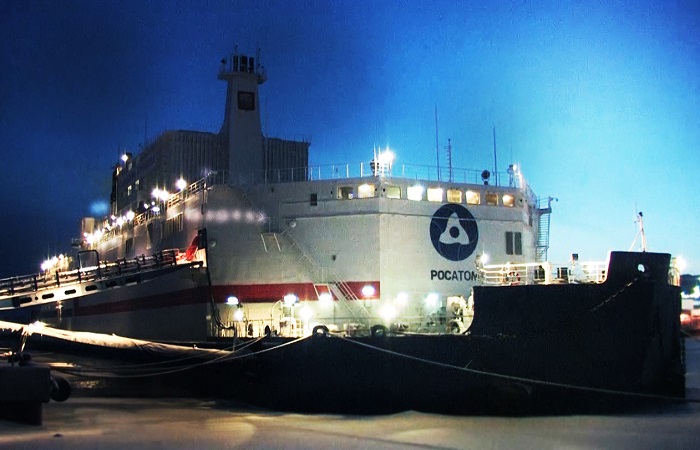
For years, the Akademik Lomonosov looked like one of the nuclear industry’s more eccentric experiments: two reactors mounted on a barge and tow...