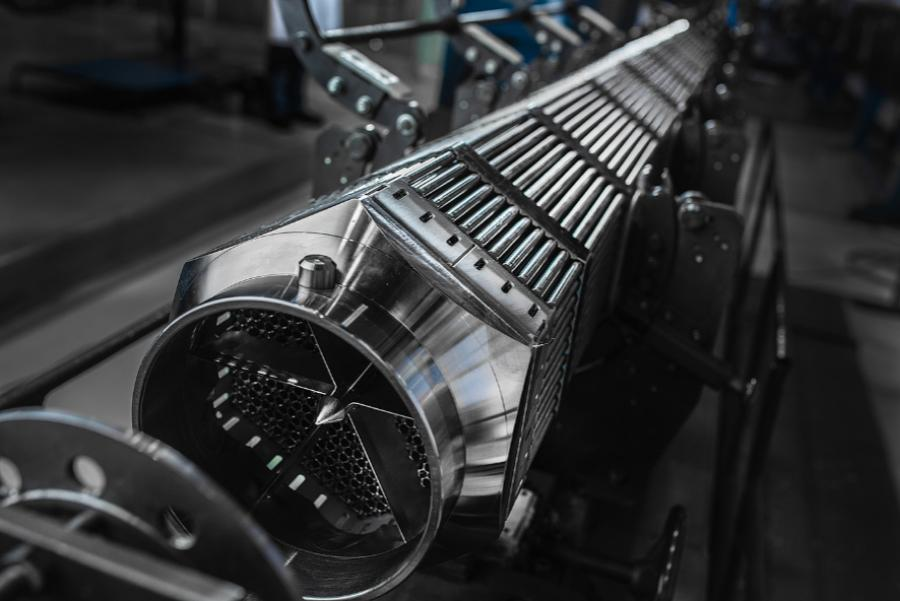
Germany wants independence from Russian nuclear fuel, using Rosatom as a bridge
Europe’s effort to break its dependence on Russian nuclear fuel has a paradox in Germany: making Russian-designed fuel without buying it from Russia ...
News

Publish date: October 30, 2013
News
Members of the European Parliament (MEPs) last week passed a resolution on the position the EU should take at COP19 in Warsaw. The resolution calls for the summit to achieve and set a clear timetable toward a global binding agreement to be struck in Paris in 2015. The main ambition is to see a new ‘Climate Pact’ to apply to all industrial as well as developing countries, including compliance and enforcement proceedings.
MEPs also called in the resolution for the setting of a carbon price on international aviation and maritime transport emissions, for policies to stop development of unconventional fossil fuels such as tar sand and for the phasing out of fossil fuel subsidies. In addition MEPs reiterated the ‘offer’ of the EU to increase its CO2 reduction target from 20% to 30% by 2020, should other major emitting countries also commit to such targets.
Finally, MEPs called for greater climate ambition from the industrial sector. The COP19 in Poland will be the first of its kind to incorporate industry stakeholders on a large scale. Polish Ministers will host an international coal and climate summit in Warsaw on 18-19 November and COP19 negotiations will see dedicated time especially to such stakeholders. The opportunities – and expectations – for a holistic and constructive summit are therefore high.
Poland’s potential
Bellona has previously reported on the plans, being pushed by Polish government officials and COP19 hosts, to build coal power plants which have been found illegal by the EU. Bellona maintains that Poland has an immense potential to lead Europe toward a more sustainable economy, both with renewables and mitigating fossil fuel use through CO2 Capture and Storage (CCS), as outlined in a CCS Roadmap for Poland.
A new report published jointly by renewable organisations, researchers and Greenpeace has now also found that Poland could at little additional cost halve its coal consumption as well as quadruple its renewable energy use by 2030. The report says Poland should be aiming for a 26.8% renewable energy use by 2030, and 88% by 2050, which could by 2030 lead to a halving of 1990 level CO2 emissions from the energy sector, further reduced by 92% by 2050. Aiming for this instead of business-as-usual with coal plant plans and the like, could also see an additional 40,000 new jobs in Poland by 2030.
It is hoped that the hosting of COP19 could lead to a much needed widening of Poland’s rather narrow climate and energy objectives. Should Poland incorporate more sustainable longer-term policies, it would clearly benefit both the sustainability of the climate and Poland’s economy.
Europe’s effort to break its dependence on Russian nuclear fuel has a paradox in Germany: making Russian-designed fuel without buying it from Russia ...
Nearly four and a half years after Russia’s full-scale invasion of Ukraine, July offered fresh evidence of how difficult it remains to disentangle Ru...

Just days after Egyptian nuclear authorities reportedly accused Rosatom of construction defects, poor management and vi...
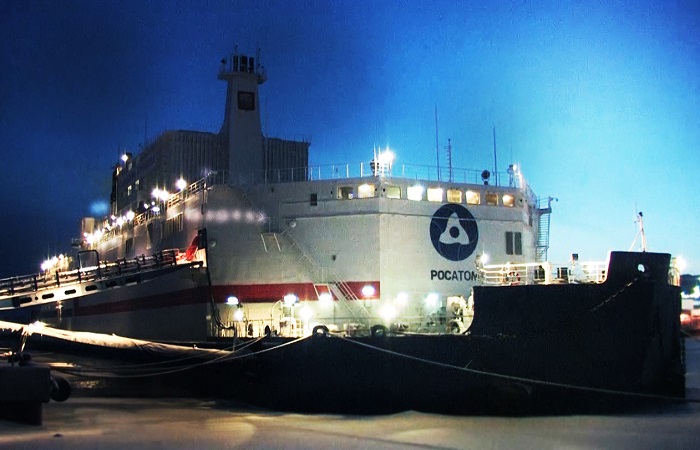
For years, the Akademik Lomonosov looked like one of the nuclear industry’s more eccentric experiments: two reactors mounted on a barge and tow...