
From reactors to shipping: Rosatom tightens its grip on Russian transport
Russia’s state nuclear corporation Rosatom has taken full control of one of the country’s largest logistics companies, consolidating an expanding tra...
News
Publish date: February 7, 2003
News
In addition to several large workshops, the yard operates two large dry docks. Until the end of the 1980s, the yard employed 5,500 workers, but today the number of employees is much smaller.
Sevmorput has been repairing first-generation nuclear submarines since the end of the 1960s and until 1991, the refuelling of nuclear submarines was also undertaken here. Today, the shipyard also carries out repairs of second-generation submarines. In 1991, county officials prohibited refuelling activities at this yard on the grounds of radiation safety concerns and the fact that the yard is located only a few hundred metres from more populous areas of the city. Defuelling activities were later resumed on the condition that a so-called dry defuelling method was used, whereby the cooling water is pumped out from the reactor. In the future, the civilian nuclear service ship Imandra is likely to perform the defuelling operations at the shipyard.
There are presently two first generation Project 675 — Echo-II class and Project 658 — Hotel class submarines in the yard. The Project 658 — Hotel class submarine was defuelled in 1995.
Russia’s state nuclear corporation Rosatom has taken full control of one of the country’s largest logistics companies, consolidating an expanding tra...

August brought signs of growing pressure on several fronts for Russia’s state nuclear corporation Rosatom, from questions surrounding major construct...
The International Atomic Energy Agency has suspended one of its most senior Russian officials — but for reasons largely unrelated to the questions ab...
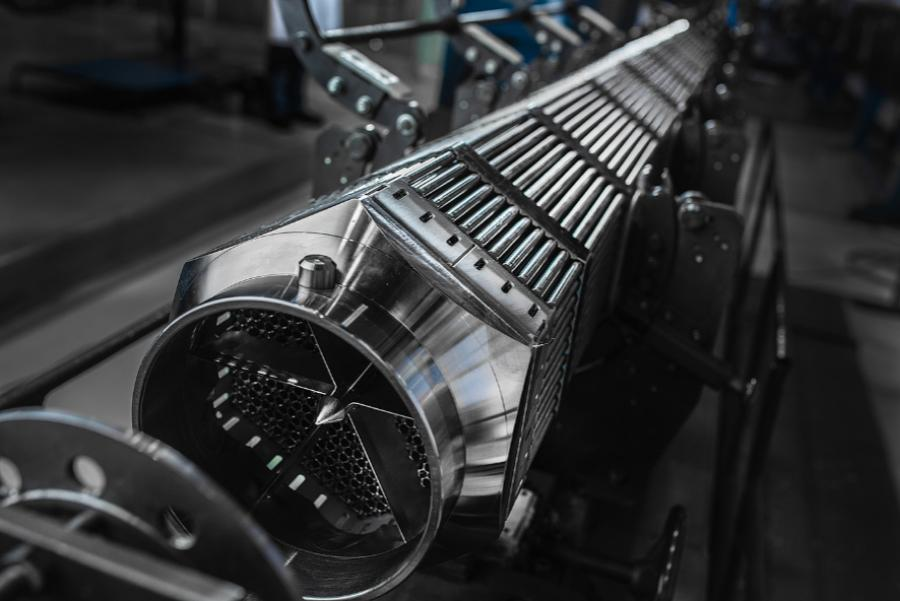
Europe’s effort to break its dependence on Russian nuclear fuel has a paradox in Germany: making Russian-designed fuel without buying it from Russia ...