
Arctic shipping expands as Chinese and Korean transit ambitions collide with chilly realities
International shipping along Russia’s Northern Sea Route (NSR) expanded during September, with Chinese and South Korean operators testing new c...
News
Publish date: November 18, 2026
News
International nuclear safety regulators representing 38 countries warned Monday that Russia’s intensifying attacks on Ukraine’s electricity infrastructure are increasing the risk of a nuclear accident this winter, as repeated strikes threaten the power supplies needed to keep the country’s nuclear reactors operating safely.
In a joint statement reported by Reuters on November 16, three international associations of nuclear and radiation safety regulators expressed concern over the mounting dangers posed by Russia’s attacks on power plants, transmission lines and substations.
The organizations — the Heads of European Radiological Protection Competent Authorities (HERCA), the Western European Nuclear Regulators Association (WENRA) and the Heads of Nordic Radiation Safety Authorities (NORA) — represent countries including all European Union members, the United States, Britain, Canada and Japan.
The warning comes as Ukraine prepares for another winter of Russian missile and drone attacks against an electricity grid already severely weakened by nearly five years of war.
The regulators’ central concern is that nuclear reactors depend on reliable electricity supplies to operate cooling systems, even when they are shut down. A prolonged interruption can force plants to rely on emergency generators, creating additional risks if backup power cannot be sustained.
The head of the Norwegian Radiation and Nuclear Safety Authority, Per Strand — who also heads HERCA and NORA — told Reuters that Russian attacks have become increasingly dangerous, with drones carrying larger explosive payloads and striking targets with greater precision.
“Because of this new tactic of the Russians … clearly the highest risk will be this winter for a nuclear accident,” Strand said.
He described a nationwide blackout affecting all nine of Ukraine’s operating nuclear reactors simultaneously as the worst-case scenario, potentially creating conditions for radioactive releases if essential safety systems failed.
Such an outcome is not inevitable, Strand noted, but he urged governments to prepare for the possibility while pressing Russia to halt attacks on energy infrastructure.
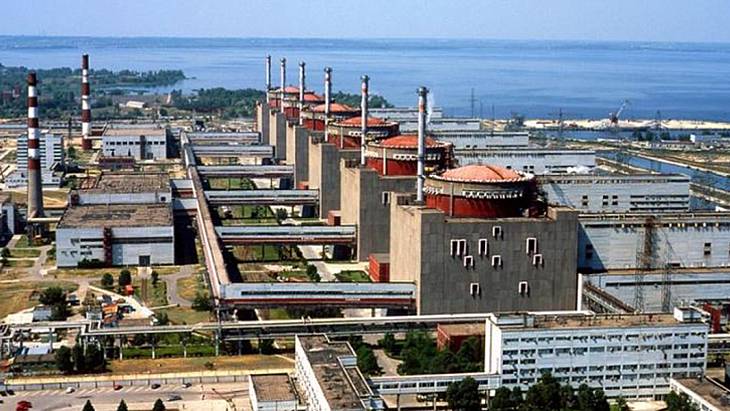
Ukraine operates three nuclear power plants — Rivne, Khmelnytskyi and South Ukraine — which together are expected to supply approximately 80 percent of the country’s electricity this winter, according to Reuters. The country’s fourth plant, Zaporizhzhia, remains under Russian occupation and has not generated electricity since 2022.
Bellona nuclear expert Dmitry Gorchakov, who recently presented findings from the World Nuclear Industry Status Report (WNISR) in Berlin and Vienna, described the situation in Ukraine as “the largest ongoing stress test of nuclear power safety,” already underway for four years with no end in sight.
He warned that repeated Russian attacks have progressively reduced the Ukrainian grid’s resilience, leaving its operating nuclear plants increasingly exposed as winter approaches.
“The situation is consistently difficult, and yet it continues to deteriorate: every winter, the resilience of Ukraine’s electricity system diminishes,” he said.
According to Gorchakov’s assessments in the 2025 and 2026 editions of the WNISR, Ukraine faced an electricity-generation capacity deficit of at least 3–4 gigawatts during the winter of 2024–2025. That shortfall increased to an estimated 5–6 gigawatts the following winter.
It is reasonable to expect an even more severe deficit this winter, he said, placing additional pressure on the country’s nuclear plants.
The Reuters-reported projection that nuclear energy could provide nearly 80 percent of Ukraine’s electricity this winter is particularly striking, Gorchakov noted. Before the war, nuclear power accounted for just slightly more than half of Ukraine’s electricity generation.
“This is an unprecedentedly high level,” he said, explaining that the destruction of much of Ukraine’s other generating capacity has left nuclear plants with increasingly limited support from the rest of the electricity system.
The warning follows another dangerous week at Zaporizhzhia, Europe’s largest nuclear power plant, where the International Atomic Energy Agency reported that the facility lost all external electricity for more than 12 hours on November 8.
The interruption, caused by damage to its sole functioning 330-kilovolt transmission line, forced four emergency diesel generators to start automatically. Operators subsequently reduced the number running to two to conserve fuel.
It was the plant’s 27th complete loss of external electricity since Russia’s full-scale invasion of Ukraine. Since late March, Zaporizhzhia has depended on a single functioning external power connection. Gorchakov has calculated that, over the past year, the Zaporizhzhia plant has spent a cumulative two months without external electricity.
Although Zaporizhzhia’s six reactors remain shut down, electricity is still needed for cooling nuclear fuel, monitoring equipment and maintaining other essential safety systems. The November 8 power loss was eventually remedied, but the plant remains vulnerable to another interruption.
The IAEA also reported that a backup transformer near the adjacent Zaporizhzhia thermal power plant, previously repaired during a ceasefire negotiated by the agency, had again been destroyed by military activity. The renewed destruction illustrates the difficulty of maintaining even temporary improvements to nuclear safety infrastructure near the front line.
Bellona nuclear expert Alexander Nikitin cautioned, however, that the consequences of losing electricity depend heavily on the condition of the nuclear facility when the interruption occurs.
At Zaporizhzhia, where the reactors have been shut down and cooled for years, another blackout would be less dangerous than an equivalent interruption at an operating nuclear plant, he said.
“If a nuclear power plant operating at full power loses electricity, that is very unpleasant, but if the personnel and the facility are prepared for such events, a catastrophe can be avoided,” Nikitin said.
He emphasized that nuclear plants worldwide underwent extensive safety upgrades following the 2011 Fukushima disaster, including measures intended to improve their ability to withstand a loss of external power.
Bellona examined these improvements in a 2014 analysis of post-Fukushima nuclear safety measures. Nevertheless, Nikitin warned against assuming that these safeguards eliminate every possibility of an accident.
“It would be a serious mistake to be confident that everything has been accounted for and that nuclear or radiological incidents are impossible,” he said.
The danger extends beyond damaged power lines. According to information provided to the IAEA by the Russian side, two Zaporizhzhia nuclear plant employees were killed in separate incidents on November 9 and 10, while an employee of the nearby thermal power plant was also killed in a drone attack. These accounts could not be independently verified.
The agency, per established habit, did not assign responsibility for the incidents. Russia and Ukraine have repeatedly accused each other of attacks affecting the occupied plant and its surroundings.
IAEA Director General Rafael Grossi warned that the continuing deterioration of safety infrastructure could have consequences far beyond the immediate conflict zone.
“I am disappointed that electrical infrastructure that was repaired under a ceasefire negotiated by the IAEA in good faith was destroyed,” he said in the agency’s November 14 statement.
For Nikitin, the repeated incidents demonstrate a fundamental weakness in the international framework governing nuclear safety during armed conflicts. He criticized international organizations for failing to respond more forcefully when Russian troops occupied the Zaporizhzhia and Chornobyl nuclear facilities in 2022.
“I am only surprised that they spoke out so late, since the shelling of Ukraine’s power grids and infrastructure has been going on for a long time,” Nikitin said.
He argued that international institutions should establish binding rules under which any country carrying out an armed attack against a civilian nuclear facility would face immediate political and economic isolation.
“The question of how to provide maximum protection for nuclear power plants during military conflicts and direct armed attacks remains open,” he said.
Gorchakov expressed similar concerns about the limits of existing international safeguards.
“What is happening has shown that neither the IAEA nor any conventions or international agreements can stop such attacks on nuclear facilities during wars or reduce the risks to them once armed conflicts have begun,” he said.
The IAEA’s latest findings suggest that the problem is no longer confined to Zaporizhzhia. Military activity destabilized Ukraine’s electricity grid during the preceding week, forcing several operating nuclear units to reduce their output.
At the Chernobyl site — where one reactor exploded in 1986 and the remaining three were eventually shut down by 2000 — electrical fluctuations triggered emergency diesel generators at several facilities in the exclusion zone, which still houses spent nuclear fuel and radioactive-waste management installations.
IAEA monitoring teams also reported repeated air raid alarms and drones near nuclear facilities. At the South Ukraine nuclear plant, one drone was detected approximately 350 meters from the site.
“It would be difficult for me to overstate my concern about the electrical grid in Ukraine and its impact on nuclear safety,” Grossi said.
Nikitin warned that nuclear installations could become sources of radioactive contamination during wartime, even without the use of a nuclear weapon.
He raised the possibility that attacks on electrical systems or radioactive-material storage facilities could effectively turn civilian nuclear installations into what he described as “dirty bombs,” causing radioactive releases of varying severity.
The scale of any such release would depend on the facility affected, the operating condition of its reactors, the effectiveness of safety systems and other circumstances, he said.
International shipping along Russia’s Northern Sea Route (NSR) expanded during September, with Chinese and South Korean operators testing new c...
Russia’s state nuclear corporation Rosatom is intensifying efforts to market floating nuclear power plants to African countries, promoting the ...

Hungary’s new government is considering replacing Russia’s state nuclear corporation Rosatom as the main contractor for the Paks II nucle...

Russia’s state nuclear corporation Rosatom made progress on two of its international reactor projects in recent weeks, bringing new generating ...