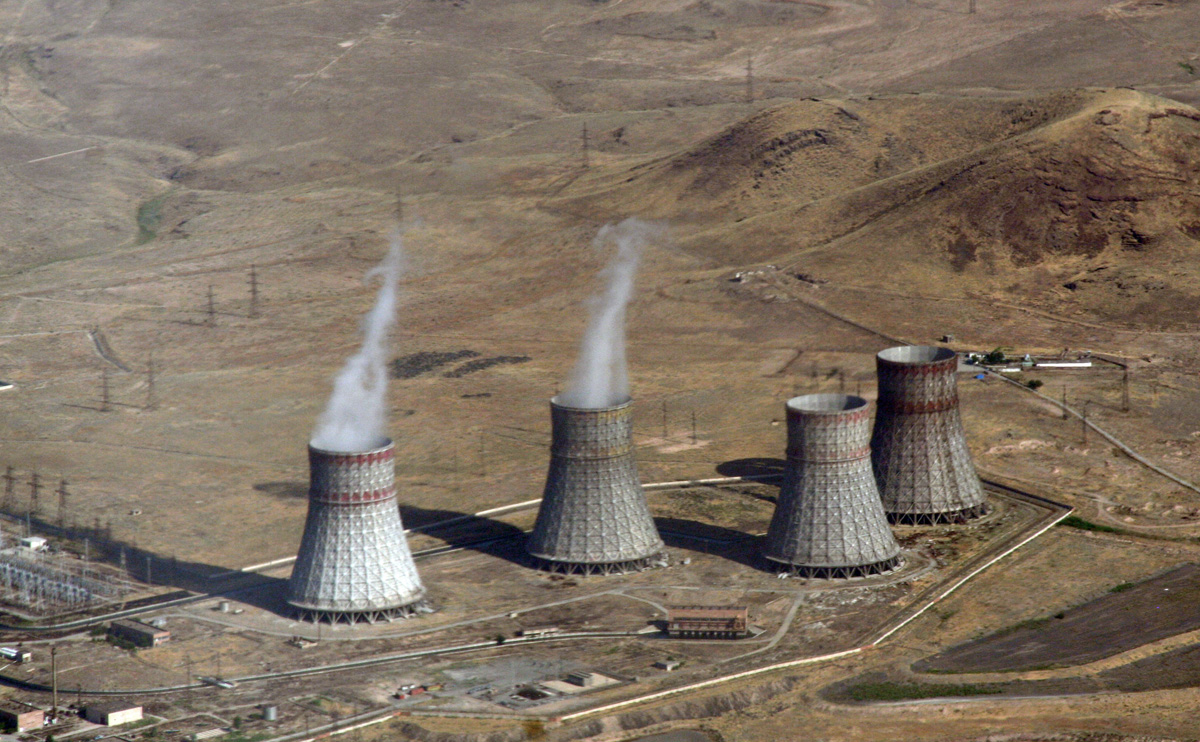
Armenia reconsiders nuclear future as Rosatom offers replacement for aging Soviet reactor
Armenia is reconsidering its plans for a new nuclear power plant after a fresh proposal from Russia’s state nuclear corporation Rosatom and a s...
News

Publish date: January 9, 2026
News
Our November Nuclear Digest by Bellona’s Environmental Transparency Center is out now. Here’s a quick taste of just three nuclear issues arising in Ukraine, Russia and worldwide that our analysts have been discussing. Stay tuned below for the entire digest and lots more nuclear news.
“Virtually unacceptable.” That’s how Bellona’s nuclear experts describe various proposals for the so-called “divided” or “50/50” operation of the Zaporizhzhia Nuclear Power Plant in our latest Nuclear Digest. This refers to the idea of somehow dividing management of the enormous, six-reactor complex between the Russian and Ukrainian sides—a notion that has emerged in many of the peace proposals under discussion to end the war in Ukraine. Basically, “50/50” operation describes a scheme wherein Russia and Ukraine—and in some iterations, the United States—would jointly operate the plant that Russian troops overran early in the war as part of any peace brokered between the nations.
Our nuclear experts say this approach is doomed on all fronts. First, using plant’s shared cooling, control, power supply and safety systems in some sort of bifurcated manner would be next to impossible, and attempts to do so would seriously degrade overall plant safety.
Further, who, in fact, would be in charge? Which side would issue key commands in the event of an emergency (of which, in time of war, there is no shortage)—and in what language would they be communicated? What country’s nuclear regulator would be responsible for ensuring safety and radiation safety regimens, and whose regimens would be observed? Which side would legally own the nuclear fuel used at the plant and make sure that its use complies with international nonproliferation norms? How would the US-origin Westinghouse fuel burning in four of Zaporizhzhia’s reactors be treated? And how would a technical staff comprised of people from bitterly warring sides be expected to cooperate?
The questions are almost too numerous to list. But a final one we propose would be: Is this the sort of world we want to live in? A divided Russian-Ukrainian operation of the Zaporizhzhia complex would only serve to normalize the taking of nuclear plants as prisoners of war—then when peace comes, dividing the baby with Solomon’s sword.
As before, we at Bellona stipulate that the only safe outcome for the Zaporizhzhia nuclear plant is to return it to Ukrainian hands. Read our full commentary here.
The US played a role in other recent nuclear developments, this time in Hungary. A White House meeting between US President Donald Trump and his Hungarian counterpart Victor Orban in November yielded a $114 million deal for Westinghouse to supply fuel to the Russian-built PAKS I nuclear plant, a supply ample enough to run the plant’s four Soviet-style VVER-440 reactors for about a year. The US side also agreed to lift any trade restrictions impacting the construction of the Rosatom-built PAKS II nuclear plant—a project that makes Hungary the sole EU member state where a Russian nuclear plant is currently under construction.
Our analyst Dmitry Gorchakov says this development is notable given Hungary’s close cooperation with Rosatom and Budapest’s efforts to block EU-wide sanctions on the Russian nuclear behemoth. Hungary’s opposition to such measures has somewhat frayed the Brussels response to Moscow’s invasion of Ukraine.
Still, Gorchakov notes that even Hungary, despite its warm ties to Moscow, is seeking to diversify its nuclear fuel supplies amid western pressures to abandon Russian sources. The US agreement offers further evidence of that—though for the US side, the deal is likely driven by commercial, rather than political, considerations. Foremost in Trump’s foreign policy is securing deals for US companies—like Westinghouse.
The lifting of US restrictions on supplies to the PAKS II plant places Hungary and the EU at fork in the road—with one route encouraging EU unity against Russia’s invasion while the other further unravels it. With Westinghouse able to cover some of the demands for fuel that have traditionally been filled by Russia, Hungary can scarcely continue to oppose sanctions by arguing that its energy security depends upon trade with Rosatom.
However, very fact that the PAKS II project is getting the US nod to continue trade relations with Russia may give other EU countries reason to argue that they should get the same relief. Read more about this conundrum here.
In Kazakhstan, new laws on “subsoil use” could set the stage for a major expansion in nuclear cooperation between Astana and Moscow. Legislation passed in November envisages adding uranium processing to Kazakhstan’s role as the world’s largest uranium exporter—with a little enforced help from its foreign partners.
Essentially, foreign customers contracting to mine uranium in Kazakhstan will also be required to build and operate uranium conversion and enrichment facilities for what they mine, as well as commit themselves to buying at least half of what these new facilities produce.
It’s a novel idea that Bellona analyst Dmitry Gorchakov says fits into Kazakhstan’s long-term strategy for developing and diversifying its nuclear sector—especially now that Russia and China are leading consortiums to help Astana build its first two nuclear power plants. By adding enrichment capabilities to its already extant mining and conversion capabilities, Kazakhstan is eliminating a bottleneck in the process that could allow it to eventually fuel its own reactors, says Gorchakov.
While it’s still unclear if China, Russia and other foreign partners Kazakhstan has will fully buy into the new legislation, the dependence of Russia and China on Kazakh uranium likely means they will. See what else we think about these developments here.
For our complete coverage of international nuclear industry issues though November, read the whole digest, out now! Subscribe to our mailing list to stay informed about future issues. Download a PDF of this digest here.
Armenia is reconsidering its plans for a new nuclear power plant after a fresh proposal from Russia’s state nuclear corporation Rosatom and a s...

Russia’s state nuclear corporation Rosatom has taken full control of one of the country’s largest logistics companies, consolidating an expanding tra...
August brought signs of growing pressure on several fronts for Russia’s state nuclear corporation Rosatom, from questions surrounding major construct...
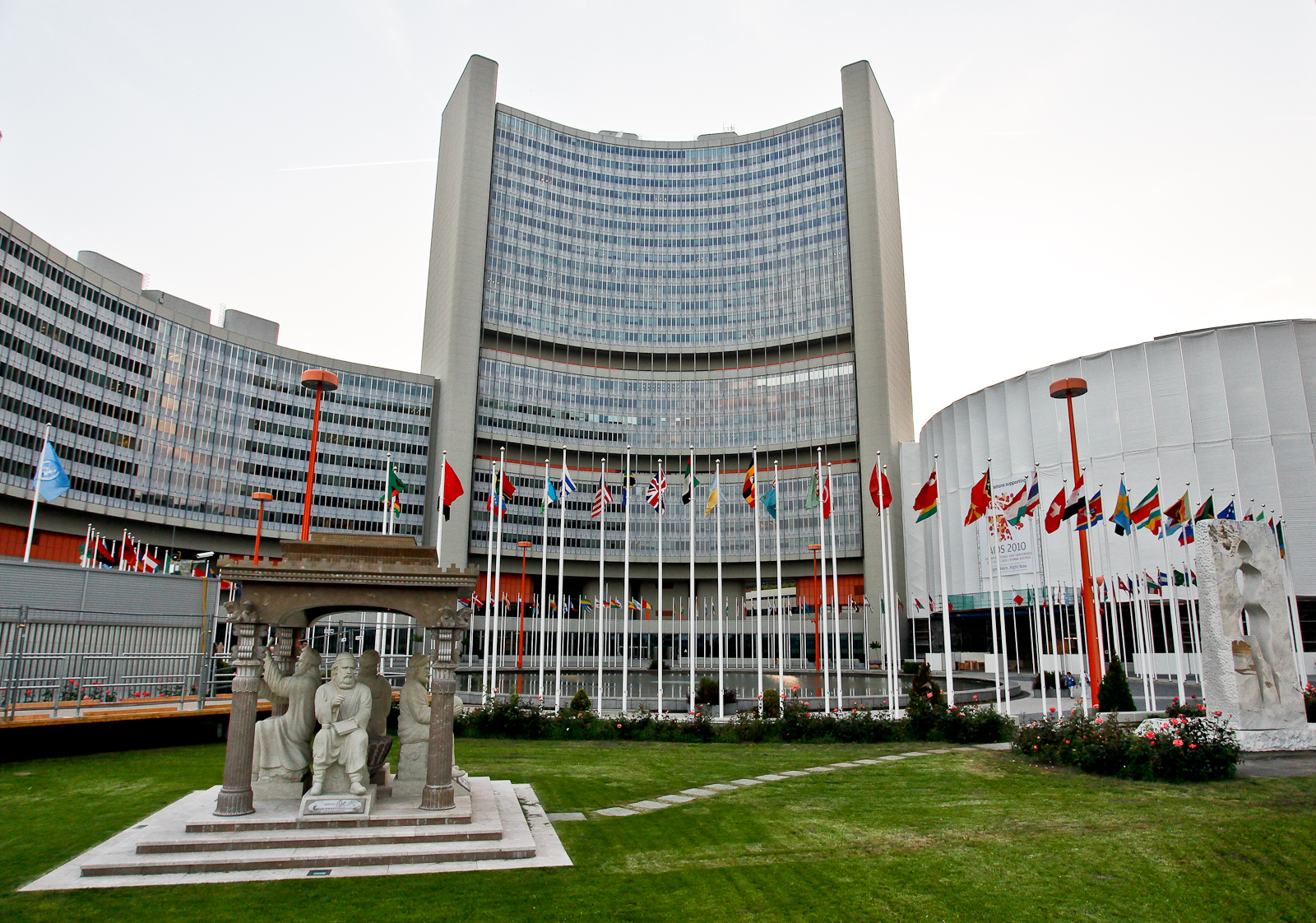
The International Atomic Energy Agency has suspended one of its most senior Russian officials — but for reasons largely unrelated to the questions ab...