
From reactors to shipping: Rosatom tightens its grip on Russian transport
Russia’s state nuclear corporation Rosatom has taken full control of one of the country’s largest logistics companies, consolidating an expanding tra...
News

Publish date: October 26, 2016
News
In its newly launched policy brief, Bellona explains why Carbon Capture and Use/Utilisation methods, except for those allowing for permanent storage of CO2, should be excluded from the ETS.
The full brief can be accessed here.
The usage/utilisation of captured CO2 (CCU) is incorrectly mentioned to be an equivalent alternative to CCS. While there are methods of permanently storing CO2 by using CCU technologies, such as mineralisation, the usage of captured CO2 in chemicals and fuels does not contribute to significantly lowering the level of CO2 in the atmosphere. Synthetic fossil fuels produced by adding captured CO2 to clean, renewable hydrogen (H2) is wrongly branded as “renewable natural gas”. Fossilising hydrogen to produce synthetic methane merely delays the CO2 from being emitted.
The distinction between permanent (e.g. CCS and mineralisation) and temporary solutions (e.g. synthetic methane and chemicals) must be made when considering to invest in solutions that are meant to resolve the major challenge of limiting and reducing the level of CO2 in the atmosphere. Although a CCU infrastructure can be a stepping stone for the deployment of CCS, there is a real danger that governments will boost the profitability of CCU for industries. This will likely form an obstacle that prevents permanent CO2 solutions from being developed.
CCU is a stepping stone towards CCS
The development of a CCU infrastructure should serve as a stepping stone towards the deployment of CCS. Although CCU can be used to prevent CO2 from entering the atmosphere in the case of mineralisation, CCS will be required to deeply decarbonise industry and households, as in the case of Leeds. Furthermore, usage of CO2 arising from biogenic sources (i.e. sewage) should be preferred to the utilisation of CO2 from fossil sources.
Synthetic methane should not be called “renewable”
Synthetic methane should not be referred to as “renewable natural gas”. This name gives the false impression that the burning of the gas does not increase the levels of CO2 in the atmosphere. The CO2 emitted from a facility using this gas is still CO2, and it will contribute to global warming.
Use H2 directly as a zero-emissions fuel
Hydrogen should be used directly in industries and households. Industrial complexes should not have the ability to claim the available hydrogen in order to convert it to synthetic methane. Fossilising it by adding CO2 in order to produce synthetic fuels offsets the positive characteristics of H2, namely that it does not emit anything but water at combustion.
Exclude non-permanent CCU from ETS
It is imperative that CCU methods, except for those allowing for permanent storage of CO2, are excluded from the ETS of the European Union. Including non-permanent CCU in the system could not only incentivise industries to produce more CO2, as this would become a commodity, but it could also allow the CO2 to be emitted without being accounted for by the ETS.
The full report can be accessed here.
Russia’s state nuclear corporation Rosatom has taken full control of one of the country’s largest logistics companies, consolidating an expanding tra...
August brought signs of growing pressure on several fronts for Russia’s state nuclear corporation Rosatom, from questions surrounding major construct...

The International Atomic Energy Agency has suspended one of its most senior Russian officials — but for reasons largely unrelated to the questions ab...
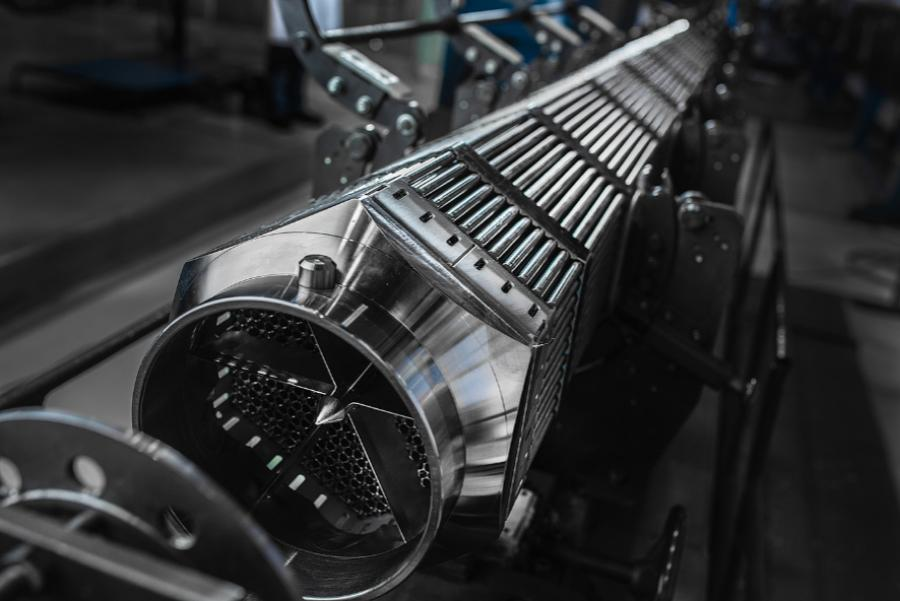
Europe’s effort to break its dependence on Russian nuclear fuel has a paradox in Germany: making Russian-designed fuel without buying it from Russia ...