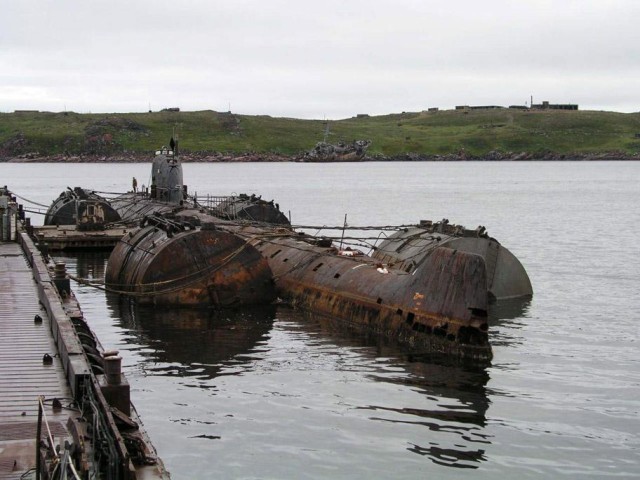
The system built to manage Russia’s nuclear legacy is crumbling, our new report shows
Our op-ed originally appeared in The Moscow Times. For more than three decades, Russia has been burdened with the remains of the Soviet ...
News

Publish date: March 14, 2014
Written by: Joanna Ciesielska
News
The book is a welcome addition to the existing literature on CCS and takes a clear stance – CCS is an essential technology for a low-carbon society. As the press release of the book’s publishing states: “Whether we like or not, we simply won’t be able to transition overnight to a world that is carbon neutral for its energy.”
The book, published by Imperial College Press, is the first volume in the Berkeley Lectures on Energy and covers topics such as chemical engineering, material science, and geology, how to estimate the CO2 that can be stored in a geological formation, how to use a molecular model of pore architecture to optimize the performance of a membrane and how to consider the importance of heat integration in amine scrubbing. It is aimed at students taking environmental science courses, but could also be useful for professionals or policy makers seeking an overview of central issues.
Lead author Berend Smit said of the topic of the book: “If society would take the reduction of carbon emissions seriously, we would be doing carbon capture and sequestration on a large scale because this is one of the only methods that allow us to continue to use fossil fuels yet reduce carbon emission. In fact, in our book we discuss how the world would look if we decide to burn all our coal reserves…. and this world does not look good. Of course, our hope is that we realize well before that the best way to sequester carbon is to leave coal and other fossil fuels in the ground, but as long as we are still on a trajectory of increasing our use of fossil fuels, we do need this plan B.”
The others authors are Jeffrey A Reimer, Curtis M Oldenburg For more information and for a sample chapter, see here.
Our op-ed originally appeared in The Moscow Times. For more than three decades, Russia has been burdened with the remains of the Soviet ...

The United Nation’s COP30 global climate negotiations in Belém, Brazil ended this weekend with a watered-down resolution that failed to halt deforest...

For more than a week now — beginning September 23 — the Zaporizhzhia Nuclear Power Plant (ZNPP) has remained disconnected from Ukraine’s national pow...

Bellona has taken part in preparing the The World Nuclear Industry Status Report 2025 and will participate in the report’s global launch in Rome on September 22nd.