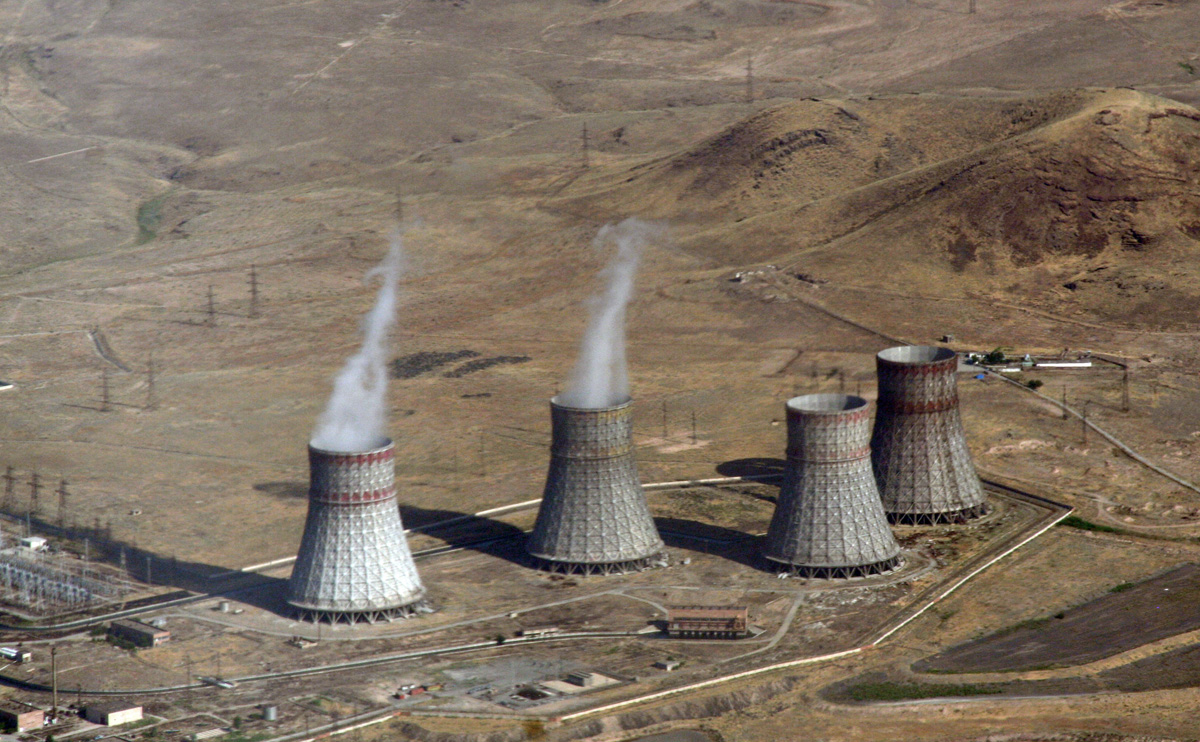
Armenia reconsiders nuclear future as Rosatom offers replacement for aging Soviet reactor
Armenia is reconsidering its plans for a new nuclear power plant after a fresh proposal from Russia’s state nuclear corporation Rosatom and a s...
News

Publish date: May 9, 2014
News
IPCC WGIII Co-Chair Ottmar Edenhofer urged the need for carbon negative emissions in order to avoid an increase in global mean surface temperatures by 3.7°C to 4.8°C over the course of the 21st century. In particular, he emphasized the importance of employing CO2 capture and storage (CCS) technologies in order to attain climate change mitigation goals cost-effectively. With regards to Bio-CCS Edenhofer argued that ‘whereas the potential risks stemming from mitigation with Bio-CCS are reversible, leaving climate change unabated can have irreversible consequences’. Bellona has always regarded Bio-CCS as a critical component of the fight against climate change and therefore welcomes the AR5’s conclusions related to this issue.
Emissions of CO2 are continuing to rise despite mitigation efforts and the financial crisis. This can be attributed to the fact that declines in carbon intensity with the switch from coal to gas, and improvements in energy efficiency have been overcompensated by GDP and population growth. Given these trends Edenhofer reiterated findings of the AR5, namely the need for a fundamental up-scaling of 310% from a business-as-usual scenario of low-carbon technologies. Edenhofer highlighted the importance of carbon pricing in signaling to investors the benefits of investing in low-carbon technologies and enabling a fundamental departure from business-as-usual. ‘If you cannot solve the problem, you should make it more complex’ said Edenhofer in his concluding remarks, by referring to the importance of building bridges between climate change and other global problems, and exploiting the synergies and co-benefits arising from such a systemic approach.
For the web streaming of the event see here.
More on Bio-CCS here.
Armenia is reconsidering its plans for a new nuclear power plant after a fresh proposal from Russia’s state nuclear corporation Rosatom and a s...

Russia’s state nuclear corporation Rosatom has taken full control of one of the country’s largest logistics companies, consolidating an expanding tra...
August brought signs of growing pressure on several fronts for Russia’s state nuclear corporation Rosatom, from questions surrounding major construct...
The International Atomic Energy Agency has suspended one of its most senior Russian officials — but for reasons largely unrelated to the questions ab...