
Germany wants independence from Russian nuclear fuel, using Rosatom as a bridge
Europe’s effort to break its dependence on Russian nuclear fuel has a paradox in Germany: making Russian-designed fuel without buying it from Russia ...
News

Publish date: September 15, 2011
News
In May this year The Bellona Foundation participated in the the public consultation process organised by the European Commission with a view to improving the offshore safety in Europe. The Bellona input to the consultation on an EU safety legislation for offshore oil and gas activity can be found here.
Requested use of best available environmental technologies
The oil and gas industry is an evolving industry continuously moving further into more complex subsurface structures and more challenging external environments (weather, depth, access to infrastructure etc.). As technology evolve so must the technical capability of the companies and the associated regulatory framework. In order to embrace this, Bellona recommended a requirement to apply existing and emerging best available technologies (BAT) should be made.
Bellona`s suggestion that BAT definitions and guidelines should be implemented in the offshore safety regulations was included in a resolution which was passed by Parliament earlier today. Such definitions are already coded in directives and reference documents concerning integrated pollution prevention and control for onshore industry (IPPC and IED).
“The use of best available techniques in existing legislations for onshore industry aims at reducing emissions and the impact on the environment as a whole. A similar definition of best available technology in order to reduce risk in offshore petroleum activities should also be applied”, says Eivind Hoff, director of the Bellona Brussels office.
Compulsory emergency plans for all operations
“Development of new gas or oil fields in European seas should only be allowed if the company has prepared an adequate emergency plan and has sufficient funds to repair possible damage to the environment”, says a resolution passed by Parliament yesterday.
The resolution, which seeks to influence the new draft legislation, suggests to require approval of site-specific plans for all drilling in order to better protect the environment. Bellona suggested emergency plans should be compulsory, both when applying for an exploration- and production licenses.
“It is important that legislation stimulates prevention and limitation of oil spills. The law must give operators economic incentives to carry out rational actions and not neglect such actions in fear of worst case juridical consequences for the operators. It is important that the international community through the IMO (International Maritime Organisation), the EMSA (European Maritime Safety Agency), the EU and the national governments co-operate to agree on solid and feasible solutions”, says Laetitia Birkeland, legal advisor in Bellona.
Bellona recommended that both the exploration- and production licences should include separate authorisation processes of which some are 1) consent to carry out drilling 2) approval of an emergency response plan and 3) approval of an abandonment plan. Further it recommended that the hydrocarbon field operator’s Emergency response plan should be authorised by two instances; 1) The national competent authority and 2) the EMSA.
The need to enhance safety
There is a clear need to enhance efforts to minimize spills and emissions from the oil and gas industry. In recent years, Bellona has followed the developments in the industry with increasing concern. An alarming number of incidents and accidents show that the environment exposure represents a comprehensive risk. A prioritization of short-term returns, rather than safety requirements, has forced the organization to report Statoil (the largest operator on the Norwegian Self) – several times the last two years.
Europe’s effort to break its dependence on Russian nuclear fuel has a paradox in Germany: making Russian-designed fuel without buying it from Russia ...
Nearly four and a half years after Russia’s full-scale invasion of Ukraine, July offered fresh evidence of how difficult it remains to disentangle Ru...
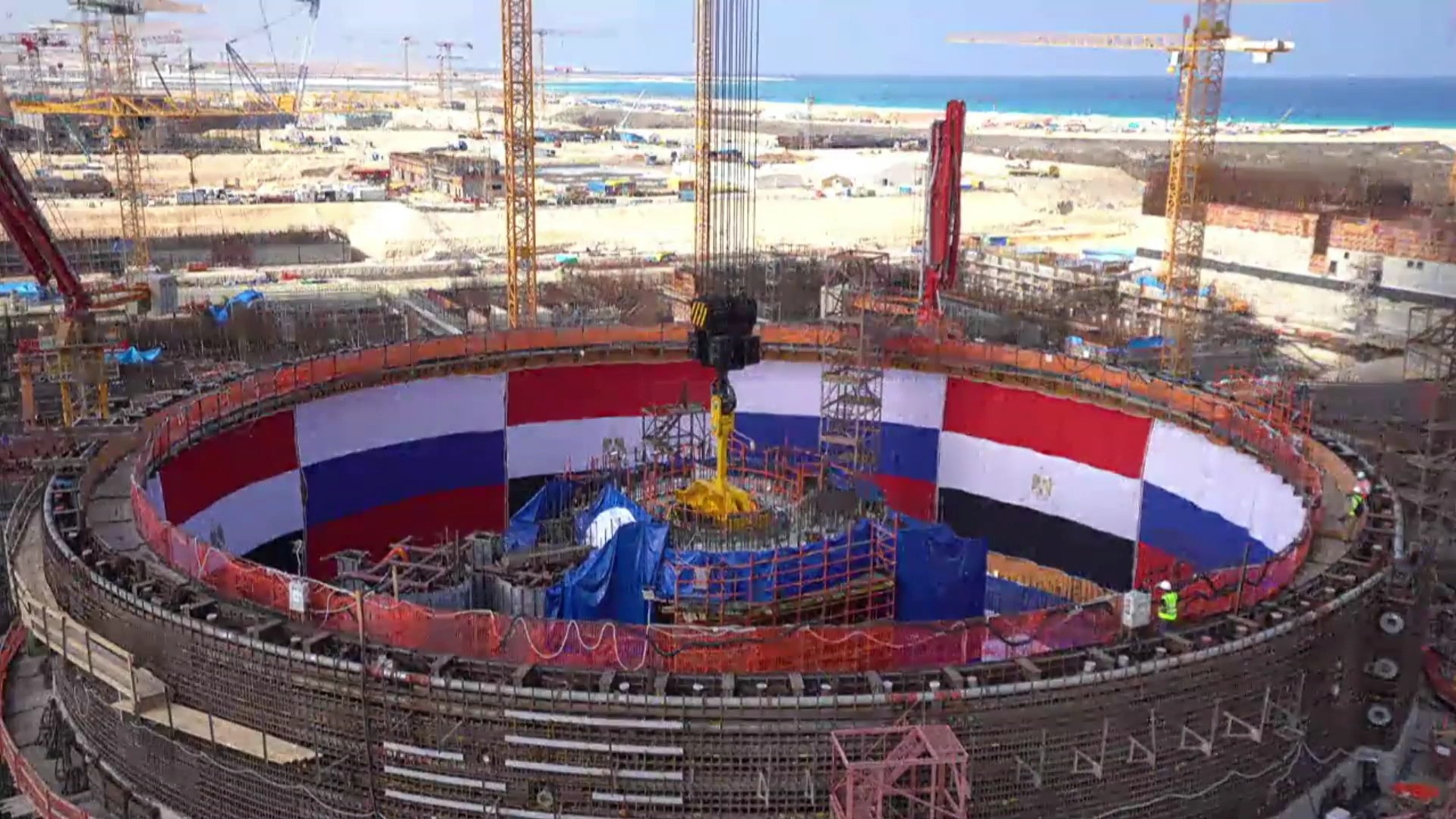
Just days after Egyptian nuclear authorities reportedly accused Rosatom of construction defects, poor management and vi...
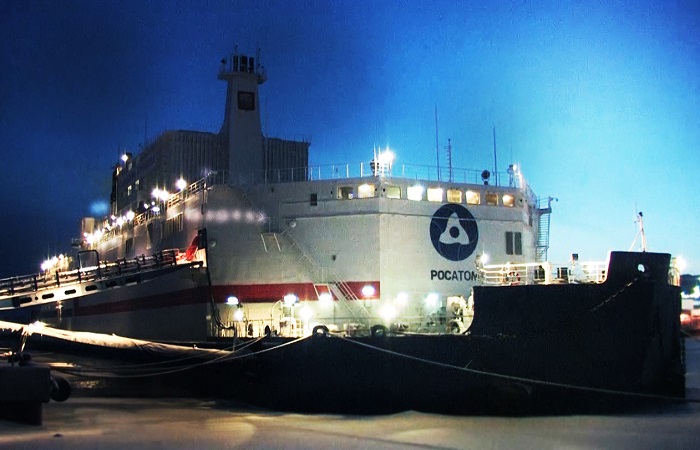
For years, the Akademik Lomonosov looked like one of the nuclear industry’s more eccentric experiments: two reactors mounted on a barge and tow...