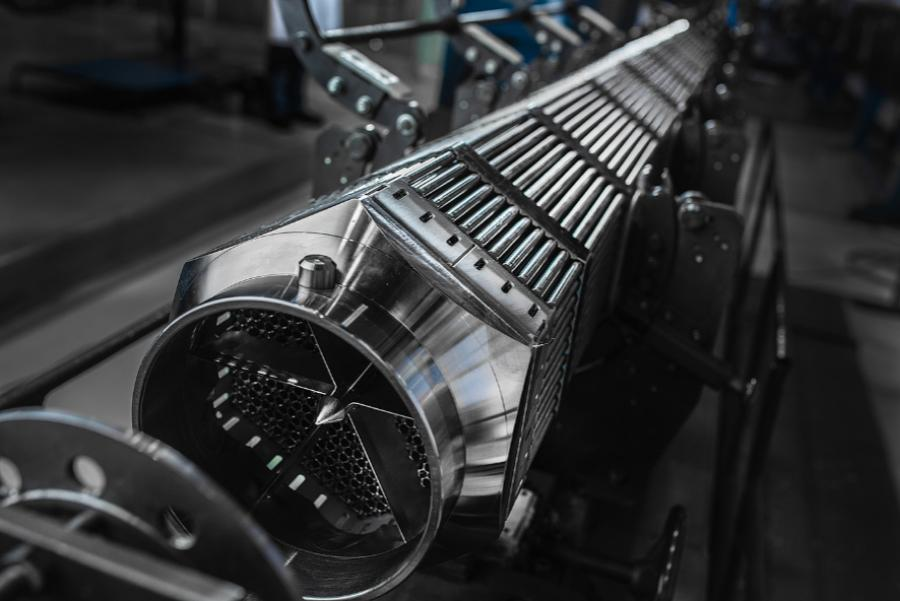
Germany wants independence from Russian nuclear fuel, using Rosatom as a bridge
Europe’s effort to break its dependence on Russian nuclear fuel has a paradox in Germany: making Russian-designed fuel without buying it from Russia ...
News

Publish date: August 8, 2011
Written by: Eivind Hoff
News
The study only looks into the two largest types of potential bio-CCS applications: Combining CCS with biomass combustion for heat and electricity, and biomass conversion to fuels.
‘The combination actually removes CO2 from the atmosphere,’ says Joris Koornneef from Ecofys in a press release. ‘The biomass extracts CO2 from the atmosphere during photosynthesis and the CCS takes out the CO2 released in the energy conversion process’.
Power plants and biofuels in the future could thus achieve a negative greenhouse gas balance, in other words become ‘carbon negative’. There are also other sectors where bio-CCS could play a role, e.g. in ammonia production.
In addition to the technical potential and the ‘realisable’ potential (taking account of energy demand scenarios), the ‘Ecofys report also makes an assessment of the economically feasible bio-CCS potential in power and transport: This could exceed 3 billion tonnes/year in negative CO2 emissions by 2050, but is highly sensitive to the CO2 emission price. The cheapest bio-CCS application in the short term will be in bio-ethanol production, but the carbon negative potential is greater when the biomass is allocated to power plants.
‘The report shows that the sustainable supply of biomass, rather than CO2 storage potential, will be the main limiting factor to bio-CCS. It reminds us of how crucial it is to develop new sources of biomass that can be scaled up massively,’ says Eivind Hoff from Bellona Europa. The Bellona Foundation is one of the partners in the Sahara Forest Project, which aims to develop biomass production in desert areas, using salt water.
Europe’s effort to break its dependence on Russian nuclear fuel has a paradox in Germany: making Russian-designed fuel without buying it from Russia ...
Nearly four and a half years after Russia’s full-scale invasion of Ukraine, July offered fresh evidence of how difficult it remains to disentangle Ru...

Just days after Egyptian nuclear authorities reportedly accused Rosatom of construction defects, poor management and vi...
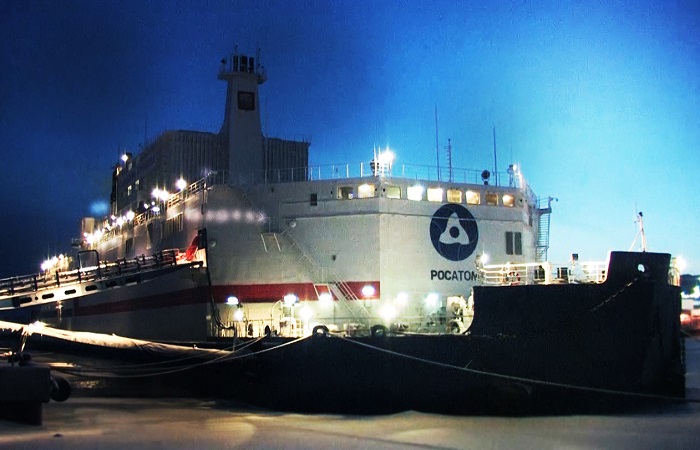
For years, the Akademik Lomonosov looked like one of the nuclear industry’s more eccentric experiments: two reactors mounted on a barge and tow...