
Germany wants independence from Russian nuclear fuel, using Rosatom as a bridge
Europe’s effort to break its dependence on Russian nuclear fuel has a paradox in Germany: making Russian-designed fuel without buying it from Russia ...
News

Publish date: November 17, 2010
News
“The problem of fires can not be solved within one state,” ERC Bellona executive director Nikolai Rybakov said during his opening remarks. “In Russia, this year it was a kind of ‘atmospheric Chernobyl.’ And we should note that fires are transboundary, and pollution is very often carried over into neighboring countries.”
“In today’s world we must address issues beyond national borders,” the General Director of Scientific Research Institute NII Armosphere, Andrey Nedre, added. “Fires had transboundary effects in the ecosystem of Russia, including the Arctic, and we believe that the problem of black carbon should be the subject of bilateral cooperation between Russia and the US. It requires reliable estimates of black carbon emission and its transfer.”
“I would like to recall the Nobel Laureate Vasily Leontiev,” Assocate Professor of the Department of Geography and Geoecology of St. Petersburg State University and Bellona expert Mikhail Amosov said.
“After returning to Russia he said that the problem of preserving the environment is something what unites people. Rich people cannot create a ‘good’ environment only for themselves, leaving the ‘bad’ environment to the poor. Therefore, cooperation is necessary in this area,” said Amosov.
At the plenary session main world’s of the coference, leading experts in this field gave speeches: Dr. Johann G. Goldammer (director of Global Fire Monitoring Center, Germany), Dr. Sarah Doherty (University of Washington, United States), Dr. Vladimir Shevchenko (Shirshov Institute of Oceanology, Russia), Vladimir Romanenkov (Institute of Agrochemistry, Russia), Dr. Nikolay Kovalev (head of National Aerial Forest Fire Centre, Russia), Karen Wood (State of Washington, Dept. of Ecology, United States), Sunny Uppal (UNECE), and others.
On the thematic sections, there were discussions about the impact of fires on the Arctic, the types of fires most affecting the Arctic in terms of location and season, the type of fire and category of burning, related effects (spreading to forest fires and peat bogs), fires caused by humans, and what can be done to reduce them, as well as their impact on health, safety and environment. There was also a review of practices and causes of open burning in different countries, specifically the United States and Canada, Europe, Russia and Ukraine, a review of legislation and regulations, alternatives to open burning and its influence, a discussion of strategies for reducing emissions from burning, and talks on future mitigation approaches and best practices.
The meeting was one of the largest international conferences ever conducted on fires in Eurasia and their implications for regional and global climate.
Europe’s effort to break its dependence on Russian nuclear fuel has a paradox in Germany: making Russian-designed fuel without buying it from Russia ...
Nearly four and a half years after Russia’s full-scale invasion of Ukraine, July offered fresh evidence of how difficult it remains to disentangle Ru...

Just days after Egyptian nuclear authorities reportedly accused Rosatom of construction defects, poor management and vi...
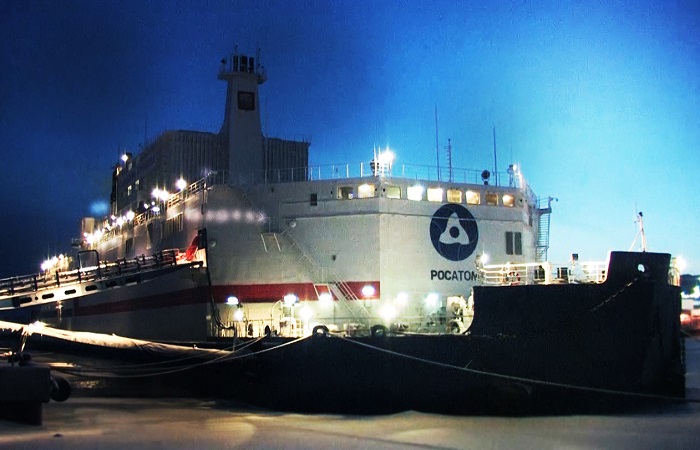
For years, the Akademik Lomonosov looked like one of the nuclear industry’s more eccentric experiments: two reactors mounted on a barge and tow...