
Germany wants independence from Russian nuclear fuel, using Rosatom as a bridge
Europe’s effort to break its dependence on Russian nuclear fuel has a paradox in Germany: making Russian-designed fuel without buying it from Russia ...
News

Publish date: July 25, 2010
Written by: Andrey Ozharovsky
Translated by: Maria Kaminskaya
News
It has long been no secret that male infertility can occur as one of the potential adverse effects of radiation exposure. As dangerous radionuclides enter the human body, a chain of alterations at a genetic level is set into motion, making natural conception impossible. According to latest research, the average period during which Ukrainian couples make a dedicated effort to conceive a child is 2.5 years. If this tendency does not improve, Ukrainian doctors say, there will soon come a time when more and more families will have to resort to artificial insemination in order to have a child.
Other risks are equally distressing: Even if successful, fertilisation with DNA-damaged sperm may lead to irreversible abnormalities in embryonic development, triggering severe disorders, developmental pathologies, and DNA changes in the foetus.
Demographic research by the UN confirms that Ukraine has the world’s lowest population growth rate. There are 45.9 million people living in the country, the state statistics authority, Goskomstat, says, and, according to the UN, if the present mortality rates do not subside, Ukraine’s population will sink to 39 million people by 2030.
Both researchers and environmentalists warn that radiation is detrimental for the population’s reproductive health – and that holds true for both unforeseen radioactive discharges that take place as a result of numerous accidents at nuclear power plants and for those that occur in the course of a site’s normal operation. These facts, however, are steadfastly denied by the nuclear authorities as they claim nuclear power plants are absolutely safe.
In Russia, the state nuclear corporation Rosatom has plans to build 26 new reactors – an ambition that threatens to aggravate the situation with radiation safety and background radiation levels in the country, and, by extension, intensify the existing trend of population loss. Building new reactors in regions that have been severely affected by nuclear and radiation accidents – such as at Chernobyl or at the Siberian Chemical Combine, a uranium-enrichment plant near the Siberian city of Tomsk – is deemed especially ill-advised.
 Photo: New Scientist, 2010
Europe’s effort to break its dependence on Russian nuclear fuel has a paradox in Germany: making Russian-designed fuel without buying it from Russia ...
Nearly four and a half years after Russia’s full-scale invasion of Ukraine, July offered fresh evidence of how difficult it remains to disentangle Ru...

Just days after Egyptian nuclear authorities reportedly accused Rosatom of construction defects, poor management and vi...
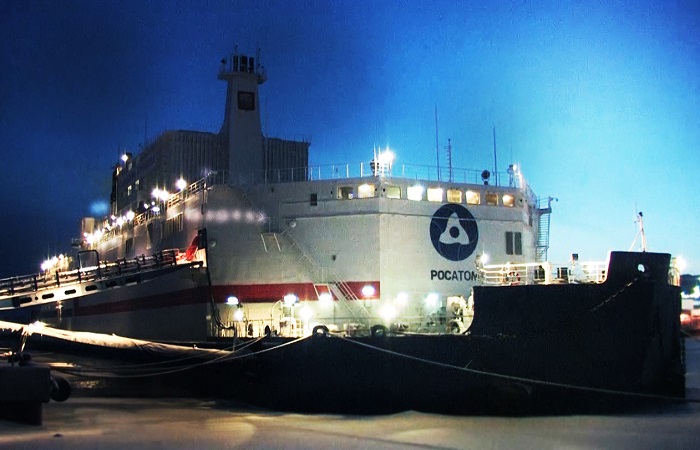
For years, the Akademik Lomonosov looked like one of the nuclear industry’s more eccentric experiments: two reactors mounted on a barge and tow...