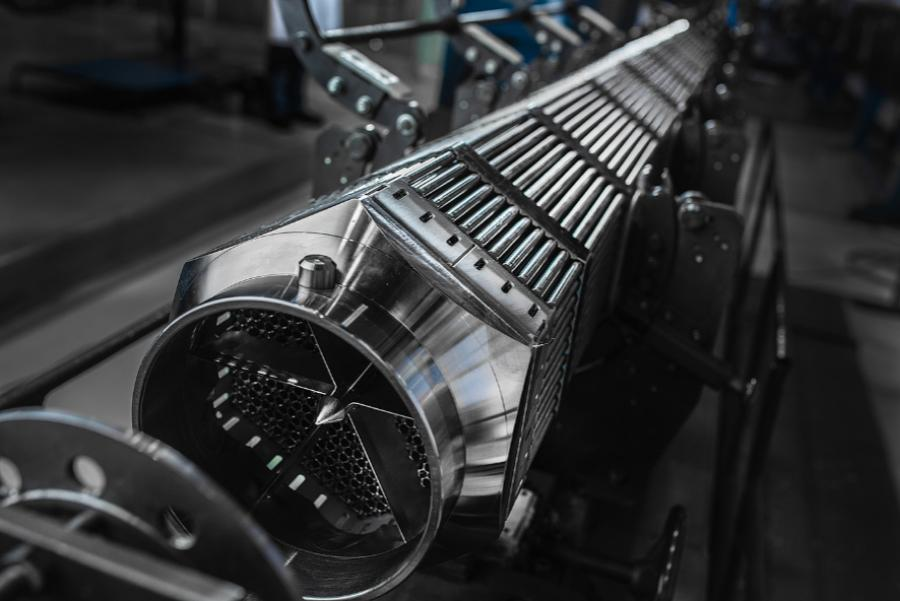
Germany wants independence from Russian nuclear fuel, using Rosatom as a bridge
Europe’s effort to break its dependence on Russian nuclear fuel has a paradox in Germany: making Russian-designed fuel without buying it from Russia ...
News
Publish date: January 7, 2009
News
The Institute of Marine Research has created a numerical model for calculating the spread of salmon lice. Salmon lice spread during the first three stages of the louse’s life cycle, before the copepodite becomes parasitic and has to attach itself to a host to survive. The salmon louse’s potential for spreading is therefore a function of current, wind and the time it takes for the louse to pass from the free-swimming planktonic phase to the immobile parasitic phase.The time it takes before the parasitic phase begins is highly dependent on water temperature. In general, colder temperatures will lead to slower development (Jonson et al., 1991a) and a greater potential for spreading over longer distances.
At 8°C it will take approximately 4.5 days from hatching until the salmon louse is infectious, after which they can be infectious for up to 23 days. For 12°C, the corresponding figures are approx. 2.5 and 13 days (Boxaspen, K. et al., 2000). That is, at 8°C the salmon louse can spread for almost a month, whereas at 12°C the potential spreading period is cut in half. Given the typical current speeds in Western Norwegian fjord areas, this means that the salmon louse can be carried several hundred kilometres from where it hatched and still be capable of infesting salmon (Asplin, L. et al., 2002).
Europe’s effort to break its dependence on Russian nuclear fuel has a paradox in Germany: making Russian-designed fuel without buying it from Russia ...
Nearly four and a half years after Russia’s full-scale invasion of Ukraine, July offered fresh evidence of how difficult it remains to disentangle Ru...
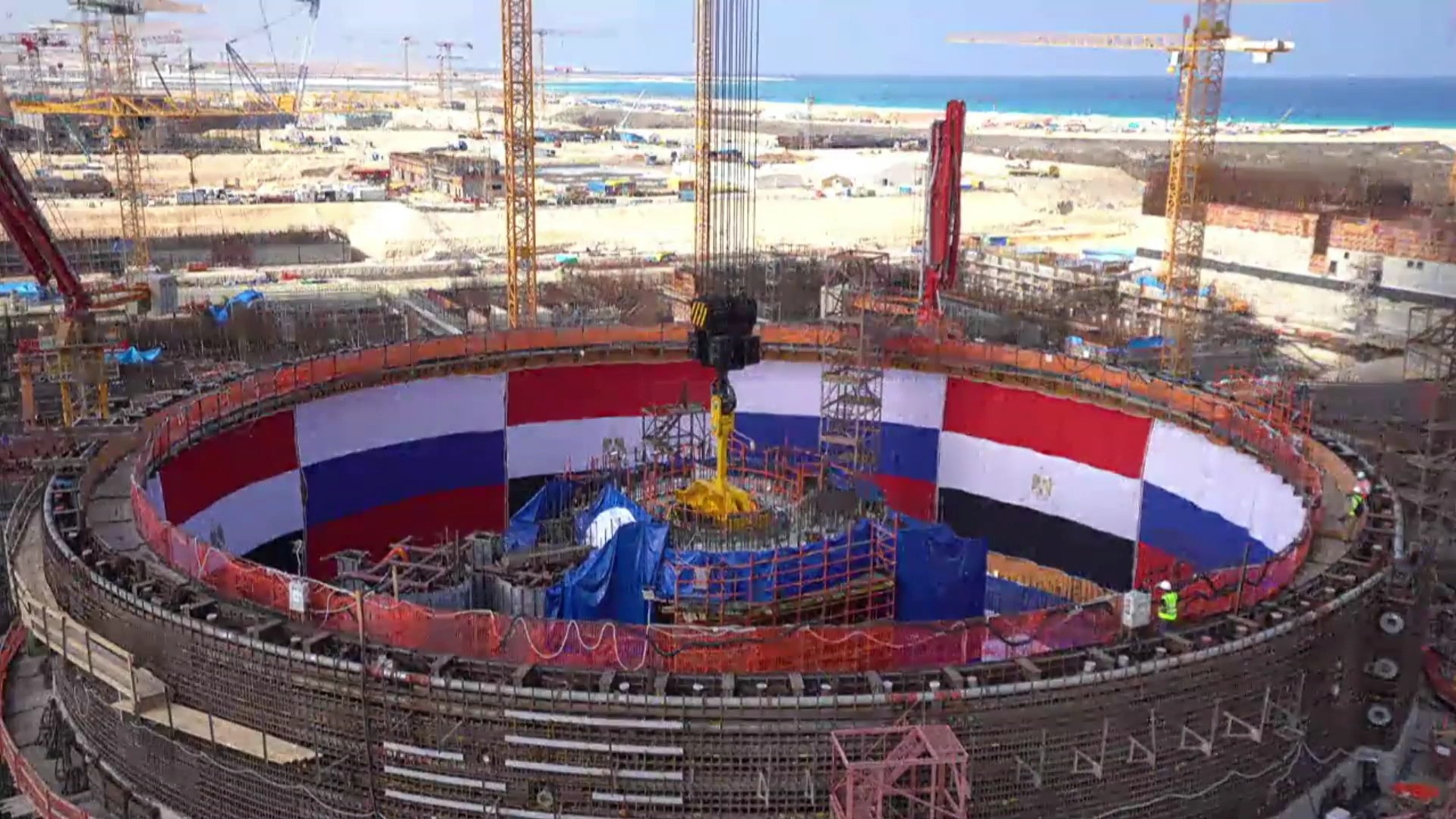
Just days after Egyptian nuclear authorities reportedly accused Rosatom of construction defects, poor management and vi...
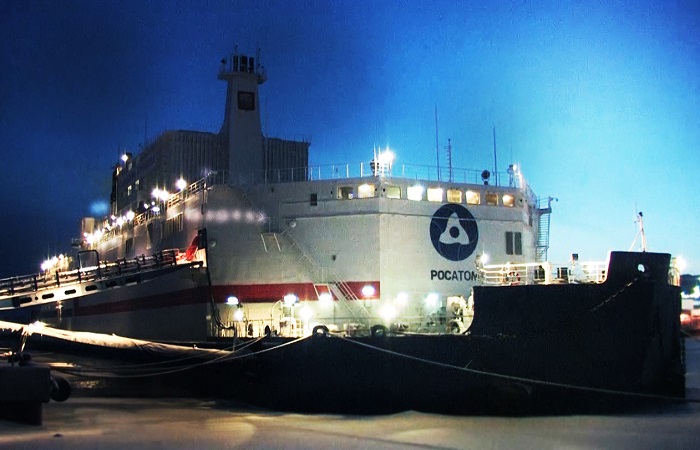
For years, the Akademik Lomonosov looked like one of the nuclear industry’s more eccentric experiments: two reactors mounted on a barge and tow...