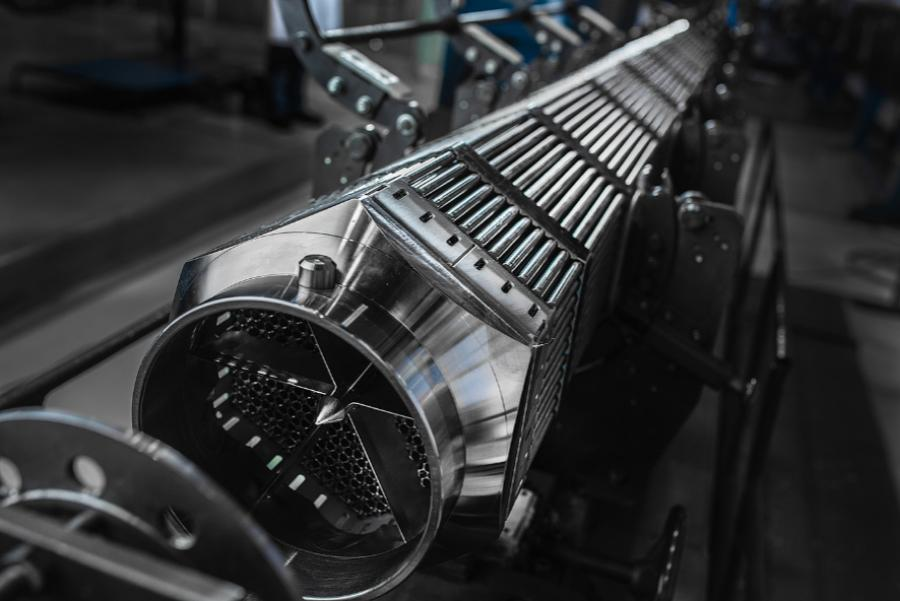
Germany wants independence from Russian nuclear fuel, using Rosatom as a bridge
Europe’s effort to break its dependence on Russian nuclear fuel has a paradox in Germany: making Russian-designed fuel without buying it from Russia ...
News
Publish date: June 1, 2009
News
There had been fears about the reprocessing facility’s future after the shut-down by staff of an essential 50-year-old piece of equipment called an evaporator when workers detected a slight rise in activity in the evaporator’s top coils, a spokesman for Sellafield, Ltd., Sellafield’s operator, said.
Evaporators are used in the condensing of highly radioactive liquid. Management has said that the higher level of activity detected in Evaporator B – one of three at use at Sellafield – had been investigated and rectified, and that it would be returned to service by the end of the week.
“The likely cause was residual activity being removed from the coils following an extended period out of service,” said Sellafield Ltd. in a statement.
“Due to the age of the facilities and the nature of the liquor that they process, corrosion within the evaporators is not a new issue,” the statement continued.
“The potential for activity breakthrough from the evaporator coils is an anticipated scenario, and extensively covered by our plant monitoring equipment, procedures and safety case,” said Sellafeild, Ltd.
Sellafield management moved quickly to reassure the 10,000-strong workforce about closures or reduced operations, the Whitehaven News reported.
The biggest threat was to Thorp because the remaining two evaporators were needed to deal with the high hazard radioactive liquor stocks and Magnox reprocessing.
The news is not encouraging for the environmental sector. When told Evaporator B had been shut down by Sellafield authorities, Nils Bøhmer, Bellona’s nuclear physicist and an expert on Sellafield, said: “This (…) is another nail in the coffin for the Thorp facility.”
Bøhmer said that Sellafield is an old facility that is difficult to run. “This incident (with the evaporator) shows exactly that – this is not a top notch facility but an old one that needs lots of maintenance,” he said.
Europe’s effort to break its dependence on Russian nuclear fuel has a paradox in Germany: making Russian-designed fuel without buying it from Russia ...
Nearly four and a half years after Russia’s full-scale invasion of Ukraine, July offered fresh evidence of how difficult it remains to disentangle Ru...
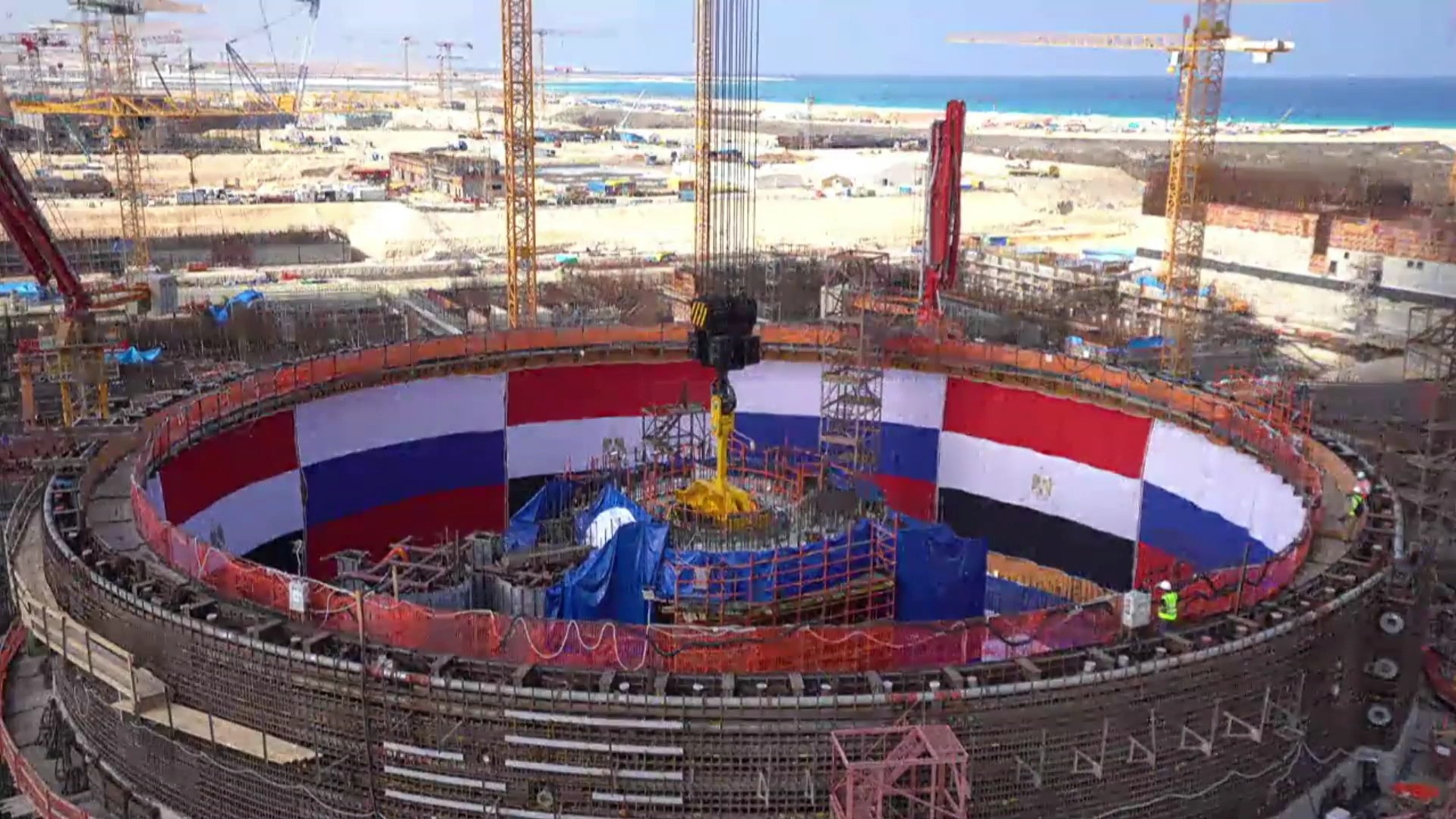
Just days after Egyptian nuclear authorities reportedly accused Rosatom of construction defects, poor management and vi...
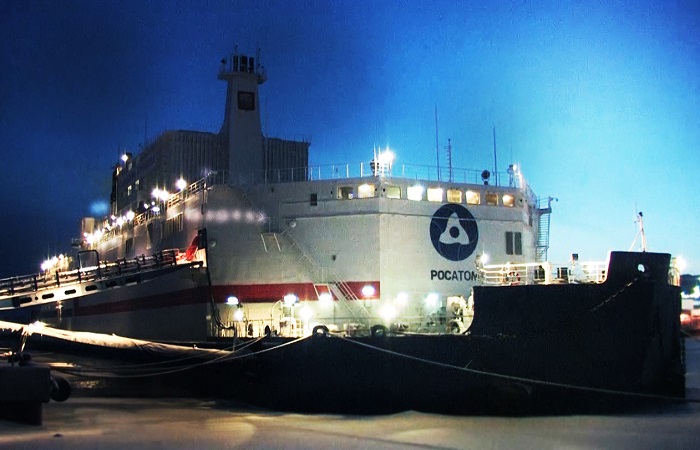
For years, the Akademik Lomonosov looked like one of the nuclear industry’s more eccentric experiments: two reactors mounted on a barge and tow...