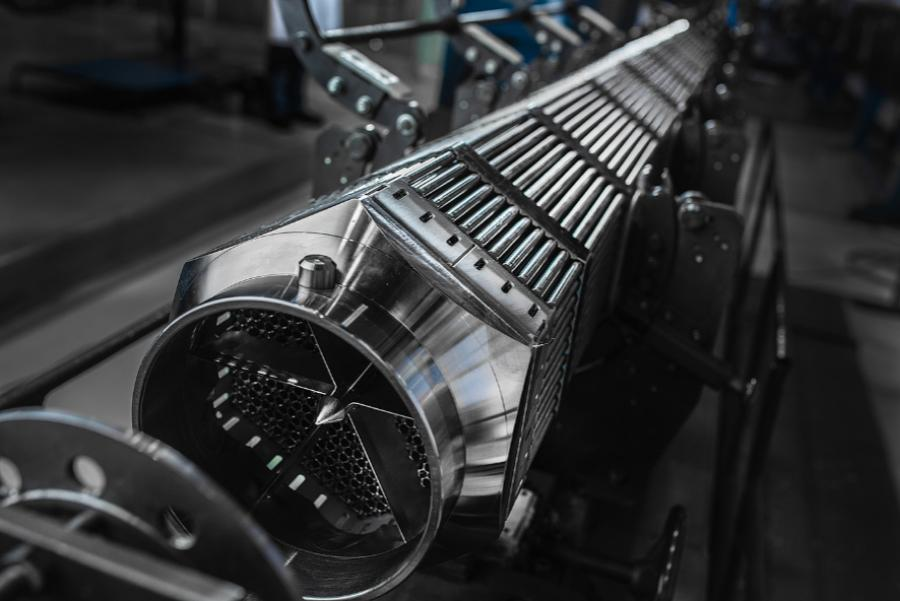
Germany wants independence from Russian nuclear fuel, using Rosatom as a bridge
Europe’s effort to break its dependence on Russian nuclear fuel has a paradox in Germany: making Russian-designed fuel without buying it from Russia ...
News
Publish date: February 6, 2007
News
The St. Petersburg-based ship maker said the 50 Years of Victory icebreaker has been towed along the narrow Neva Riva to the St. Petersburg seaport and will undergo a series of tests to check its manoeuvrability and speed performance in the open sea.
"Experts will also test the ship’s navigation and communications systems, water-purification and anti-freezing equipment and other devices, whose performance cannot be checked near shore," the company’s press service said.
An upgrade of the Arktika-class icebreaker, the 159-meter (522-foot) long and 30-meter (100-foot) wide vessel, with deadweight of 25,000 metric tons, is designed to break through ice up to 2.8 meters deep (9.2 feet). It has a 138-man crew.
The Russian nuclear-powered icebreaker fleet, which is operated by the Murmansk Shipping Company, currently consists of five Arktika-class icebreakers (Arktika, Sibir, Rossiya, Sovetskiy Soyuz, and Yamal), and two Taymyr-class river icebreakers (Taymyr and Vaygach).
The icebreaker was launched in 1989 but could not be completed before 2006 due to the poor state financing.
Europe’s effort to break its dependence on Russian nuclear fuel has a paradox in Germany: making Russian-designed fuel without buying it from Russia ...
Nearly four and a half years after Russia’s full-scale invasion of Ukraine, July offered fresh evidence of how difficult it remains to disentangle Ru...
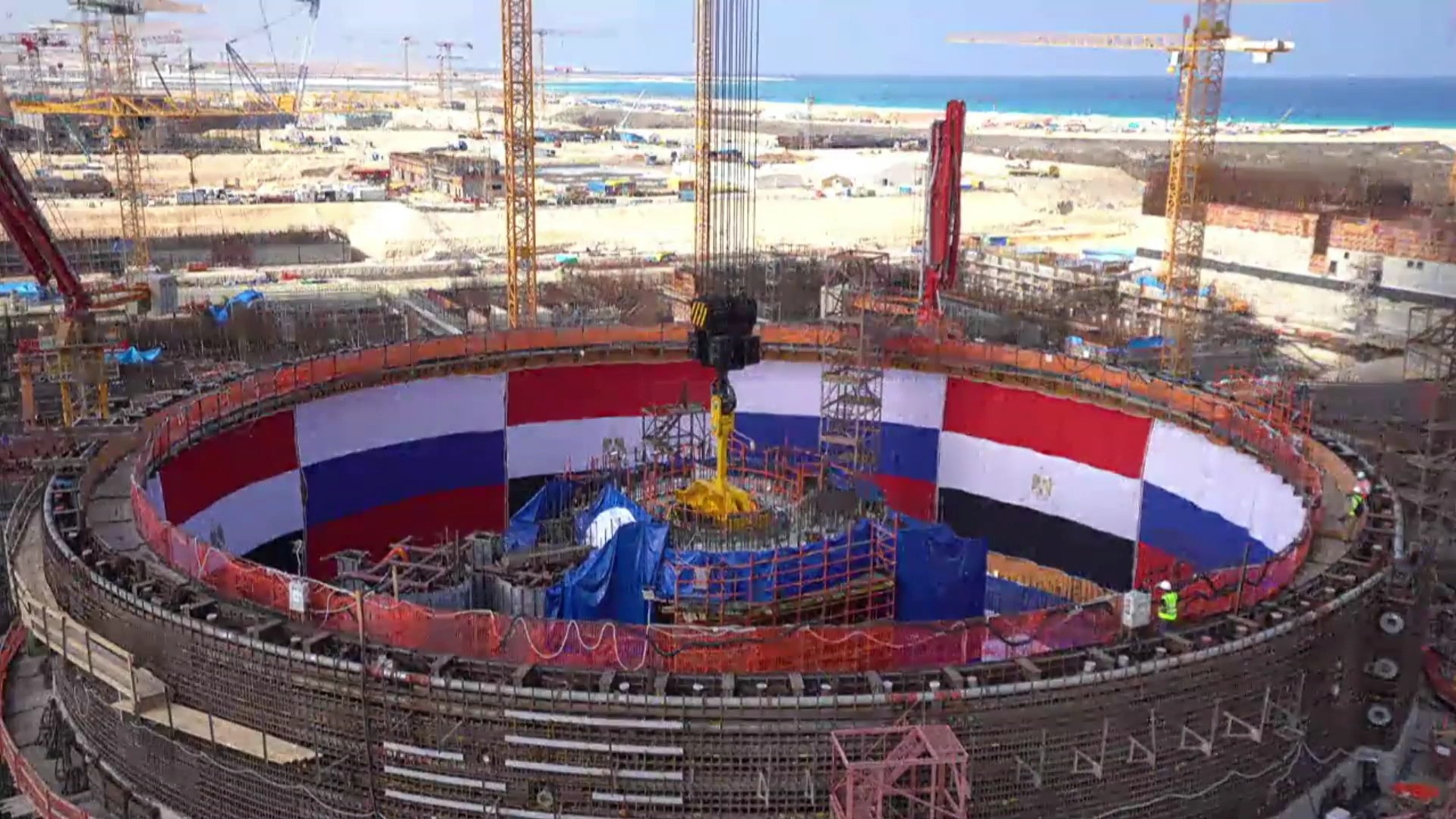
Just days after Egyptian nuclear authorities reportedly accused Rosatom of construction defects, poor management and vi...
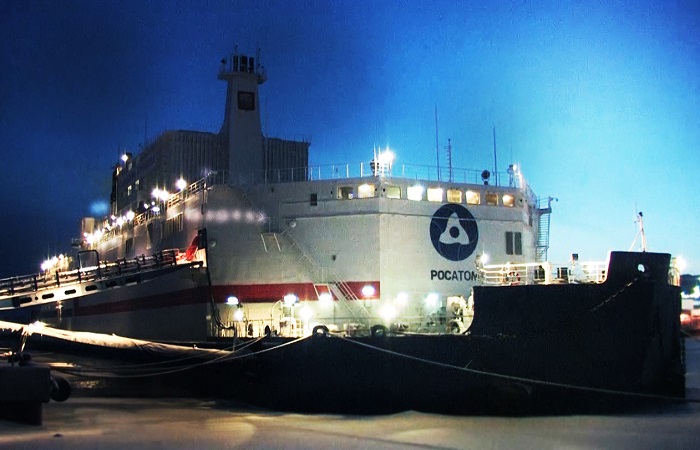
For years, the Akademik Lomonosov looked like one of the nuclear industry’s more eccentric experiments: two reactors mounted on a barge and tow...