Hungary weighs breaking with Rosatom as nuclear plant build tests Russian influence
Hungary’s new government is considering replacing Russia’s state nuclear corporation Rosatom as the main contractor for the Paks II nucle...
News
Publish date: November 9, 2026
News
Russia’s state nuclear corporation Rosatom is intensifying efforts to market floating nuclear power plants to African countries, promoting the technology as a relatively quick way to introduce nuclear electricity without the expense and infrastructure requirements of conventional land-based reactors. But Bellona experts warn that the technology raises questions about safety, costs and long-term dependence on Moscow.
At a gathering of Russian and African officials in Moscow in late October, Rosatom chief executive Alexei Likhachev said nine African countries had expressed substantial interest in floating nuclear plants. Talks with four of them — Egypt, Tanzania, Togo and Namibia — had reached a more advanced stage, he said.
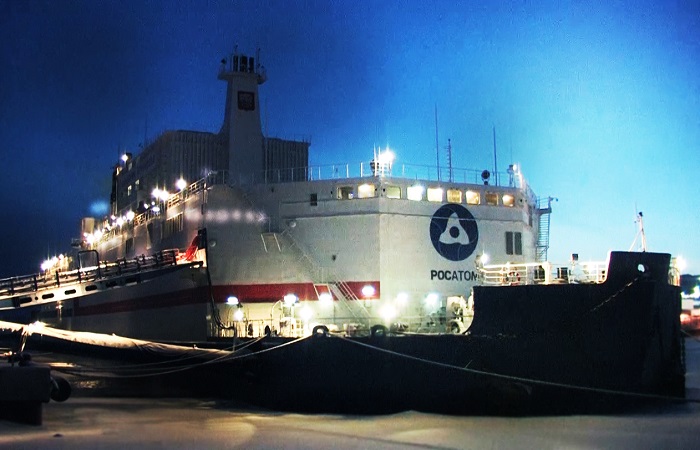
Russia’s experience with floating nuclear power plants centers on the Akademik Lomonosov, a barge-mounted facility equipped with two KLT-40S reactors that began supplying electricity to the far northeastern Russian port of Pevek in 2019 and started commercial operations in 2020.
Construction on that plant began in 2007, making it a project more than a decade in the making, with repeated delays and substantial cost overruns documented by Bellona. The plant was designed to replace the Bilibino nuclear plant in Russia’s Arctic Chukotka, but its lengthy development and the limited public information about its operating costs have raised questions about whether the technology can be deployed economically elsewhere. Rosatom’s proposed export plants would use newer RITM-200 reactors instead of the Akademik Lomonosov‘s older design.
Still, no African country has announced a binding contract to deploy a Russian floating nuclear power plant.
Bellona nuclear expert Alexander Nikitin sees Rosatom’s African ambitions as part of a broader Russian effort to compensate for the loss of European markets and political partnerships following its invasion of Ukraine.
“Since the war against Ukraine began, Russia has lost many of its allies and is looking for new ones, including by using Rosatom’s resources,” he said.
Nikitin argues that nuclear exports offer Moscow a means of establishing long-term political and economic relationships with countries that could become heavily dependent on Russian technology.
“Rosatom’s efforts to get into an African country and establish itself there with its project are a kind of desperate step and a political task assigned to it by Russia’s current leadership,” he said.
On October 28, Rosatom and representatives of Togo signed a memorandum of understanding covering peaceful nuclear cooperation, including floating power plants, infrastructure development and personnel training.
Togo has no commercial nuclear power industry, making floating reactors potentially attractive as a means of introducing nuclear electricity without constructing a large conventional plant.
The memorandum, however, specifies no reactor purchase, financing, location or construction timetable.
Egypt is already building the four-reactor El Dabaa nuclear power plant with Rosatom, while Tanzania and Namibia have explored various forms of nuclear cooperation with Russia.
Nikitin questions whether countries without established nuclear industries possess the trained personnel, regulatory institutions and technical infrastructure needed to support such projects.
“How realistic are Rosatom’s plans is impossible to say,” he said.
Rosatom is promoting floating plants generating approximately 100 megawatts, using variants of its RITM-200 reactor technology originally developed for nuclear-powered icebreakers.
Rather than selling the units outright, Rosatom proposes retaining ownership and supplying electricity under long-term contracts, while handling operations, maintenance and nuclear fuel.
Bellona nuclear expert Dmitry Gorchakov says this resembles the build-own-operate arrangement Rosatom has pursued at Turkey’s Akkuyu nuclear plant.
“Rosatom takes responsibility for all the major tasks, while the customer receives only what it needs and commits to purchasing it for a certain period at agreed prices,” he explained.
Gorchakov says newer RITM-200 reactor variants can operate for seven to ten years between refueling operations. This would allow floating plants to be returned to specialized Russian facilities for refueling and dry-dock maintenance rather than requiring those operations at their deployment sites.
“Rosatom’s idea is to tow the floating units back to a specialized base in Russia rather than build such infrastructure abroad and burden the customer with additional infrastructure that they do not really need,” he said.
The approach could spare host countries the expense of constructing specialized nuclear servicing facilities and maintaining extensive fuel-handling capabilities. But it would also make them reliant on Rosatom for electricity generation, reactor servicing and nuclear fuel over decades.
Nikitin calls the arrangement “a double-edged sword.”
“The main question is how much it costs,” he said.
He also raises questions about who would pay for maintenance, refueling, security and the consequences of accidents, and who would bear responsibility if nuclear or radioactive materials were stolen.
The financial terms of the proposed arrangements, including electricity prices, ownership structures and provisions for terminating contracts, have not been publicly disclosed.
Nikitin also warns that floating reactors introduce hazards beyond those associated with conventional nuclear plants.
“Floating nuclear power plants are no less dangerous than stationary ones, and possibly even more dangerous, because several new factors affecting their safety are added to those associated with land-based nuclear power plants,” he said.
These include threats to the stability and buoyancy of the floating structure from storms, tsunamis, collisions and hull damage. He also points to security challenges unique to maritime nuclear installations.
“While stationary nuclear power plants must be protected from the air and from the ground, floating plants must also be protected from underwater,” he said.
Floating reactors require periodic inspections and dry-dock maintenance, creating further logistical challenges for countries without suitable facilities. Gorchakov identifies additional regulatory questions, particularly if floating nuclear plants become widespread.
“The main challenge will arise if there are many such plants, simply because the number of nuclear facilities that need to be monitored and inspected worldwide could increase, including from a nuclear non-proliferation perspective,” he said.
He nevertheless sees potential safety and operational advantages in conducting refueling at specialized facilities rather than at deployment sites, where equipment and expertise may be limited.
“If refueling operations are carried out less frequently and at specialized facilities, this could be preferable to transporting fresh fuel to each individual FNPP every two to three years,” he said.
Russia has operated the Akademik Lomonosov for the past six years, but Nikitin questions whether that experience establishes the technology’s suitability for export. He points to the project’s lengthy construction and commissioning process and the scarcity of publicly available information about its operation.
“Knowing how many problems there have been with operating similar nuclear power installations on submarines and surface ships, this silence is troubling,” he said.
Nikitin also questions whether the economics of operating floating nuclear plants in tropical climates have been adequately demonstrated.
Aside from its proposals to countries in Africa, Rosatom is pursuing floating nuclear exports to Indonesia. In October, the corporation announced an agreement with PT Pembangkit Listrik Nuklir concerning two floating units with a combined capacity of approximately 200 megawatts for Halmahera Island.
Under the proposed arrangement, Rosatom would retain ownership while the Indonesian customer purchased electricity over a planned 60-year operating life.
The units have not yet been deployed, however, leaving their commercial performance and regulatory requirements untested in an export setting.
Hungary’s new government is considering replacing Russia’s state nuclear corporation Rosatom as the main contractor for the Paks II nucle...
Russia’s state nuclear corporation Rosatom made progress on two of its international reactor projects in recent weeks, bringing new generating ...
Armenia is reconsidering its plans for a new nuclear power plant after a fresh proposal from Russia’s state nuclear corporation Rosatom and a s...

Russia’s state nuclear corporation Rosatom has taken full control of one of the country’s largest logistics companies, consolidating an expanding tra...