Rosatom advances nuclear projects abroad as sanctions gaps and wartime ties draw scrutiny
Russia’s state nuclear corporation Rosatom made progress on two of its international reactor projects in recent weeks, bringing new generating ...
News
Publish date: October 29, 2026
Written by: Charles Digges
News
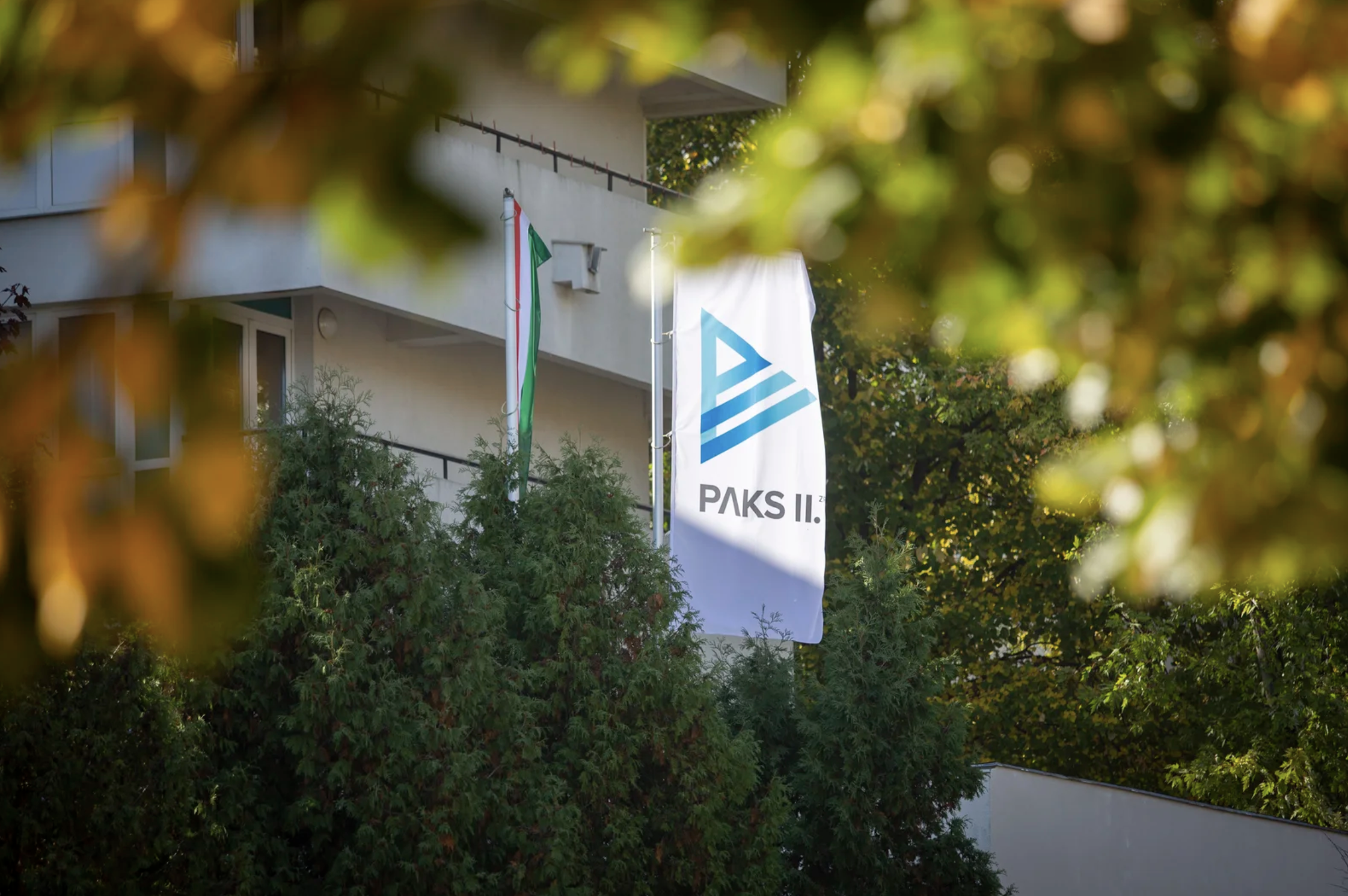
Hungary’s new government is considering replacing Russia’s state nuclear corporation Rosatom as the main contractor for the Paks II nuclear power plant, raising questions about whether Budapest is preparing to break with Moscow or simply seeking more favorable terms for a project already plagued by delays and rising costs.
According to an October 21 Reuters investigation, Prime Minister Péter Magyar’s government has begun exploring alternative suppliers as part of a comprehensive review of the €12.5 billion project, awarded to Rosatom by former Prime Minister Viktor Orbán in 2014.
The uncertainty has reached Rosatom’s leadership. Director General Alexei Likhachev acknowledged on October 23 that the project could either accelerate or be abandoned altogether, adding that the corporation had received no response to its requests for talks with the Hungarian government.
But Bellona nuclear expert Dmitry Gorchakov cautions against interpreting the reports as evidence that Hungary has decided to abandon Rosatom.
“I fear these rumors about a possible replacement, attributed to anonymous sources, are simply part of the debate now taking place indirectly between Hungary’s new government and Rosatom,” he said.
Paks II involves two Russian-designed VVER-1200 reactors intended to expand Hungary’s nuclear generating capacity. Construction has suffered repeated delays, with the first concrete poured only in February 2026.
By then, Hungary had already spent more than €2 billion on the project, including approximately €1.1 billion paid to Rosatom. Gorchakov says the threat of cancellation may be a negotiating tactic rather than a settled policy.
“Refusing to work with Rosatom would be the most radical measure, one that apparently was not even discussed during the election campaign,” he said. “It may be useful as a bargaining position, but that does not mean it will actually happen.”
He estimates that replacing the Russian contractor could delay construction by another five to ten years—about how long it would take to approve an alternative design and begin building.
There is at least one European precedent for breaking with Rosatom on a major construction project—Finland’s Hanhikivi plant, which Helsinki cancelled in 2022 with the outbreak of the Ukraine war. But unlike Finland, Gorchakov notes, Hungary remains deeply dependent on Rosatom. Its four existing reactors operate on Russian nuclear fuel, while Rosatom is expected to participate in extending their operating lives.
“Breaking relations with Rosatom could involve much more than simply abandoning a new Russian nuclear power plant,” Gorchakov said.
Such a rupture, he added, could trigger litigation, diplomatic disputes—just as Finland’s divorce with Rosatom did.
Bellona nuclear expert Alexander Nikitin agrees that negotiations over the future of PAKS II may be underway but argues that economic considerations alone cannot determine the outcome.
“Geopolitics will enter into these economic negotiations,” he said. “And that could very well mean Rosatom loses.”
Nikitin believes Russia’s invasion of Ukraine has fundamentally changed how European governments assess long-term dependence on Russian technology.
Building a Russian nuclear power plant establishes relationships with Moscow lasting many decades, encompassing fuel supplies, maintenance, specialized equipment and technical expertise. For countries seeking to reduce Moscow’s influence, those commitments increasingly carry political risks.
“Experience from Ukraine and other countries previously dependent on Rosatom shows that it is possible to replace the corporation at any stage,” Nikitin said. “Of course, the question is how much it costs.”
But he argues that the price of replacing Rosatom must be weighed against the long-term political and strategic costs of maintaining dependence on Russia.
Hungary is already pursuing alternatives to Russian supplies. On October 29, Magyar’s government submitted legislation to formalize a nuclear cooperation agreement with the United States, covering civilian nuclear technology, including small modular reactors.
The agreement, originally signed under Orbán, encourages the use of American technology in future nuclear projects. It does not, however, resolve the question of Paks II.
Gorchakov believes Budapest may ultimately seek a broader compromise, using the project’s future to negotiate better terms with Rosatom while gradually diversifying fuel supplies and reducing Russian involvement in the existing plant.
Rosatom also has reasons to compromise. Paks II remains its only nuclear power plant construction project in the European Union, making its preservation commercially and politically important.
The dispute comes amid continuing uncertainty over the project’s regulatory and environmental future. A September 2025 European Court of Justice ruling annulled the European Commission’s approval of Hungarian state aid, while exceptionally low Danube water levels have raised questions about cooling arrangements for the expanded station.
Gorchakov argues that these concerns should form part of Hungary’s review, alongside the project’s finances.
Hungary’s decision, expected by late 2026 or early 2027, will therefore determine more than the future of two reactors. It will test how far a European country deeply embedded in Russia’s nuclear industry is prepared to go to reduce that dependence.
Russia’s state nuclear corporation Rosatom made progress on two of its international reactor projects in recent weeks, bringing new generating ...
Armenia is reconsidering its plans for a new nuclear power plant after a fresh proposal from Russia’s state nuclear corporation Rosatom and a s...

Russia’s state nuclear corporation Rosatom has taken full control of one of the country’s largest logistics companies, consolidating an expanding tra...
August brought signs of growing pressure on several fronts for Russia’s state nuclear corporation Rosatom, from questions surrounding major construct...