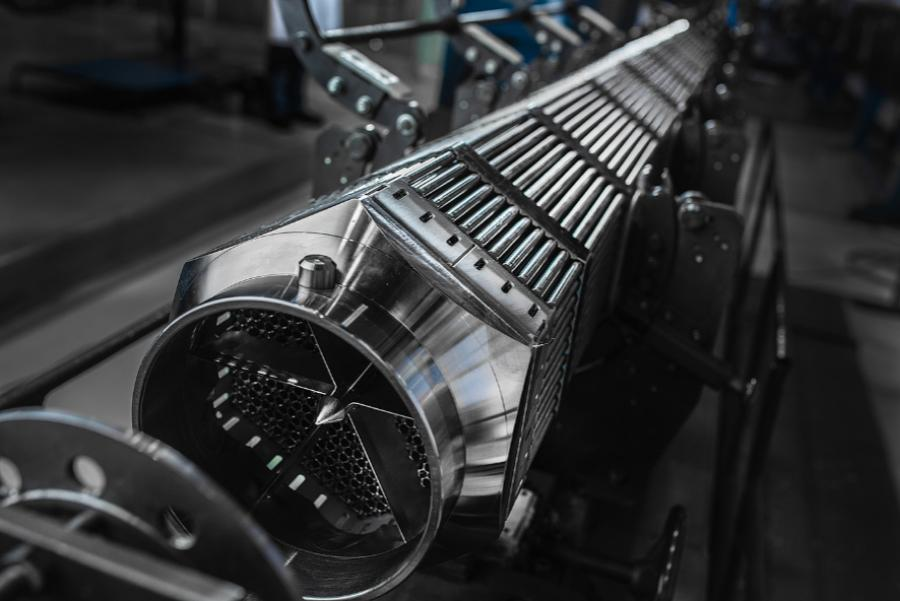
Germany wants independence from Russian nuclear fuel, using Rosatom as a bridge
Europe’s effort to break its dependence on Russian nuclear fuel has a paradox in Germany: making Russian-designed fuel without buying it from Russia ...
News
Publish date: May 7, 2026
News
Russia continues to present its nuclear sector as a pillar of strength—at home, abroad, and even in war. But a closer look at developments in our March Nuclear Digest tell a different story: one of political improvisation, slipping timelines, and growing constraints.
Three cases from our latest digest—Ukraine, Turkey, and the Kursk Nuclear Power Plant II—show a strategy that is still moving forward, but increasingly under strain.
Ukraine: Licensing reality into existence
Nowhere is that strain more visible than at the Zaporizhzhia Nuclear Power Plant, occupied by Russian troops since early in the invasion. Earlier this year, Russia’s nuclear regulator announced it had issued long-term licenses for two reactors at the besieged plant. On paper, Rosatom wishes to indicate progress. In practice, it’s something else entirely.
There is no real license today that would allow these units to be put into operation—let alone operated for 10 years, writes Bellona expert Alexander Nikitin.
Under normal conditions, reactor licenses are the final step in a long process of construction, testing, and safety validation. None of that has happened at Zaporizhzhia. The reactors remain in cold shutdown, dependent on fragile external power lines that continue to be disrupted by nearby fighting.
So what are these licenses for? According to Nikitin, they are less about engineering than optics: “a forced step taken under pressure to legitimize Russian control over the station.”
That effort may already be working. Subtle changes in how international organizations refer to the plant—dropping explicit mention of Ukraine—suggest that language is beginning to shift alongside reality. But the risks to the plant remain unchanged. Military activity continues near nuclear facilities, power supply remains unstable, and safety margins are thin.
Even beyond Zaporizhzhia, the long shadow of war is growing. Repairs to the damaged confinement structure at the Chernobyl Nuclear Power Plant—which was struck by a Russian drone—are expected to cost €500 million. But for now, those plans may be more aspirational than practical.
“There is no real threat from these facilities today—and no resources to carry out such work during the war,” Nikitin notes. In other words: even nuclear safety is being triaged.
Turkey: The Limits of Export Power
If Ukraine shows how Russia uses nuclear tools politically, Turkey shows where the limits of that strategy begin. The Akkuyu Nuclear Power Plant—Rosatom’s flagship export project—is now years behind schedule. Its first reactor was supposed to be running by 2025, but it’s not.
Rosatom blames sanctions. Its CEO, Alexey Likhachev, has described the project as stuck in a “sanctions meat grinder.” But the consequences go deeper than delays.
The delays are not just technical—they have legal and economic implications, writes Bellona analyst Dmitry Gorchakov.
Akkuyu is built under a model that leaves Rosatom carrying most of the financial risk while relying on long-term electricity purchase agreements to make the numbers work. The longer the delays, the weaker Rosatom’s bargaining position becomes.
Turkey is clearly taking note. In March, Ankara moved forward with talks on alternative nuclear technologies, including a deal with Canada’s Candu Energy. Negotiations are also ongoing with South Korea and China. What was once expected to be Rosatom’s next big win in Turkey—the Sinop project—is no longer a given.
As Gorchakov puts it, “Sinop is now effectively an open project, without any obligations toward Rosatom.”
Kursk II: When Dates Don’t Line Up
Back in Russia, the story is less about geopolitics and more about transparency.
At the Kursk Nuclear Power Plant II, the first unit has reached full power—a milestone the industry likes to highlight. At the same time, international databases list the start of construction on Unit 3 as January 31, 2026.
But Bellona’s analysis suggests that date may not be accurate. Evidence from regional sources and site imagery indicates the “first concrete” milestone likely occurred weeks earlier, in late December 2025. That discrepancy may seem minor. But in nuclear construction, it’s not.
“This case shows that information about the construction of Kursk-II units is being deliberately concealed,” Gorchakov writes.
The start of construction is one of the most closely tracked benchmarks in the nuclear industry. Moving it—even by a few weeks—can obscure delays, reshape narratives, and complicate oversight. And it raises a broader question: if even basic milestones are unclear, what else is?
Read our full article on the strange data from Kursk II here.
The Bigger Picture
Taken together, these cases point to a nuclear strategy that is still active—but increasingly reactive. In Ukraine, Russia is trying to regulate its way into legitimacy. In Turkey, it is losing ground in a market it once seemed to dominate. And at home, it is struggling to maintain transparency even on its own projects.
None of this means Rosatom is in retreat. Its global footprint remains large, and its projects continue to move forward. But the corporation’s narrative of steady expansion is becoming harder to sustain. Read this and more in the new digest.
Europe’s effort to break its dependence on Russian nuclear fuel has a paradox in Germany: making Russian-designed fuel without buying it from Russia ...
Nearly four and a half years after Russia’s full-scale invasion of Ukraine, July offered fresh evidence of how difficult it remains to disentangle Ru...
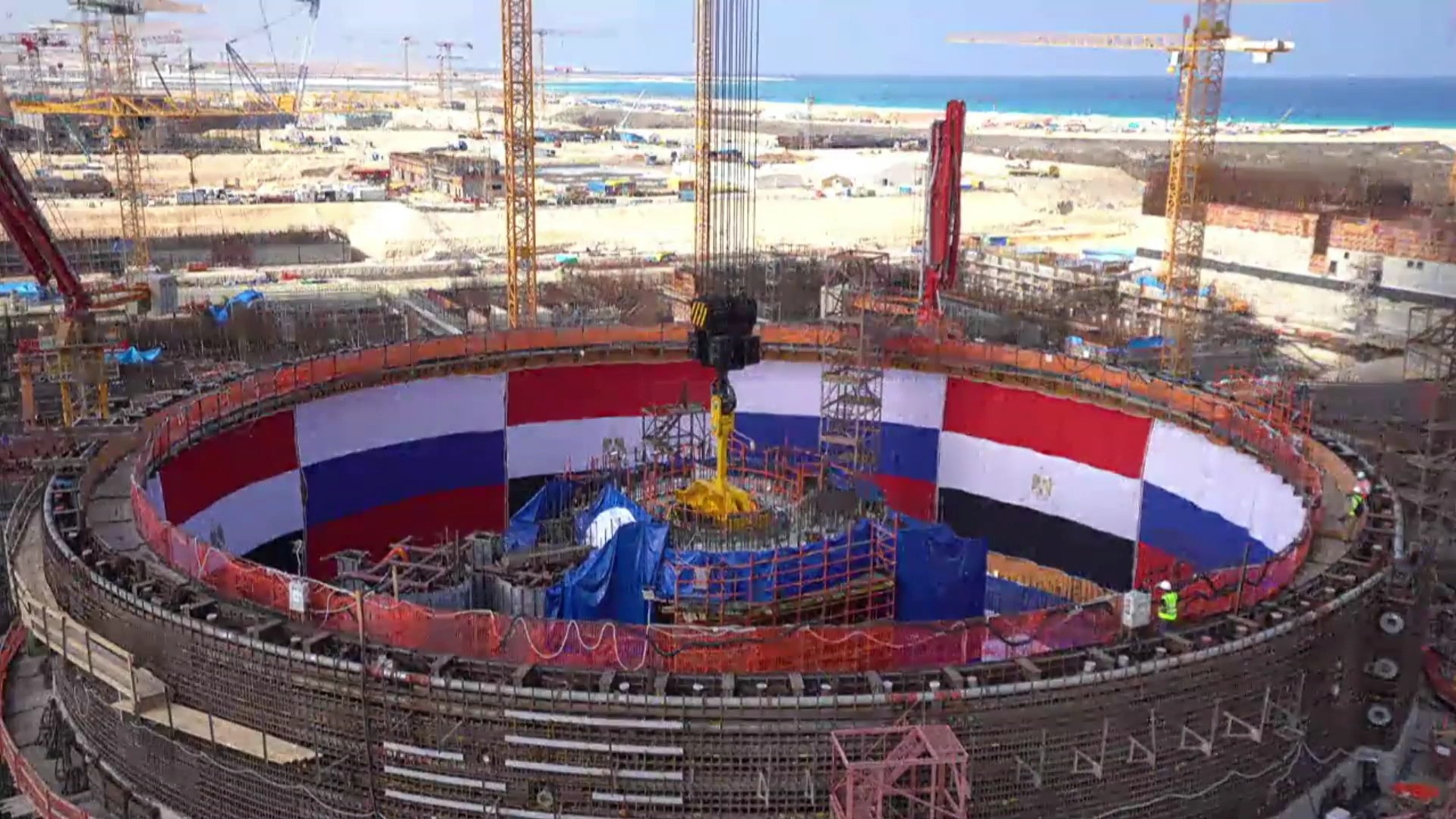
Just days after Egyptian nuclear authorities reportedly accused Rosatom of construction defects, poor management and vi...
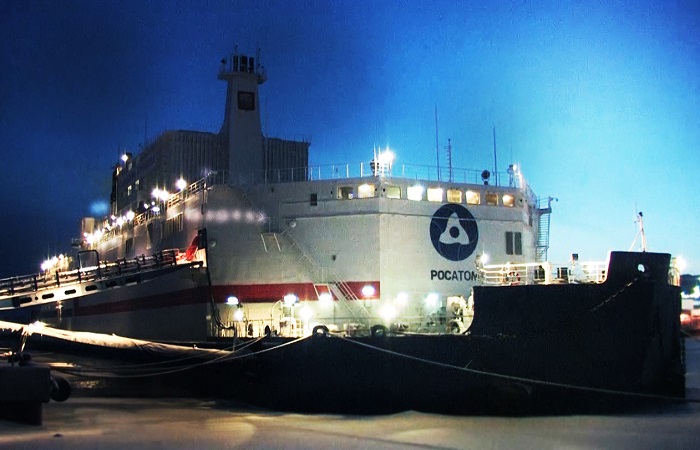
For years, the Akademik Lomonosov looked like one of the nuclear industry’s more eccentric experiments: two reactors mounted on a barge and tow...