
Germany wants independence from Russian nuclear fuel, using Rosatom as a bridge
Europe’s effort to break its dependence on Russian nuclear fuel has a paradox in Germany: making Russian-designed fuel without buying it from Russia ...
News

Publish date: November 7, 2019
Written by: Bellona
News
At the end of last month, Russian media reported that containers of depleted uranium hexafluoride, owned by the Western European company Urenco, were being transported from Germany to Russia as part of a deal with Tekhsnabexport, a subsidiary of Rosatom, Russia state nuclear corporation.
As a result of these reports and the public concern they provoked, Bellona’s St Petersburg office considers it necessary to give its official position on the import of these hazardous materials, which appear to be radioactive waste.
1 – A deal of this kind should be open to the public. Citizens of the Russian Federation have the right to know why depleted uranium has to be imported into the country, given that Russia already holds considerable reserves of its own depleted uranium.
2 – The contract should be published in the public domain, with any information that would expose trade secrets accordingly redacted.
3 – We must recall that in 2006, Sergei Kiriyenko, who was then head of Rosatom, promised that contracts for the import of depleted uranium would no longer be concluded. After an active public campaign in 2009, transportation of depleted uranium was stopped. What has changed since then?
4 – It seems at the moment that under the guise of providing uranium enrichment services, hazardous material is being transported into Russia for the purpose of long-term storage within the country.
5 – We believe that the Russian public has the right to open and reliable information about the details of the import contract and Rosatom’s further plans for similar transactions. Indeed, under the pretext of “metal extraction” all manner of contaminated equipment could also be imported to Russia.
Our society has come a long way from the days of complete information blackouts to being able to transfer text and media files to anywhere in the world at any time. Today, everyone can see what hazardous landfills look like and trace the routes by which waste is delivered to them. Citizens are increasingly cognizant of the state of the environment and hiding information from the public in these circumstances is a clear sign of incompetence.
Europe’s effort to break its dependence on Russian nuclear fuel has a paradox in Germany: making Russian-designed fuel without buying it from Russia ...
Nearly four and a half years after Russia’s full-scale invasion of Ukraine, July offered fresh evidence of how difficult it remains to disentangle Ru...

Just days after Egyptian nuclear authorities reportedly accused Rosatom of construction defects, poor management and vi...
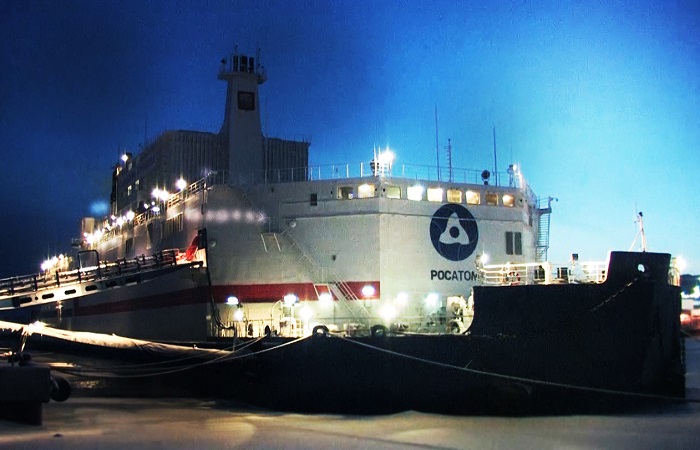
For years, the Akademik Lomonosov looked like one of the nuclear industry’s more eccentric experiments: two reactors mounted on a barge and tow...