Russian nuclear ties persist in the West as war claims another life at Zaporizhzhia
Nearly four and a half years after Russia’s full-scale invasion of Ukraine, July offered fresh evidence of how difficult it remains to disentangle Ru...
News
Publish date: February 27, 2019
News
Russian officials have said they will back the overhaul of an ailing Far Eastern shipyard in order to build an enormous nuclear icebreaker the Kremlin hopes will cement its control of Arctic waterways, the official Tass newswire reported this week.
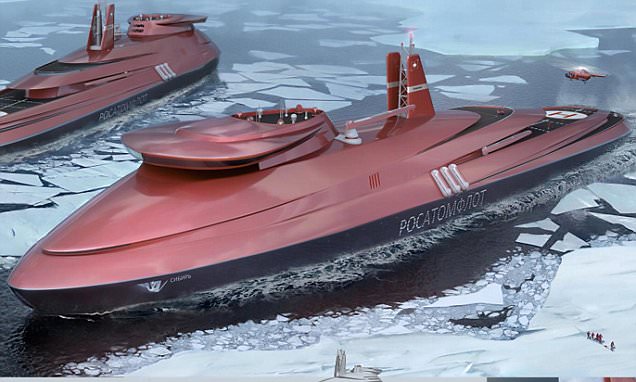
The icebreaker in question is the Leader – or Lider in Russian – a ship of futuristic, almost fantastical, proportions that first debuted on the pages of a slick Russian trade magazine four years ago. But what at first looked like an expensive dream has gathered momentum in official circles, and now the government is mobilizing billions of dollars to revamp the Zvezda shipyard, a nearly defunct naval installation Vladivostok, to build the vessel.
On Monday, Yury Borisov, a deputy prime minister, told the Tass state newswire that the Kremlin would issue an official order to build the Leader next month. At the same time, he confirmed that Zvezda would be renovated by Rosneft, Russia’s enormous state oil company, which has high hopes for drilling oil in the Arctic with help from ice-crushing nuclear behemoths like the Leader.
Borisov offered no specific dates for when the Leader would be completed, but did say that the dry dock at which it will be built at Zvezda will be ready for operation by next year.
Should the project come to fruition, it will become one of Russia’s most potent symbols of post-Soviet Arctic conquest.
The Leader first appeared as a mere artist’s rendition on the cover of the United Shipbuilding Corporation’s company magazine in 2015.
On its glossy cover, the sleek vessel was pictured from the point of view of helicopter poised to land on its deck as it steamed through puffy islands of ice. The airy vision seemed more similar to a prized yacht owned by a Kremlin-friendly oligarch than it did to any of Russia’s more muscular specimens of nuclear icebreaking steel.
Its dimensions seemed likewise incredible. At 205 meters and 71,000 tons, it would weigh in at 50 meters longer and thousands of kilograms heavier than Russia’s three largest icebreakers – which are themselves still under construction.
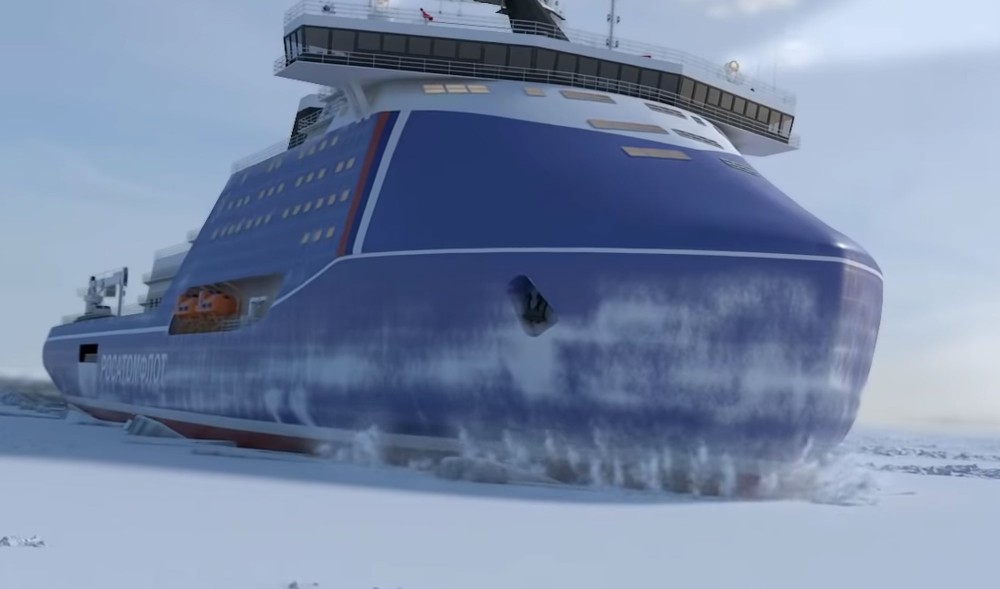 The Leader nuclear icebreaker as envisioned in a promotional video.
Credit: Rosatom
The Leader nuclear icebreaker as envisioned in a promotional video.
Credit: Rosatom
Its two experimental RITM 400 reactors would be capable of propelling it through the thickest ice the Arctic can dish out, while maintaining a hull shallow enough to make it useful in navigating the Arctic’s river tributaries.
And the Leader’s maintenance needs, according to engineers, would be minimal. As described in reports by Russia’s shipbuilding trade press, the Leader would be built of materials capable of “self-diagnosing” metal corrosion, and would further be able to “self-heal” when damage is detected. Many in Russia’s official press have championed the Leader as nothing less than the engine of the country’s economic turnaround.
But the Leader comes at a stiff price. The vessel is expected to cost $1.6 billion, and Russian officials have said they intend to build at least three.
Yet the Zvezda shipyard is an unlikely place to entrust with the task of building it. The bulk of Russia’s nuclear icebreaker fleet has been forged at the Baltic Shipyard in St. Petersburg. In fact, that shipyard is in the process of constructing the Sibir, the Arktika, and the Ural – which officials have previously billed as the biggest in the world.
But the Zveda shipyard has not only not built a nuclear icebreaker before it hasn’t built much of anything for the past 20 years. During the late 1990s and early 2000s, the shipyard was kept afloat by funding from the United States, which paid it to dismantle Soviet nuclear submarines under various post-Soviet nuclear disarmament agreements.
Since then, it has accrued debt and frustrated the Kremlin, which last year turned the shipyard over to Rosneft, run by a close political ally of Vladimir Putin, to boost its bottom line.
Alexei Rakhimov, head of the United Shipbuilding Corporation, which owns the Baltic Shipyard, noted the political nature of giving the Leader contract to the Zvezda shipyard, and said building an icebreaker at the distant Pacific Ocean port makes little economic sense.
Nearly four and a half years after Russia’s full-scale invasion of Ukraine, July offered fresh evidence of how difficult it remains to disentangle Ru...
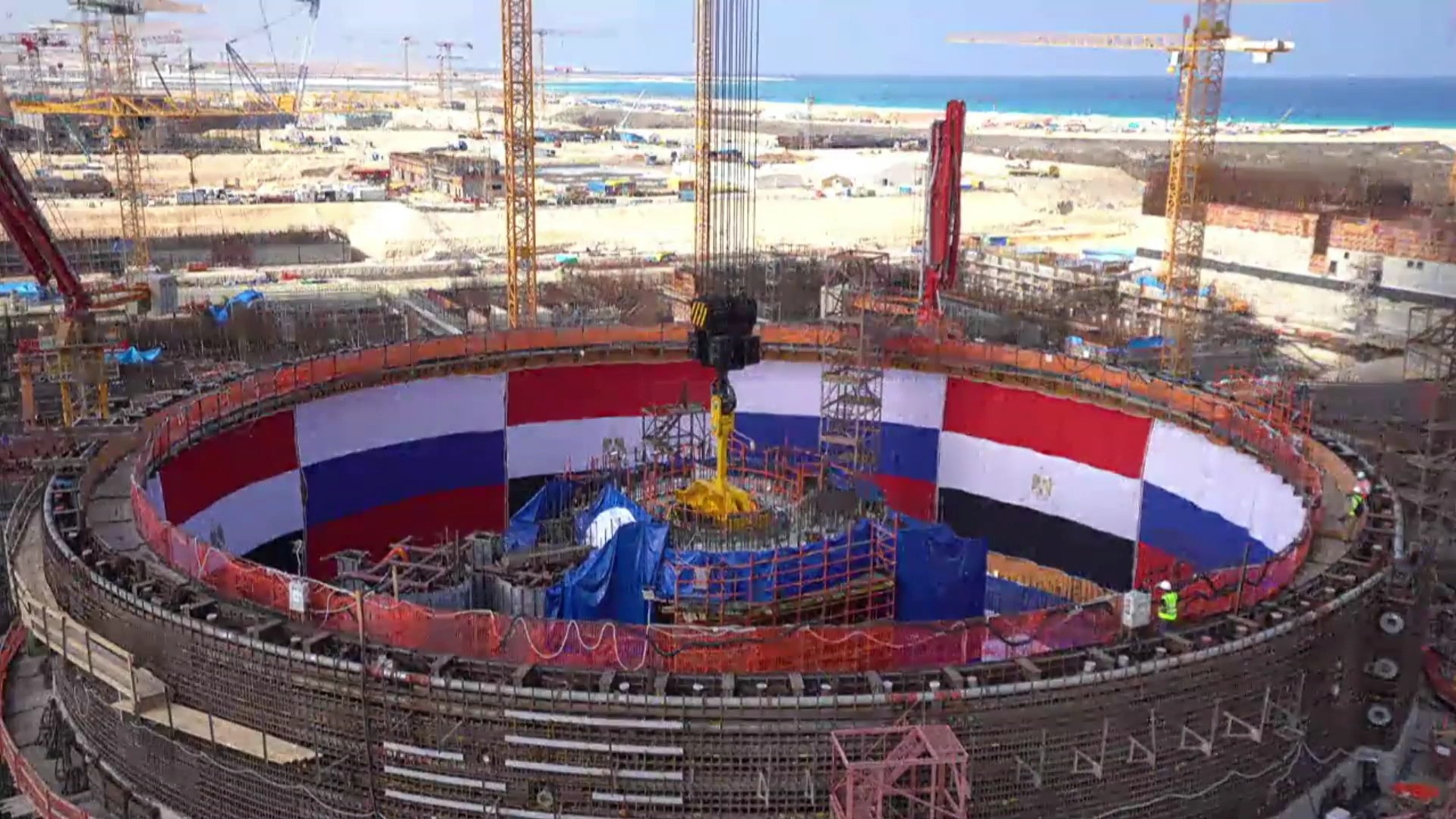
Just days after Egyptian nuclear authorities reportedly accused Rosatom of construction defects, poor management and vi...
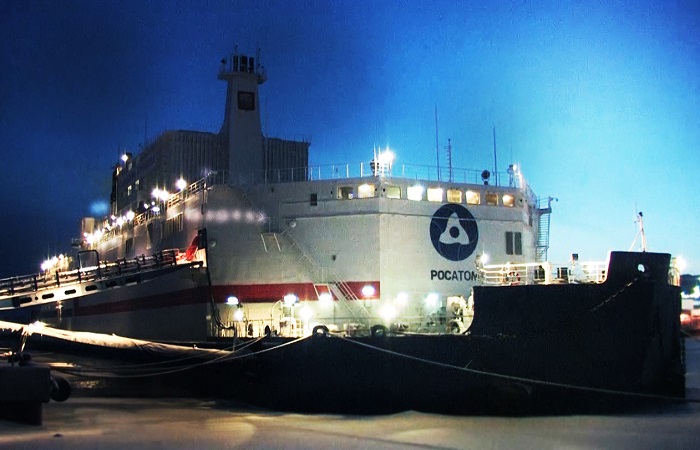
For years, the Akademik Lomonosov looked like one of the nuclear industry’s more eccentric experiments: two reactors mounted on a barge and tow...
Russia’s war against Ukraine continues to reshape the global nuclear industry in ways that extend beyond the battlefield. Western governments a...