
Egypt complained about Rosatom’s nuclear work. Now it wants two more reactors
Just days after Egyptian nuclear authorities reportedly accused Rosatom of construction defects, poor management and vi...
News

Publish date: September 24, 2015
News
“Volkswagen had the choice between making more efficient combustion engines or manipulating the performance of their engines to cheat the system, and they chose the latter option” argued Hallstein Havåg, Director of Policy & Research at Bellona, on Norwegian radio on 22 September 2015.
On 18 September 2015 the US Environmental Protection Agency (EPA) uncovered Volkswagen’s fraudulent practices whereby the car maker has been manipulating emission test results, and thus allowing its diesel cars to emit up to 40 times more pollution than allowed. The company admitted to having equipped around 11 million of its vehicles with a device which allowed for significant reductions of NOx emissions when a test is being conducted.
‘Common practice’ across the EU car-maker industry
The truth about the Volkswagen scandal is that it does not come as a surprise, and that it unveils something which is common practice across the whole car industry and perhaps the hybrid car industry, in particular in the EU. Emission tests in the EU have been governed by the deceivingly named ‘New’ European Driving Cycle (NEDC), which has been developed in the 1970 and is by far outdated.
The current EU testing procedure involves equipping cars with measuring devices to monitor emissions of carbon monoxide, NOx, and particulate matter among other pollutants. These, however, have been carried out with lack of third-party supervision and have involved manufacturers corrupting inspectors. These fraudulent practices have allowed car makers to ‘attain’ their emission performance standards mandated by EU law ahead of set deadlines.
In Bellona’s view it is unacceptable for the EU to remain blind to such practices. Instead, commitment is needed to enacting stringent and accurate testing techniques, as well as fiscal incentives for the wider uptake of electromobility; the clear and clean way forward for the transport sector.
“We are reaching the point where one cannot make combustion engines any more energy efficient and with less emissions. Sooner or later, and Bellona thinks this will be sooner, it will be cheaper and better to produce a zero-emissions car, an electric car, than a car with a combustion engine” added Havåg.
The introduction of new, supposedly stricter, emission testing rules is underway in the EU. The replacement of NEDC by the ‘World Light Duty Test Cycle’ is expected from 2017. The new technique would involve using portable emission meters to identify NOx, and to put on-road cars through a series of tests. Nevertheless, the proposal is still to be finalised and it remains unclear whether it will be able to adequately close the loopholes of the current NEDC test.
Just days after Egyptian nuclear authorities reportedly accused Rosatom of construction defects, poor management and vi...
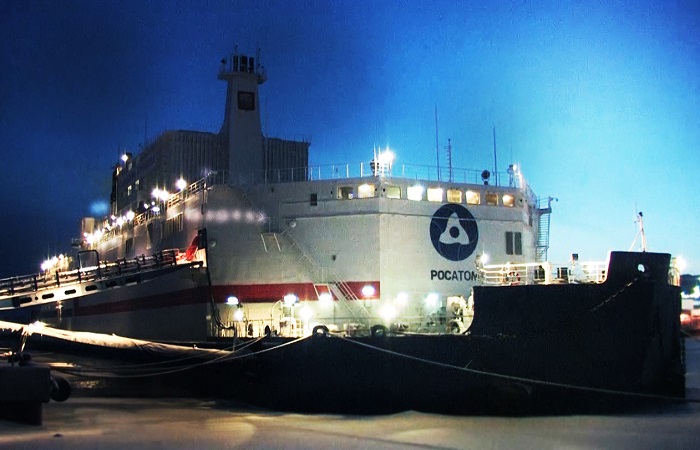
For years, the Akademik Lomonosov looked like one of the nuclear industry’s more eccentric experiments: two reactors mounted on a barge and tow...
Russia’s war against Ukraine continues to reshape the global nuclear industry in ways that extend beyond the battlefield. Western governments a...

Despite sweeping Western sanctions, Russia’s ambitions in the Arctic continue to advance—albeit in increasingly different ways. Novatek’s...