
Germany wants independence from Russian nuclear fuel, using Rosatom as a bridge
Europe’s effort to break its dependence on Russian nuclear fuel has a paradox in Germany: making Russian-designed fuel without buying it from Russia ...
News
Publish date: November 10, 2004
News
The Polyarninsky Shipyard no.1 is situated in Polyarny, a town of ca 30 000 inhabitants, north of Murmansk in the Kola Bay. The shipyard has been designated as the recipient of an integrated radioactive waste management complex as a combination of several AMEC projects.
The aim of the AMEC project PICASSO is to provide an automated radiation monitoring system to give information in real time on the actual radiation situation. It is based on the Norwegian software PICASSO, adapted for Russian use, and combined with Russian manufactured radiation sensors. Installation of automated radiation monitoring at this site ensures safe operation, early warning in case of accidents and helps protect workers, population and the environment against radiation. The automated radiation monitoring system PICASSO-AMEC at Atomflot has been put into operation in 2003.
The following elements are included in the radioactive waste management complex:
– The Picasso system for radiation monitoring
– The mobile pre-treatment facility for solid radioactive waste
– Light weight storage buildings and containers for transport and storage of solid waste
– The mobile treatment facility for liquid radioactive waste
Eight gross gamma air detectors and one submersible detector are planned, including one gross gamma detector in the city of Polyarny.
Gamma radiation detectors will be placed at the following locations:
– Integrated radioactive waste management complex
– The open pad for interim storage of solid radioactive waste
– The piers where submarines are laid up awaiting dismantlement
– The floating docks where submarines are dismantled
– The entrance gate and the radiation safety department building
The submersible sensor for water radioactivity is planned in the sewage discharge pipe from the waste management complex. This position is beneficial for the integral assessment of the shipyard’s impact on the water environment, Mil.no reported.
Europe’s effort to break its dependence on Russian nuclear fuel has a paradox in Germany: making Russian-designed fuel without buying it from Russia ...
Nearly four and a half years after Russia’s full-scale invasion of Ukraine, July offered fresh evidence of how difficult it remains to disentangle Ru...

Just days after Egyptian nuclear authorities reportedly accused Rosatom of construction defects, poor management and vi...
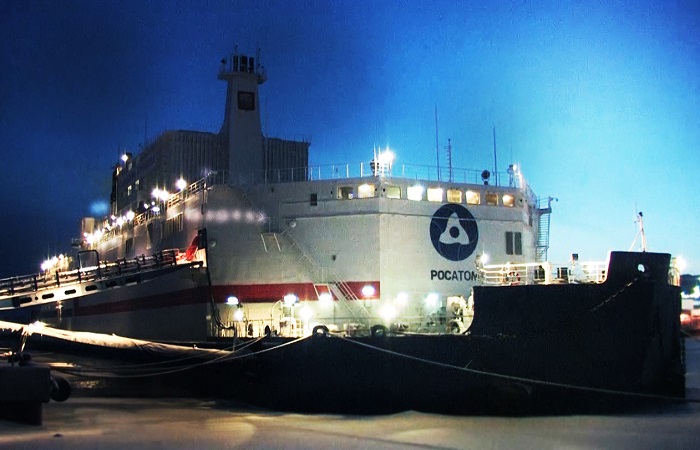
For years, the Akademik Lomonosov looked like one of the nuclear industry’s more eccentric experiments: two reactors mounted on a barge and tow...