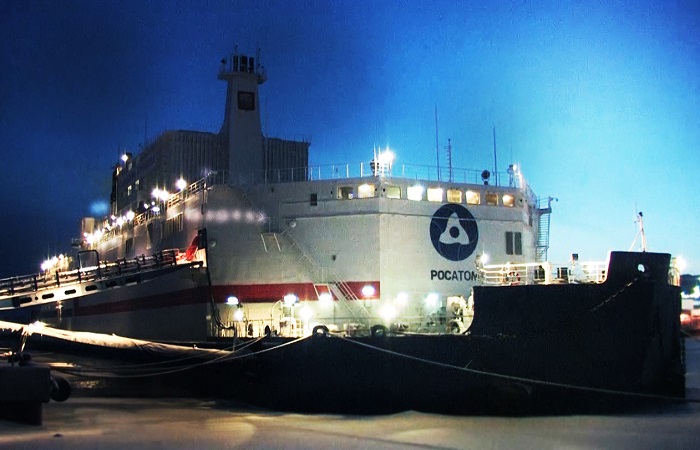
Floating nuclear power was a Russian curiosity. Now others want to give it a shot
For years, the Akademik Lomonosov looked like one of the nuclear industry’s more eccentric experiments: two reactors mounted on a barge and tow...
News
Publish date: August 5, 2003
News
The first experimental solar lighthouses were produced at the Crimea Electrical Engineering Plant Saturn. According to murman.ru, the units have been delivered to Murmansk. One of them will be installed in Norway, the other at the Kola bay at the Shavor lighthouse in Russia. These two first lighthouses is the first step to implement Russian-Norwegian project on radioisotope thermal generators decommissioning on the Kola Peninsula. Fifty RTGs have been already eliminated during the past 3 years thanks to this project. It takes from 900 to1000 years before the radioisotope generator becomes safe. The new solar panels of the lighthouses will accumulate the energy in the daytime and then use it in the night-time. Norway will finance production of 40 solar powered lighthouses if these two first units show good results. The designers give 20 years operation guarantee. For example, the first experimental solar lighthouse has been working in Azov sea for 17 years.
For years, the Akademik Lomonosov looked like one of the nuclear industry’s more eccentric experiments: two reactors mounted on a barge and tow...
Russia’s war against Ukraine continues to reshape the global nuclear industry in ways that extend beyond the battlefield. Western governments a...

Despite sweeping Western sanctions, Russia’s ambitions in the Arctic continue to advance—albeit in increasingly different ways. Novatek’s...
Even as the war grinds on, Ukraine continues to expand its civilian nuclear ambitions. Britain has tightened sanctions on Russia’s nuclear sect...