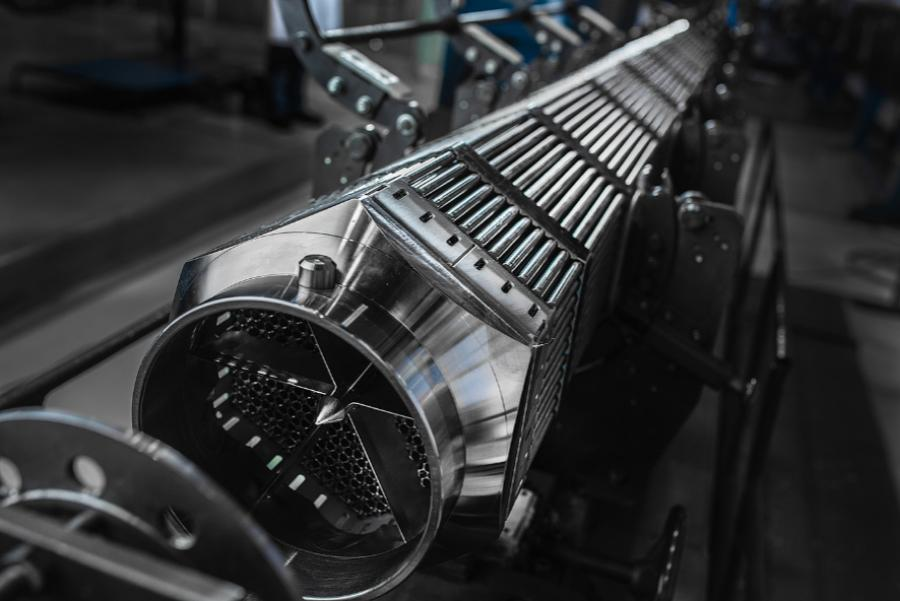
Germany wants independence from Russian nuclear fuel, using Rosatom as a bridge
Europe’s effort to break its dependence on Russian nuclear fuel has a paradox in Germany: making Russian-designed fuel without buying it from Russia ...
News

Publish date: April 19, 2005
Written by: Hanne Bakke
Translated by: Charles Digges
News
The lions share of the millions will be included in the US Department of Energys (DOE) budget and includes, among other things, $183m for the DOEs programme for improving energy efficiency and renewable energy, as well as $33m for DOE research programmes.
Bushs budget proposal is interesting. There are plenty of reasons that hydrogen has found such a prominent roll, said Bellonas hydrogen Project Director Isak Oksvold.
Hydrogen will not only reduce American oil imports, but hydrogen cars will visibly surpass the conventional automobile. This gives enormous advantages to the auto producers that master the technology best. The budget proposal implies that Bush has taken the American auto industry seriously.
Oksvold reiterated that General Motors has given clear signals that hydrogen will come sooner or later, and that the auto industry will shift its activities to those areas where the most active development is occuring.
Hydrogen Fuel Initiative
Despite Bushs frayed environmental reputation, he has been a persistent advocate for the hydrogen cause. In 2003, he laid out his Hydrogen Fuel Initiative in order to turn the United States dependence on oil imports toward the development of technology for hydrogen cells for use in automobiles and other transport as well as electricity production.
The hydrogen initiative is also a part of the presidents environmental policy. At its launch in 2003, he pledged $1.2 bilion to the project over a five year period. The initiative seeks to develop hydrogen technology, fuel cells and the infrastructure to make it possible for the average American to chose hydrogen cars as a means of transport by 2020.
The hydrogen initiative compliments the Freedom-CAR initiative which works specifically with the development of hybrid technology that will shape the foundation for the development of hydrogen cars for the broad market.
Research reduces the expenses
The DOE has also thrown its weight behind the financing of different energy research projects, and one of these projects in 2004 contributed to lowering the volume cost of using a fuel cell in a car from $275 per kilowatt to $200 per kilowatt.
In order to make hydrogen fuel cells competitive with contemporary automobiles, the DOE still considers that the costs per kilowatt must be driven down to $50.
Cooperation with the EU
In 2003, the Eu and the United States entered into a cooperative hydrogen project to ensure a stabile, clean energy supply for the future. The cooperation strengthens joint research on fuel cells with an eye to making them commercially competitive. American and European researchers from both the pubic and private sector will cooperate on reducing costs, improving performance, and extending fuel cell life-spans.
The cooperation will also address how to overcome impediments and will set forth which common research programme the concerned parties will settle on. The common research effort will focus on six chief areas: transport, fuel cells and backup systems, regulations and standards, fuel choice, solid or oxide fuel cells and other supporting studies.
Download the budget proposal here (.pdf-format)
This article was first published in Norwegian April 1. 2005.
Europe’s effort to break its dependence on Russian nuclear fuel has a paradox in Germany: making Russian-designed fuel without buying it from Russia ...

Nearly four and a half years after Russia’s full-scale invasion of Ukraine, July offered fresh evidence of how difficult it remains to disentangle Ru...

Just days after Egyptian nuclear authorities reportedly accused Rosatom of construction defects, poor management and vi...
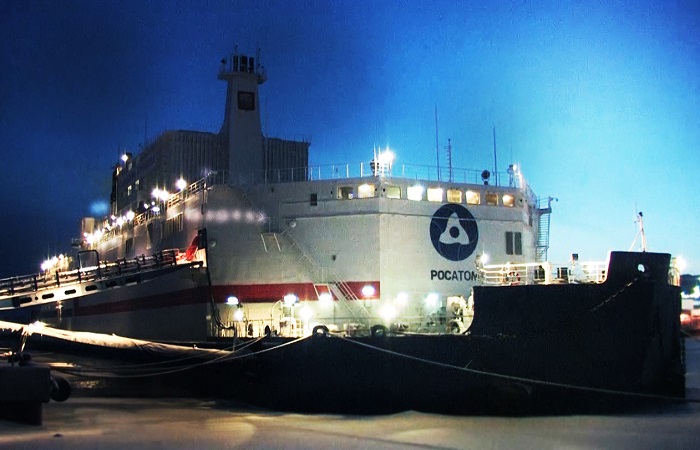
For years, the Akademik Lomonosov looked like one of the nuclear industry’s more eccentric experiments: two reactors mounted on a barge and tow...