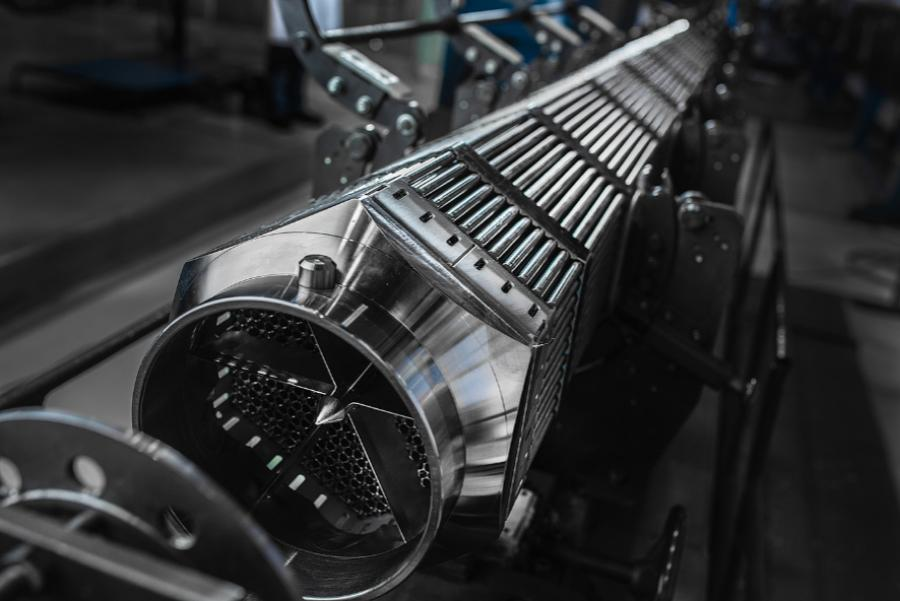
Germany wants independence from Russian nuclear fuel, using Rosatom as a bridge
Europe’s effort to break its dependence on Russian nuclear fuel has a paradox in Germany: making Russian-designed fuel without buying it from Russia ...
News

Publish date: May 10, 2002
Written by: Charles Digges
News
Alexander Rumyantsev, head of Russia’s nuclear ministry, Minatom, acknowledged that the deal with Iran remains a sensitive topic, but said that we are close to finding a solution, he was quoted by The Associated Press as saying.
Energy Secretary Spencer Abraham, at a joint news conference with Rumyantsev in Washington, DC, said Russia’s nuclear assistance to Iran remains a concern, AP reported. But, he added, We had positive discussions.
The two officials have met for three days to discuss energy issues related to the May 23-26 summit in Russia between President Bush and Russian President Vladimir Putin. The Russia-Iran deal probably will come up at their talks, which will focus on nuclear weapons reductions and other nonproliferation issues.
Rumyantsev repeated Russia’s view that the light water nuclear reactor under construction in Iran in an $800 million contract cannot be used to develop material for weapons. The reactor is not a source of proliferation of nuclear material, Rumyantsev said, according to RIA Russian news agency.
Indeed, in recent weeks, Minatom officials have told Bellona that Russia would maintain consent rights on nuclear fuel sold to the Iranian facility at Bushehr, meaning the spent nuclear fuel (SNF) would be sent back to Russia for storage or reprocessing — an apparent guarantee that the SNF does not pose a nonproliferation danger within Iran.
Rumyantsev also said he agreed with his US counterpart to continue negotiations on Agreement of Cooperation on the Peaceful Uses of Atomic Energy. Such agreement among other things is a precondition for the US to grant Russia permission to import American origin spent nuclear fuel. Minatom plans to import foreign spent nuclear fuel to Russia for storage/reprocessing and earn around $20 billion on such operations. The most promising clients, according to the plan, will be Asian countries, which use US origin fuel.
Agreement reached on “dirty bombs”
Rumyantsev and Abraham announced an agreement on a US-Russia task force to look at better safeguarding low-grade radioactive materials that could be used to fashion a dirty bomb — which does not have a nuclear chain reaction but can disperse radiation over a limited area by using conventional explosives, AP said.
These non-weapon radiation sources — isotopes used in medicine, construction and, often in Russia, as a power source in remote locations — are potentially attractive targets for theft and could be used by terrorists to make a dirty bomb, Abraham said at the joint press conference.
Rumyantsev said his government has acted to improve the protection of such radioactive materials. As an example, he cited a recent decision to let Minatom control the disposition of radioactive material used in beacons used for directional lights in remote parts of Russia. According to a Russian government report recently cited in the Washington Post, many of these beacons have not been visited by government staff for years and have fallen prey to scrap metal thieves and the elements.
Minatom’s new efforts to control the disposition of these devices “shows how serious this issue is and that we’re ready to solve it,” AP quoted Rumyantsev as saying.
The United States has similar problems. Last week, in a letter to Massachusetts Congressman Ed Markey, the Nuclear Regulatory Commission acknowledged that about 1,500 such radiation devices have disappeared across the United States over the past five years and that about half are missing.
NASA spacecraft to be fuelled with Russian plutonium
Abraham also said Thursday that the United States plans to resume purchases of plutonium 238 from Russia for use as a power source in NASA spacecraft. Since 1992, there has been an agreement with Russia to buy the non-weapons grade plutonium, but in recent years none has been bought because the National Aeronautics and Space Administration’s needs could be met with US supplies, the RIA reported.
Europe’s effort to break its dependence on Russian nuclear fuel has a paradox in Germany: making Russian-designed fuel without buying it from Russia ...
Nearly four and a half years after Russia’s full-scale invasion of Ukraine, July offered fresh evidence of how difficult it remains to disentangle Ru...
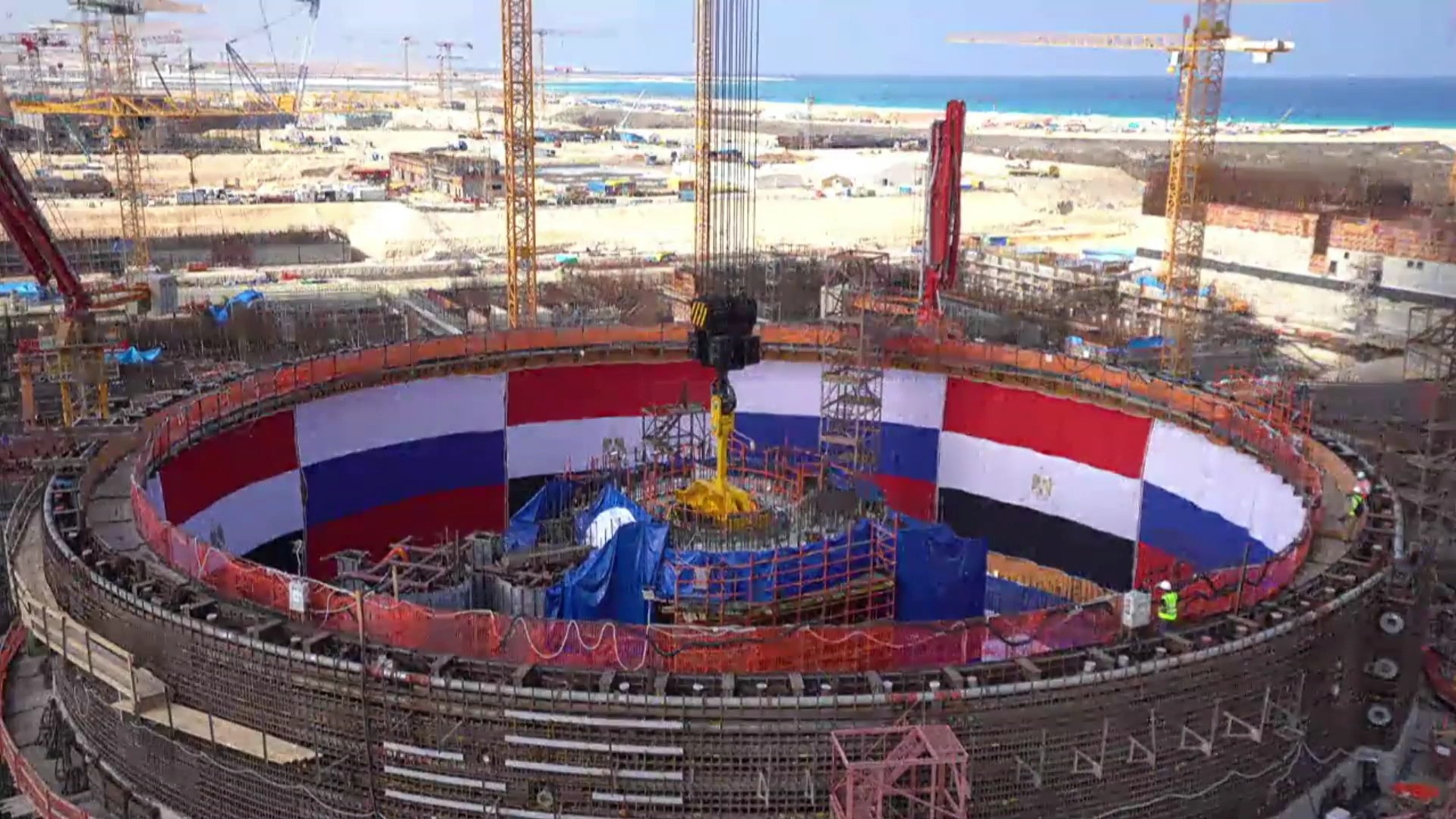
Just days after Egyptian nuclear authorities reportedly accused Rosatom of construction defects, poor management and vi...
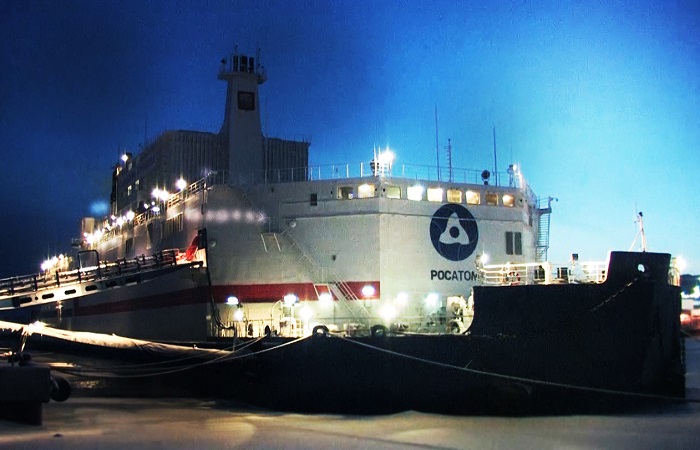
For years, the Akademik Lomonosov looked like one of the nuclear industry’s more eccentric experiments: two reactors mounted on a barge and tow...