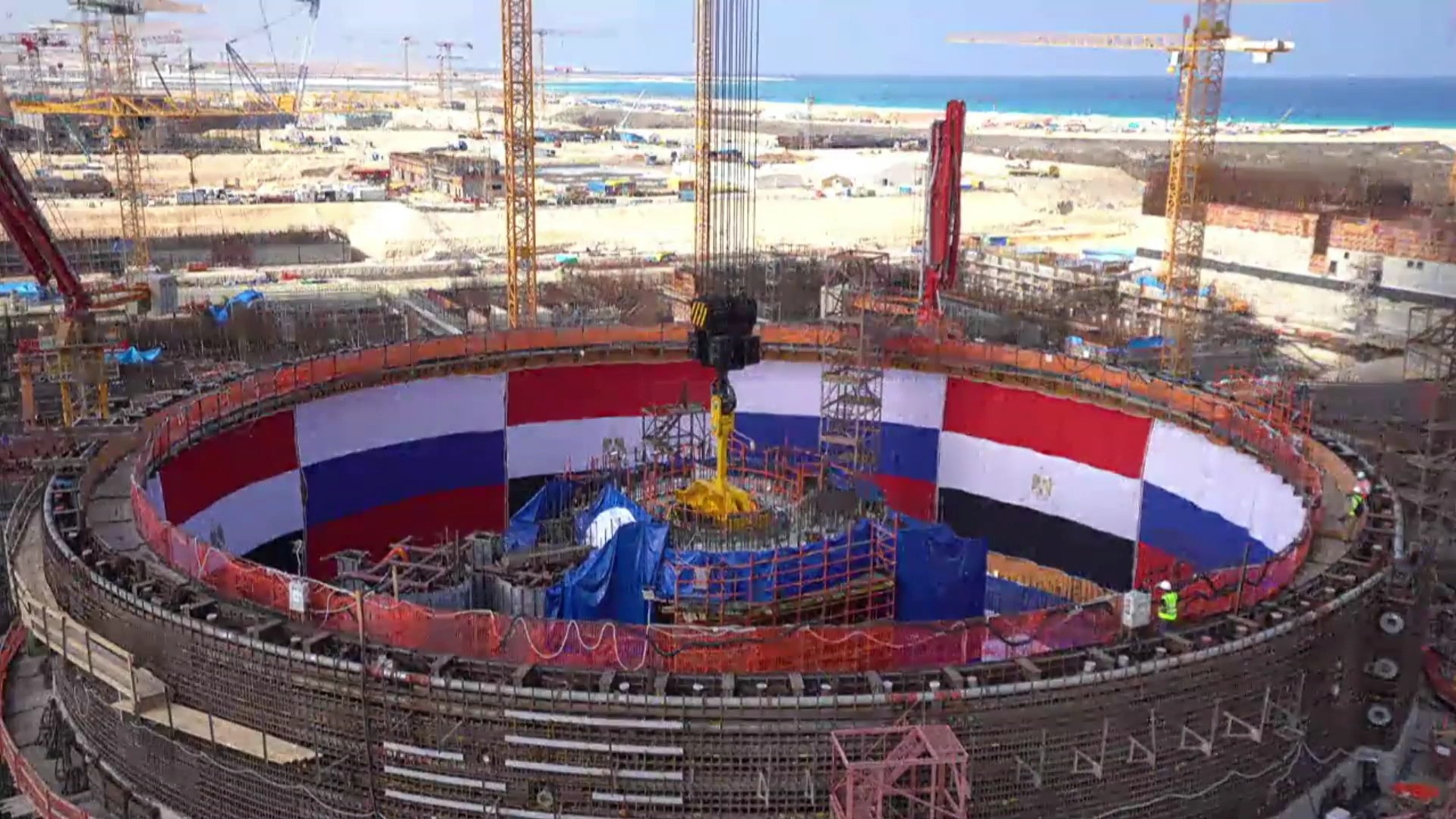
Egypt complained about Rosatom’s nuclear work. Now it wants two more reactors
Just days after Egyptian nuclear authorities reportedly accused Rosatom of construction defects, poor management and vi...
News
Publish date: December 10, 1999
Written by: Igor Kudrik
News
USEC Inc will continue to serve as the US government’s executive agent under the Russian HEU agreement, despite earlier threats to resign if the company did not receive US$200 million in government aid over the next two years. USEC officials conceded that it was in the company’s long-term interest to continue its role as executive agent.
The Russian highly enriched uranium agreement was reached in February 1993. As a follow-up of the agreement, the two countries signed a contract in 1994, under which 500 tons of highly enriched uranium (HEU) were to be purchased by the U.S. Enrichment Corp. (USEC). The company was at that time a part of the Department of Energy (DOE). On the Russian side, the Ministry for Atomic Energy (Minatom) was responsible for the deal.
In compliance with the terms of the contract, the HEU was to be blended down to 4,4% for uranium-235 at the facilities of Tomsk-7 (Seversk) in Siberia, to meet the standards of American nuclear power plants. The enrichment services were to be paid by USEC upon delivery of the product to the United States, while the payment for the uranium itself would be made after its sale on the international market.
USEC purchased 6 tons of HEU in 1995, and 12 tons in 1996. The contract was supposed to run through the year 2013. The total deal amounts to 12 billion USD. The expected shipment of 18 tons of HEU (540 tons of low-grade uranium) in 1997 was suspended, as USEC announced it could not pay the bills. The reason for the claim was the fact that USEC was privatised in 1996.
Minatom started the search for new partners ending up with an obscure Pleiades Group led by a Russian immigrant in the U.S.
The story ended when the global giants of uranium mining – Cameco, Cogema, Nukem (CCN) – made an agreement with Russian Techsnabexport to sell the uranium. The USEC Inc was subsidised by the U.S. government to cover the losses and remained the position of the government’s executive agent in this deal.
Just days after Egyptian nuclear authorities reportedly accused Rosatom of construction defects, poor management and vi...
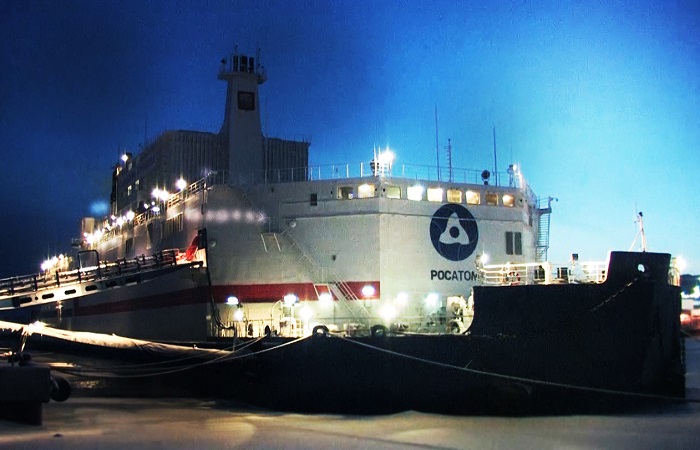
For years, the Akademik Lomonosov looked like one of the nuclear industry’s more eccentric experiments: two reactors mounted on a barge and tow...
Russia’s war against Ukraine continues to reshape the global nuclear industry in ways that extend beyond the battlefield. Western governments a...

Despite sweeping Western sanctions, Russia’s ambitions in the Arctic continue to advance—albeit in increasingly different ways. Novatek’s...