
Germany wants independence from Russian nuclear fuel, using Rosatom as a bridge
Europe’s effort to break its dependence on Russian nuclear fuel has a paradox in Germany: making Russian-designed fuel without buying it from Russia ...
News
Publish date: November 25, 2003
Written by: Jon Gauslaa
News
Council of Europe Parliamentary Assembly:
The resolution was prepared by PACE’s rapporteur on the Pasko-case, the German parliamentarian Rudolf Bindig from the Socialist Group. —Three aspects of the case of Pasko have major importance for the development of the Russian society, Bindig said in his introduction speech.
Grave concerns
First, the case reveals that the freedom of the press are in danger in Russia. Second, it shows that Russian legislation’s very broad definition of state secrets is not compatible with general rule of law principles. Third, the case exposes considerable weaknesses of the procedure before military courts. All aspects give reasons for grave concerns.
Binding gave an overview over the case, which is explained in more detail in the resolution text. He pointed out that background for the prosecution and conviction of Grigory Pasko was his critical journalism focusing on environmental abuse and corruption within the Russian Pacific Fleet.
The fact that he was convicted for having an alleged intention to hand over information to Japanese journalists, but without actually carrying out this intention, gives serious reason to doubt the basis of the conviction, Bindig said. —Besides, the use of secret military decrees as the basis for the conviction, further strengthens this impression.
Further violations
—Pasko has brought the conviction to the European Court on Human Rigths, claiming that his rights under Article 6 (fair trial), 7 (the use of secret decrees) and 10 (freedom of expression) of the European Convention of Human Rights are violated, Bindig continued, adding that more violations had occured after he had finalised the resolution text.
Even though there were no conditions related to Pasko’s releas on parole in January 2003, he is still being refused the right to receive a passport. —This appears as clear violations of both his rights under the European Convention (Article 4 of its Protocol no 2) and internal Russian legislation, Bindig said.
The continuing rejections of Pasko’s applications for passport have prevented him from being present at todays PACE-session, to which he was officially invited.
A clear message
After the rapporteur had concluded his speech, the president of PACE, Peter Schirmer from Austria, addressed the assembly.
—I think I speak on behalf of all of you, when I urge the present Russian representatives to bring up the worrying aspects of the Pasko-case with the proper Russian authorities. It is not acceptable that citizens of a member state of the Council of Europe are being treated the way Pasko has been treated, he said.
After this clear message from the President, the Assembly adopted the resolution unanimously.
Europe’s effort to break its dependence on Russian nuclear fuel has a paradox in Germany: making Russian-designed fuel without buying it from Russia ...

Nearly four and a half years after Russia’s full-scale invasion of Ukraine, July offered fresh evidence of how difficult it remains to disentangle Ru...

Just days after Egyptian nuclear authorities reportedly accused Rosatom of construction defects, poor management and vi...
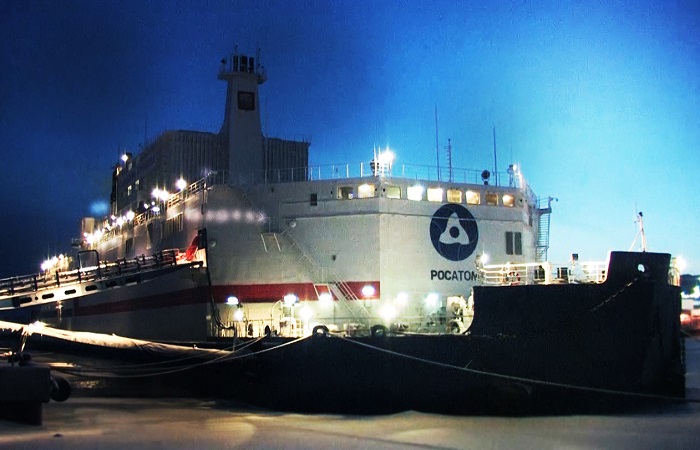
For years, the Akademik Lomonosov looked like one of the nuclear industry’s more eccentric experiments: two reactors mounted on a barge and tow...