
Germany wants independence from Russian nuclear fuel, using Rosatom as a bridge
Europe’s effort to break its dependence on Russian nuclear fuel has a paradox in Germany: making Russian-designed fuel without buying it from Russia ...
News
Publish date: October 15, 2001
Written by: Jon Gauslaa
News
At a recent press conference Pasko’s defender, Ivan Pavlov, said that the expert-interrogations showed that both the technical side and the juridical side of the expert-evaluation are untenable, and that it should be easy for the Pacific Fleet Court to see this.
‘We shall not be moved’
– It took the experts three days to discredit not only their own work, but also the phrase ‘state secrets’, said Pavlov. They mixed up technical terms and answered the same questions with both "’yes" and "no".
The attorney also revealed that the experts tried to defend their position with statements like "I have blackout"; "I have a bad sight"; and "We had problems with our computer". – When being questioned about a sentence they claim contains state secrets, they even themselves admitted that their conclusion was ‘nonsense’.
– To put it short, the experts showed an astonishing lack of knowledge, said Pavlov. Besides, the legal foundation of their evaluation can under no circumstances form the basis for a conviction, as it is based on the secret decree 055, which according to a recent ruling by the Military Supreme Court has no legal value. – Thus, if our opponents limit themselves to use only legal means, they will not be able to move us one inch, concluded Pavlov.
Experts producing blunt smiles
One of the incidents Pasko is accused with is that he allegedly has drawn a sketch over a technical naval base, which would help the Japanese to make the base ‘subject to terrorist attacks’. Although the sketch is inaccurate and outdated, and American personnel have visited the base in question on several occasions, the experts still claim that the sketch reveals state secrets.
However, they also claim that if the base mentioned were blown up, the whole Primorsky region and also most of ‘the country that ordered the sketch’ would be wiped out. When the experts were asked why the Japanese would want to destroy their own country, they could give no proper answer.
– They were only able to produce blunt smiles and claim that the sketch according to decree 055:96 contains state secrets about the location of secret units and about the presence of nuclear fuel, said Pasko’s ‘public defender’ Aleksandr Tkatchenko of the Russian Pen-club.
*****
Grigory Pasko was arrested in November 1997 on charges of espionage. He was acquitted in July 1999, but convicted of ‘abuse of official authority’ and freed under an amnesty. Seeking a full acquittal, Pasko appealed, but so did the prosecution, insisting he was a spy. In November 2000 the Military Supreme Court sent the case back for a re-trial at the Pacific Fleet Court. The re-trial started on July 11th 2001, and will resume on November 1st. The charges against Pasko are based on the evaluation of the state secret experts, whose main legal instrument has been the Russian Ministry of Defence’s secret decree no. 055:1996.
Europe’s effort to break its dependence on Russian nuclear fuel has a paradox in Germany: making Russian-designed fuel without buying it from Russia ...
Nearly four and a half years after Russia’s full-scale invasion of Ukraine, July offered fresh evidence of how difficult it remains to disentangle Ru...
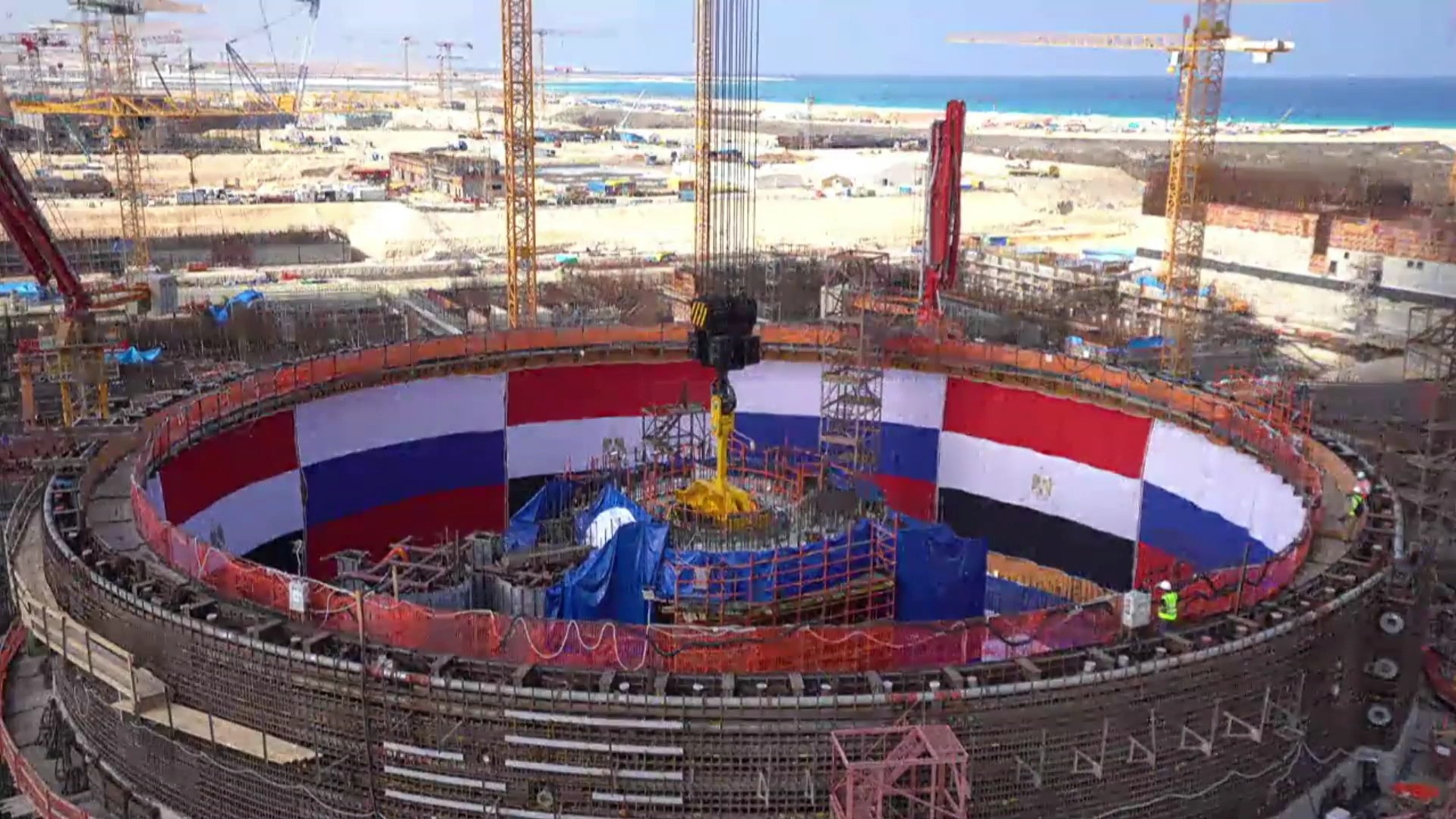
Just days after Egyptian nuclear authorities reportedly accused Rosatom of construction defects, poor management and vi...
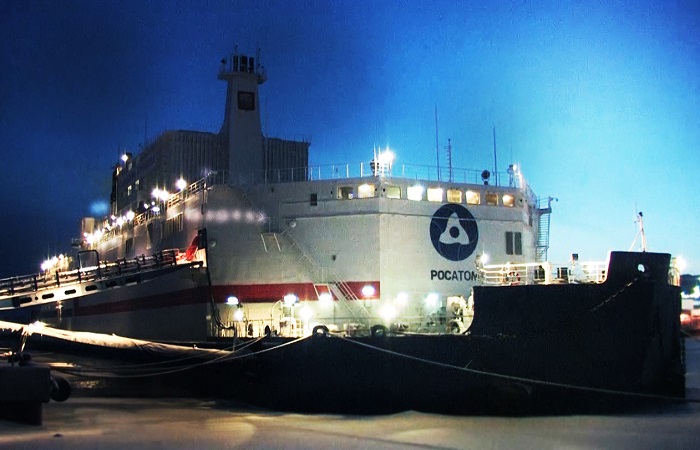
For years, the Akademik Lomonosov looked like one of the nuclear industry’s more eccentric experiments: two reactors mounted on a barge and tow...