
Germany wants independence from Russian nuclear fuel, using Rosatom as a bridge
Europe’s effort to break its dependence on Russian nuclear fuel has a paradox in Germany: making Russian-designed fuel without buying it from Russia ...
News

Publish date: September 5, 2001
Written by: Jon Gauslaa
News
Oksana Semenova works at NHKs Vladivostok branch as correspondent, secretary and translator. She was interrogated by the Court on September 3 about one episode that took place when a crew from NHK was making a film near the Hasan Lake. The crew had obtained all necessary permissions from the authorities, but still they were all arrested and placed in cells for attempts of filming secret objects in the area.
– We were pressed by the FSB
When the FSB started to interrogate Ms. Semenova, she soon realized that the lake had no significance for the investigators. What they were after was to get the witnesses to say something that could be used as basis for filing criminal charges against Pasko. Ms. Semanova told the Court that the FSB-interrogators had told her that if she did not give the correct information, she would loose her job and the NHK-Office in Vladivostok would be closed. The interrogation of the crew had continued until long after midnight. The NHK personell had been scared, and some of them broke down and lied against Pasko, Ms. Semanova told the Court.
At Paskos first trial, one of his then lawyers, Karen Narsesyan, claimed that the arrest of the NHK crew at Lake Hasan was a part of FSBs operation in order to get Pasko arrested. Then the presiding judge asked the lawyer to leave the court room, but this time the witness was allowed to give her testimony without such behaviour from the judges.
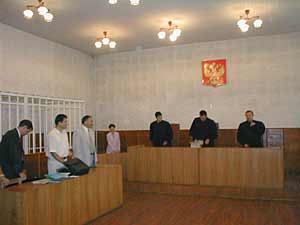
Mr. Vorobyev confirmed that he on Paskos request gave him the book, but as far as he was concerned there was no secret information in it. He also said that he believed and still believes that Pasko had journalistic interests when he asked for the book.
Trial may continue until early October
Paskos defender, Ivan Pavlov, said yesterday at a pressconference that it still was difficult to estimate when the trial would be over. Perhaps in early October, maybe longer, but that will depend on how the proceedings in Court will develop the nearest days.
Grigory Pasko was arrested in November 1997 on charges of espionage on behalf of the Japanese TV-station ‘NHK’. He was acquitted of espionage in July 1999, but convicted of abuse of his official authority and freed under a general amnesty. Seeking a full acquittal, Pasko appealed the verdict, but so did the prosecution, insisting he was a spy. The Military Collegium of the Russian Supreme Court cancelled the verdict in November 2000, and sent the case back to Vladivostok for a re-trial. After several postponements, the re-trial started on July 11, 2001.
Europe’s effort to break its dependence on Russian nuclear fuel has a paradox in Germany: making Russian-designed fuel without buying it from Russia ...

Nearly four and a half years after Russia’s full-scale invasion of Ukraine, July offered fresh evidence of how difficult it remains to disentangle Ru...

Just days after Egyptian nuclear authorities reportedly accused Rosatom of construction defects, poor management and vi...
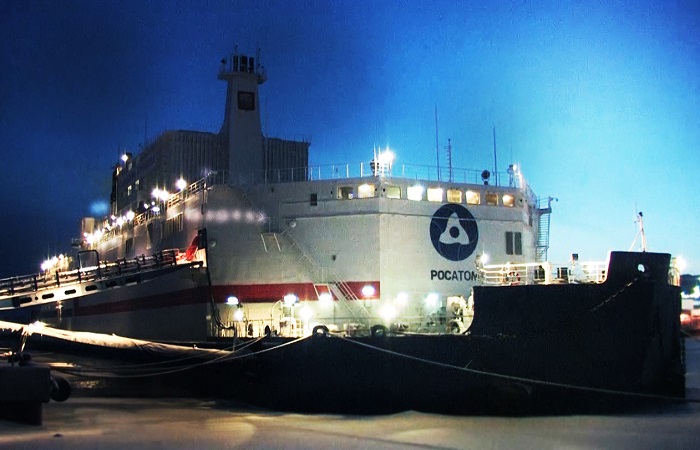
For years, the Akademik Lomonosov looked like one of the nuclear industry’s more eccentric experiments: two reactors mounted on a barge and tow...