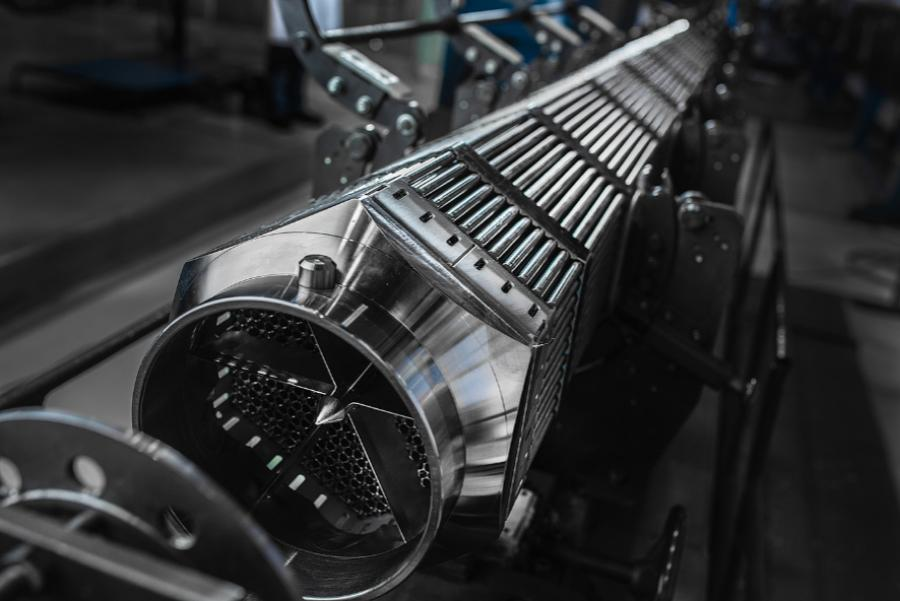
Germany wants independence from Russian nuclear fuel, using Rosatom as a bridge
Europe’s effort to break its dependence on Russian nuclear fuel has a paradox in Germany: making Russian-designed fuel without buying it from Russia ...
News
Publish date: February 19, 1998
Written by: Igor Kudrik
News
This month, the police in Novosibirsk has finalised investigation into uranium-235 smuggling case, reported Novaya Sibir newspaper. A few members of the group of smugglers were traced down in March 1997 in the town of Rubtsovsk, southwards from Novosibirsk, not far from the border with Kazakhstan. The rest of the group was seized the same time in the town of Berdsk, in the same area, where they intended to hand over the uranium pallets.
This time the "buyers" were the agents of the police department of Novosibirsk county.
The trial has not begun yet, though the investigators believe the smugglers will be sentenced up to 8 years in prison.
The origin of the seized uranium-235 has not been identified in the course of the investigation.
In his testimony in front of the U.S. Congress in June 1995, William C. Potter, Director of the Centre for Non-proliferation Studies, Monterey Institute for International Studies, indicated that there had been 12 proliferation significant cases of diversion of probable FSU-origin highly enriched uranium and plutonium from 1992 till 1995. Mr. Potter, though, did not mention seizure of weapons-grade uranium in Novosibirsk county on December 15 1995, which presumably had derived from Kazakhstan, and the case described above.
According to Vladimir Orlov, Director of the Centre for Political Studies in Moscow, some 20 criminal cases have been launched in Russia related to the theft of radioactive materials. Orlov believes that the criminals caught so far could not find customers and were acting on amateur level. In the meantime, the possibilities to smuggle nuclear materials for organised professionals remain to be quite high, said Vladimir Orlov in his article in Nuclear Control magazine.
Europe’s effort to break its dependence on Russian nuclear fuel has a paradox in Germany: making Russian-designed fuel without buying it from Russia ...
Nearly four and a half years after Russia’s full-scale invasion of Ukraine, July offered fresh evidence of how difficult it remains to disentangle Ru...

Just days after Egyptian nuclear authorities reportedly accused Rosatom of construction defects, poor management and vi...
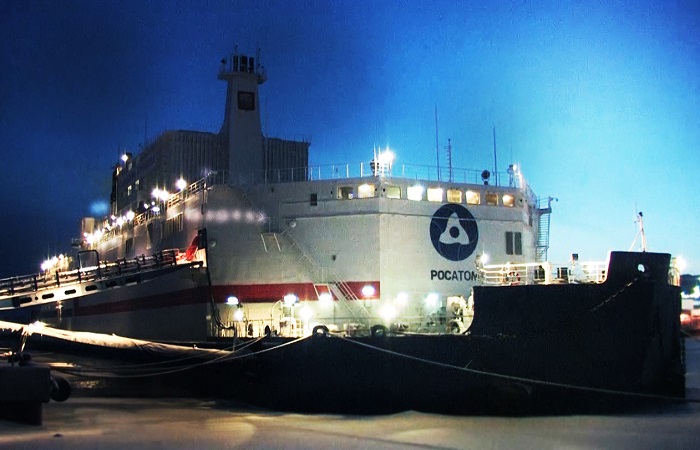
For years, the Akademik Lomonosov looked like one of the nuclear industry’s more eccentric experiments: two reactors mounted on a barge and tow...