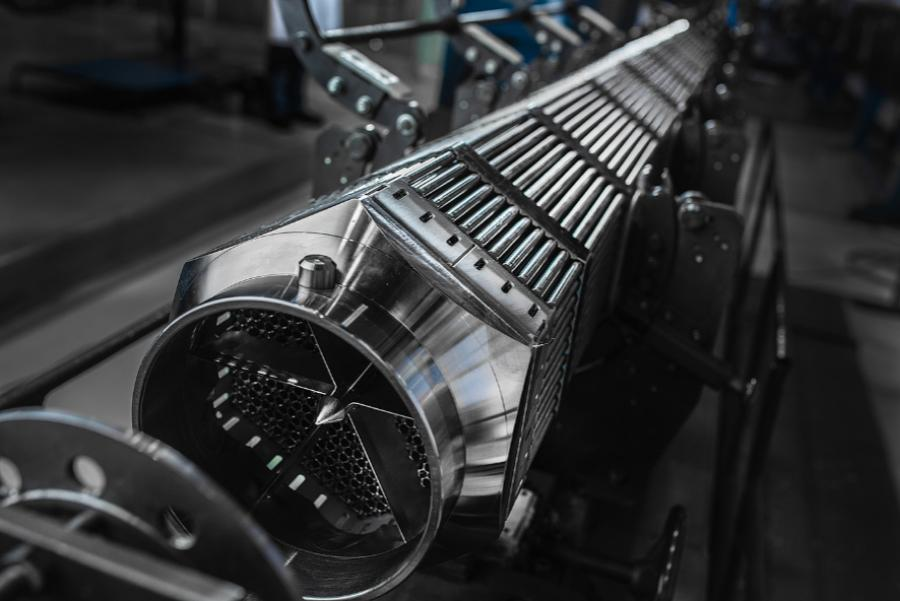
Germany wants independence from Russian nuclear fuel, using Rosatom as a bridge
Europe’s effort to break its dependence on Russian nuclear fuel has a paradox in Germany: making Russian-designed fuel without buying it from Russia ...
News
Publish date: November 3, 2004
News
The Russian Emergency minister Mikhail Faleyev told RIA Novosti about the expedition onboard scientific ship Professor Shtokman. The expedition took place in the Tsivolky, Abrosimov and Stepovoy bays from 2 to 28 September. It examined two solid radioactive waste sites and seven separate underwater objects including the nuclear submarine. All these objects are included in the Russian Register of the potentially dangerous objects. Besides, the minister mentioned that the side-scan sonar helped to locate 37 new objects, 16 of them in the Tsivolky bay. The tests showed that some of them contained radioactive waste of various activities. Faleyev also said that 554 sediment tests and 12 water tests were taken for the examination. The final report about the expedition should be ready by Desember 20.
Europe’s effort to break its dependence on Russian nuclear fuel has a paradox in Germany: making Russian-designed fuel without buying it from Russia ...
Nearly four and a half years after Russia’s full-scale invasion of Ukraine, July offered fresh evidence of how difficult it remains to disentangle Ru...

Just days after Egyptian nuclear authorities reportedly accused Rosatom of construction defects, poor management and vi...
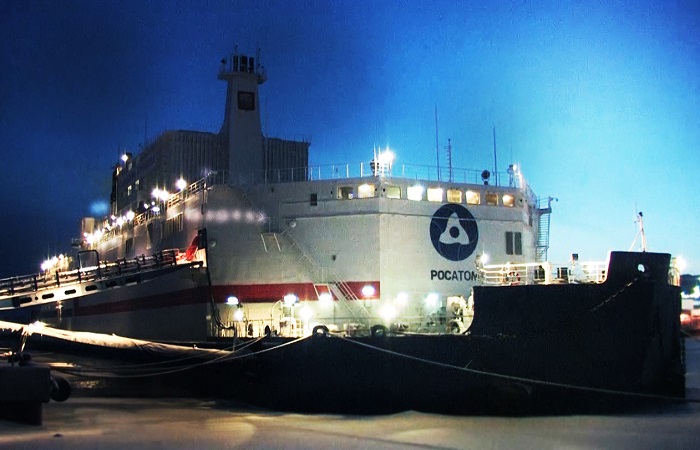
For years, the Akademik Lomonosov looked like one of the nuclear industry’s more eccentric experiments: two reactors mounted on a barge and tow...