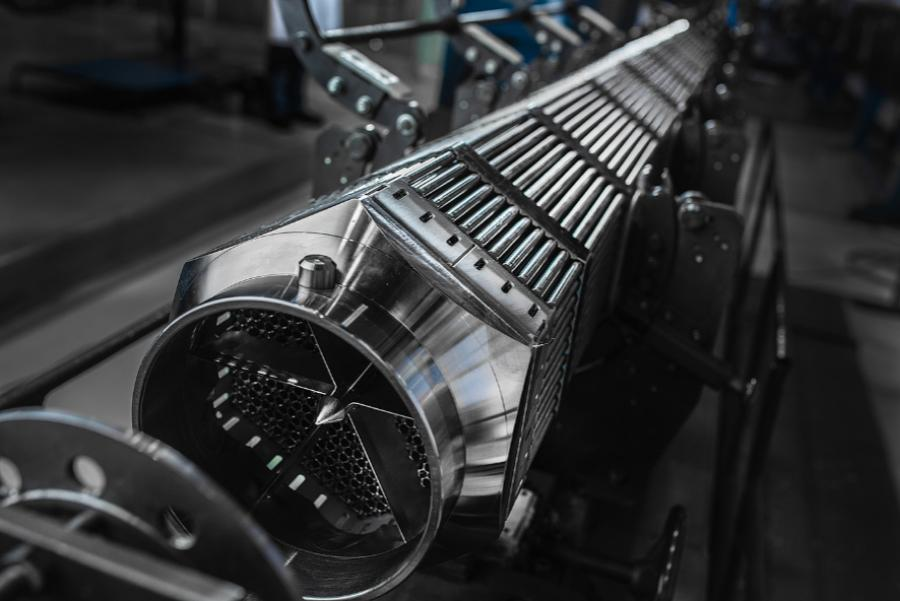
Germany wants independence from Russian nuclear fuel, using Rosatom as a bridge
Europe’s effort to break its dependence on Russian nuclear fuel has a paradox in Germany: making Russian-designed fuel without buying it from Russia ...
News
Publish date: September 12, 1998
Written by: Thomas Nilsen
News
The drama on board the Akula-class submarine, the first nuclear object ever in history to be hijacked, ended after 23 hours. Special anti-terrorist forces from the Federal Security Service (FSB) and the Northern Fleet prepared for an assault when the young sailor, Alexandr Kuzminykh, shot himself to death. The sailor’s mother and brother, in addition to a psychologist and a priest, had tried in vain to persuade him to give himself up. Instead, he threatened to blow up one of the torpedoes in the compartment where he had locked himself in.
Northern Fleet spokesman Sergei Anufriyev said in an interview with The Moscow Times there was no way Kuzminykh could cause an explosion or sink the submarine. However, all other vessels, including other nuclear submarines, had been evacuated from the area, as the Special Forces prepared for storming the hijacked Akula submarine. The torpedo casing is several centimeters thick, and cannot be detonated by gunfire from the sailors’ automatic rifle, according to the Navy’s spokesman. Nor could he start a fire on board, because the submarine’s powerful extinguishing system would be activated automatically.
Though Northern Fleet officials offered assurances that a torpedo cannot be detonated without training, in 1995 a case was recorded of two conscripts accidentally detonating a conventional missile warhead. The conscripts, stationed at a base at the Pacific Fleet, stole the warhead from the base’s arsenal, intending to strip it off precious metals. When they tried to open it with a hammer, the warhead exploded, vaporizing the conscripts.
The fact that other submarines, close to the hijacked Akula in Skalisty naval base, were evacuated is also a sign that no one could guarantee that the teenage sailor who had run amok would not be able to detonate some of the Akula’s 40 torpedoes. An explosion in the torpedo compartment could be strong enough to damage the submarine’s single reactor. Norwegian radiation protection authorities were on alert during the submarine drama, which took place only 120 kilometers from the Norwegian border in the north.
Europe’s effort to break its dependence on Russian nuclear fuel has a paradox in Germany: making Russian-designed fuel without buying it from Russia ...
Nearly four and a half years after Russia’s full-scale invasion of Ukraine, July offered fresh evidence of how difficult it remains to disentangle Ru...

Just days after Egyptian nuclear authorities reportedly accused Rosatom of construction defects, poor management and vi...
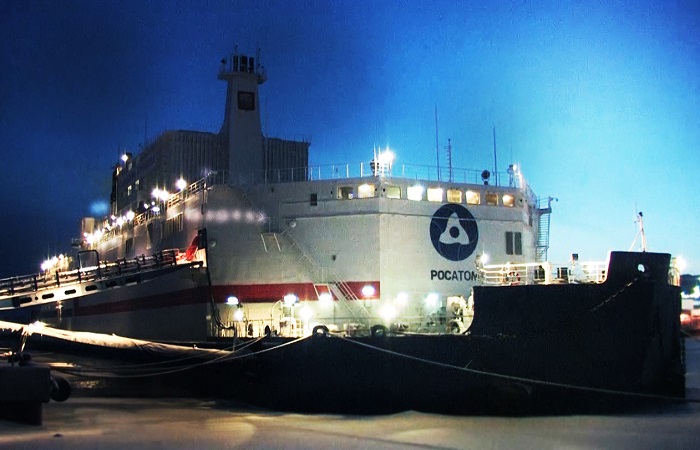
For years, the Akademik Lomonosov looked like one of the nuclear industry’s more eccentric experiments: two reactors mounted on a barge and tow...