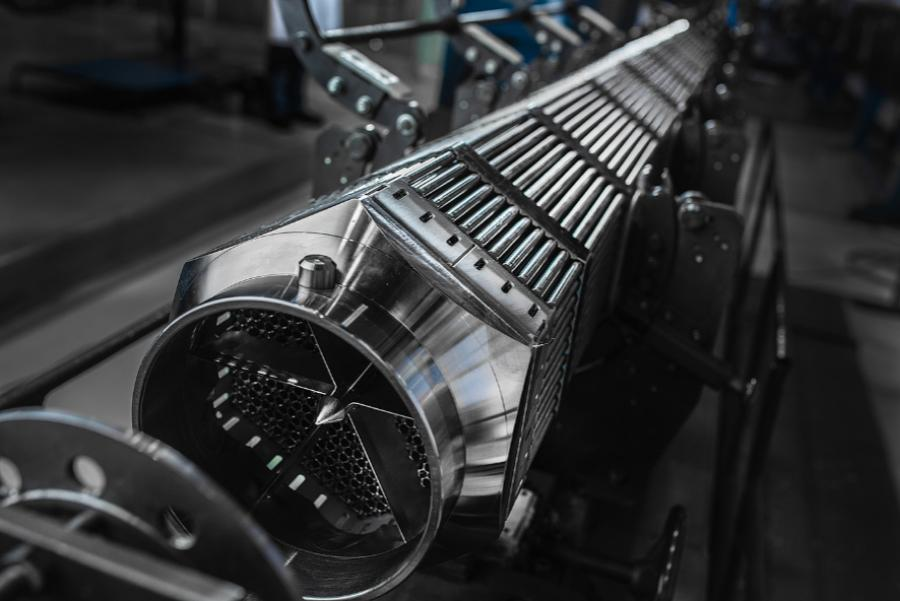
Germany wants independence from Russian nuclear fuel, using Rosatom as a bridge
Europe’s effort to break its dependence on Russian nuclear fuel has a paradox in Germany: making Russian-designed fuel without buying it from Russia ...
News

Publish date: November 29, 2008
News
Bellona’s Poznan lecture series:
December 2nd at 13:00 :“The EU Demonstration Programme for CO2 Capture and Storage” by Paal Frisvold. Frisvold will hold a lecture on behalf of the European Union’s (EU) Technology Platform on Zero Emission Fossil Fuel Power Plants (ZEP) at the EU commission’s side event on CO2 capture and storage (CCS). He will show in this lecture that this technology is ready to be put into use. The lecture will take place in Pavilion 9 in the EU tent.
 Photo: (Foto: Tone Foss Aspevoll)
December 8th, 16:30-18:15: CO2 Capture Flagship Programme (not public). Frederic Hauge is moderator and chairman of this conference arranged by the European Parliament’s Energy Forum by virtue of his presidency of the Bellona Foundation and vice-foremanship of the EU’s Technology Platform on Zero Emission Fossil Fuel Power Plants (ZEP). The panel included Janez Potočnik, European Commissioner for science and research, former Polish Prime Minister Jerzy Buzek, Member of European Parliament Chris Davies, the Liberal Democrat spokesman on the environment and public health in the European Parliament. In the Bedlewo suburb of Poznan.
Bellona’s expectations of the Poznan meeting:
CO2 Capture and Storage (CCS): We were not in possession of this tool when the Kyoto Protocol was ratified. Bellona’s reckoning indicates that CO2 capture and storage will become a part of the next climate agreement, presumably in a new mechanism for technology transfer and development in poorer nations.
Technology and financing: Technology transfer and development will be central in Poznan. Bellona considers it important for wealthier nations to go forth and set a good paradigm now that this concerns financing and economic contributions. The financial crisis is no excuse not to seek solutions to the climate crisis.
The Clean Development Mechanism (CDM): Simplification of regulation work, as well as group approval of similar programmes can open the door for many smaller projects.
The 2 degree goal: Norway and the EU are holding fast to the two-degree level. This is still realistic – and necessary – to hinder global warming that exceeds two degrees in order to forgo large and irreversible climate changes. An emissions goal must be set in Poznan.
‘Middle ground’ nations: Countries like Mexico, South Korea, Brazil, India, Russia and China must set their own climate obligations and evaluate themselves differently from the way the poorest nations evaluate their obligations.
A global climate agreement and the role of the United States: Norway is working hard to come to a deal that includes all countries. US President-elect Barack Obama’s climate goal underscore the possibility of achieving this. Through its network, Bellona will do all it can to build bridges between the United States and Russia.
Contacts:
Bellona Information Advisor Tone Foss Aspevoll (+47 91 72 02 67, tone@bellona.no) for comment inquiries and interviews, information about the negotiations, and access to our international networks of politicians and researchers.
Bellona Vice-President Marius Holm (+47 95 72 16 32) is avaialble for press comment in Oslo.
Europe’s effort to break its dependence on Russian nuclear fuel has a paradox in Germany: making Russian-designed fuel without buying it from Russia ...
Nearly four and a half years after Russia’s full-scale invasion of Ukraine, July offered fresh evidence of how difficult it remains to disentangle Ru...
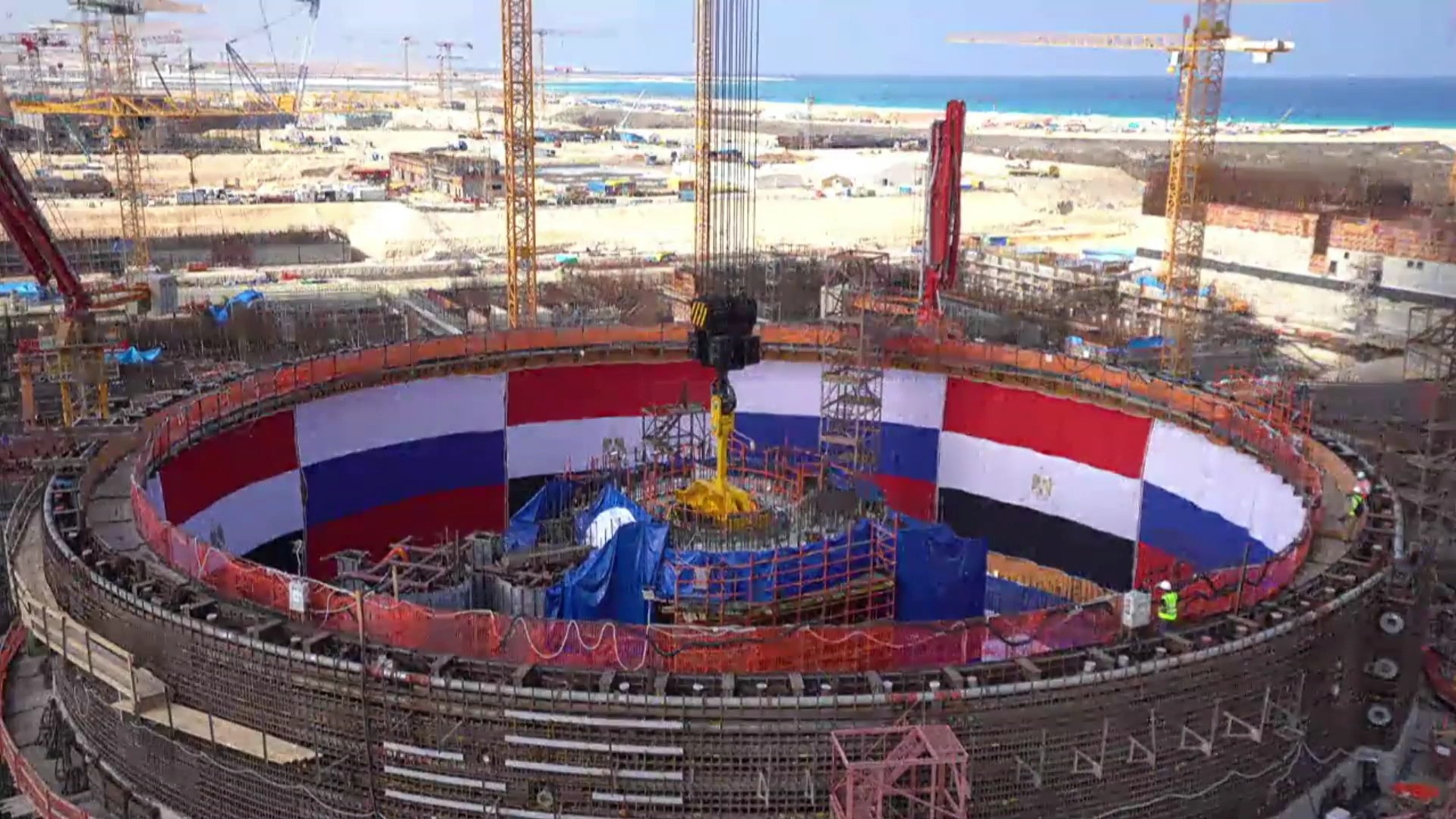
Just days after Egyptian nuclear authorities reportedly accused Rosatom of construction defects, poor management and vi...
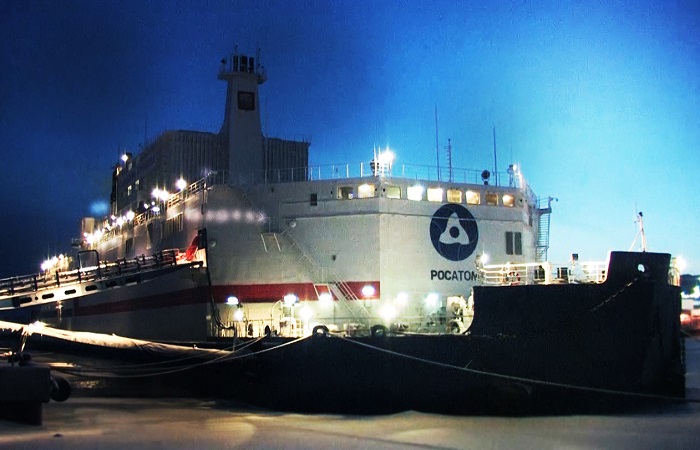
For years, the Akademik Lomonosov looked like one of the nuclear industry’s more eccentric experiments: two reactors mounted on a barge and tow...