
Germany wants independence from Russian nuclear fuel, using Rosatom as a bridge
Europe’s effort to break its dependence on Russian nuclear fuel has a paradox in Germany: making Russian-designed fuel without buying it from Russia ...
News

Publish date: May 27, 2008
News
The refusal, which environmentalists and lawyers insist are legally baseless, establishes that public input regarding the construction of yet another nuclear power plant some 40 kilometres down the road from St. Petersburg will not be taken into account — as is increasingly the case in Russia when environmental concerns butt heads with big money.
At the end of April, Rostekhnadzor, Russia’s nuclear oversight body accepted materials to start a state environmental impact assessment in order to issue a license for the building of the Leningrad Nuclear Power Plant 2. A conclusion is expected from an expert government commission by July.
ERC Bellona petitioned the Smolnenskoye administrative body — which oversees the city of Sosnovy Bor, where the original Leningrad Nuclear Power Plant is located — to conduct an independent review of the licensing materials for the second Leningrad Nuclear Power Plant as an environmental organization.
The administrative structure refused Bellona on the grounds that the Leningrad Nuclear Power Plant is a “federally significant installation” and is a part of the “nuclear complex,” which, according to Presidential Order No. 1203 of November 1995 (revised in 2008), makes it an installation that is classified as secret.
“In all circumstances the articles of the Russia Law ‘On State Secrets’ about information on the condition of the environment are not subject to attribution as state and this interpretation has juridical preponderance,” said prominent Russian human right lawyer Yury Shmidt.
“The installation to be evaluated is not military, which, doubtless disallows its attribution to information constituting a state secret.”
According to Alexander Nikitin, chairman of ERC Bellona, the refusal to conduct a public environmental impact study “is not founded on anything but the personal opinion of the head of the Smolnenskoye Administrative body, one V. I. Sekushin, who signed the refusal.”
However, taking the refusal up with the courts in hopes of getting a favorable ruling in favor of the environmental group remains in question because of rules governing conducting public environmental impact studies.
In accordance with article of the 1995 law “On Environmental Impact Studies,” public environmental impact studies are to be undertaken either before a government environmental impact study or while the governmental study is being conducted.
Thus, if the conclusions of a public environmental study were submitted after the confirmation of a government study, the findings of NGOs and civil society organisations are not taken into account.
The state environmental impact study of materials validating the license for the construction of the Leningrad Nuclear Power Plant 2 will be carried out over a two-month period and the possible red tape in the echelons of the court will force the environmentalists to miss this deadline.
Europe’s effort to break its dependence on Russian nuclear fuel has a paradox in Germany: making Russian-designed fuel without buying it from Russia ...
Nearly four and a half years after Russia’s full-scale invasion of Ukraine, July offered fresh evidence of how difficult it remains to disentangle Ru...
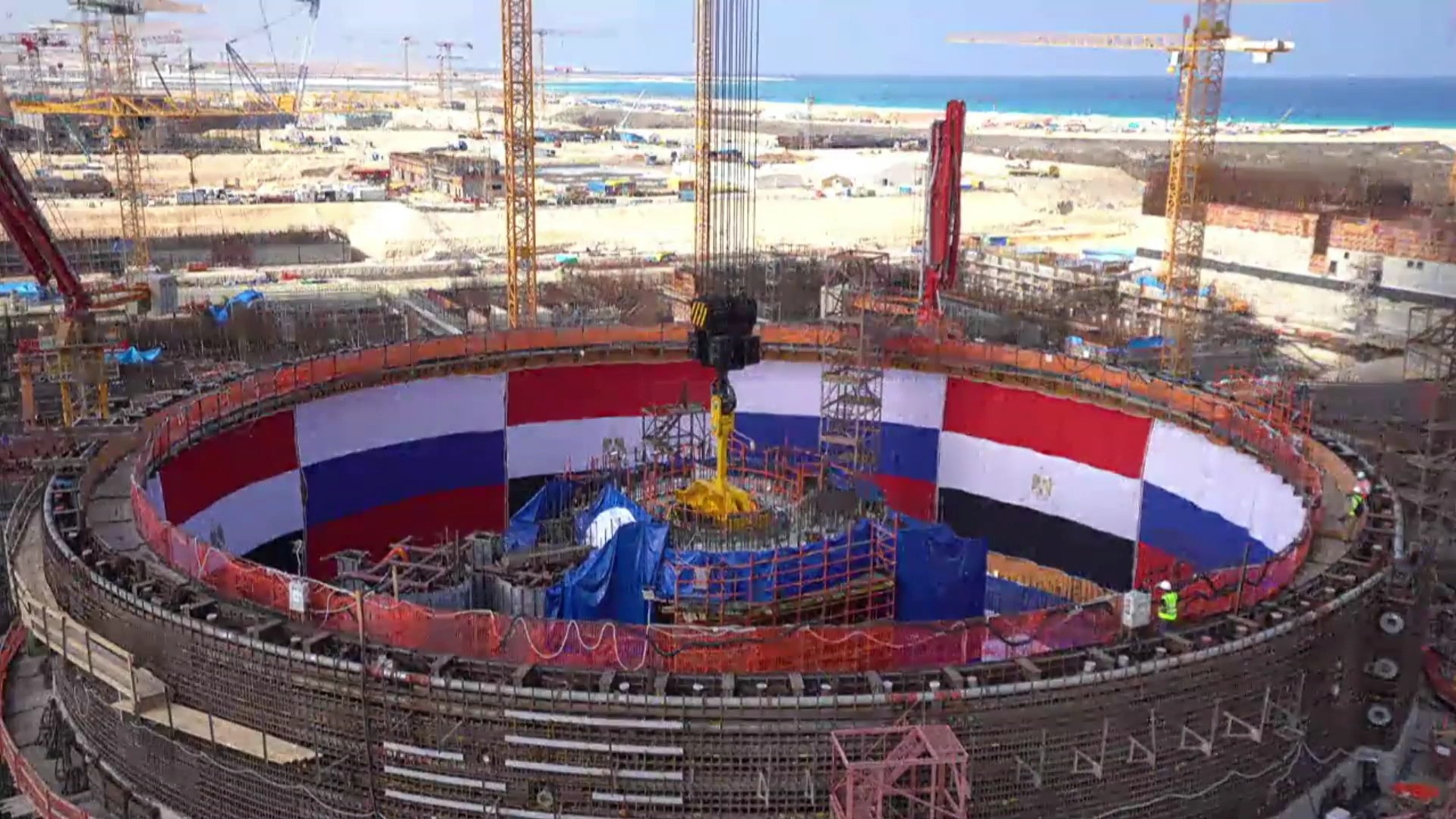
Just days after Egyptian nuclear authorities reportedly accused Rosatom of construction defects, poor management and vi...
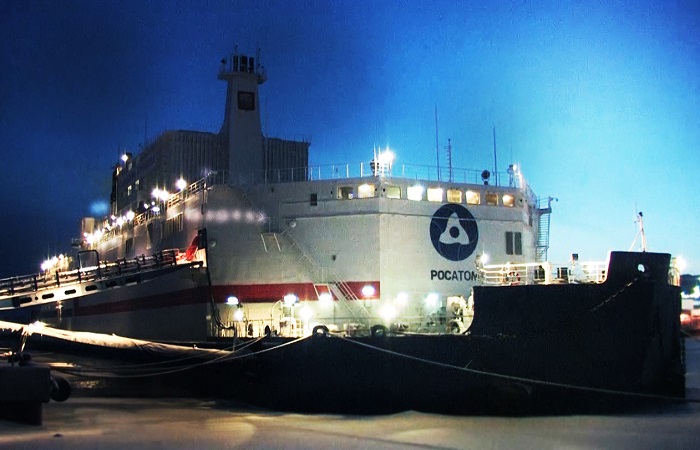
For years, the Akademik Lomonosov looked like one of the nuclear industry’s more eccentric experiments: two reactors mounted on a barge and tow...