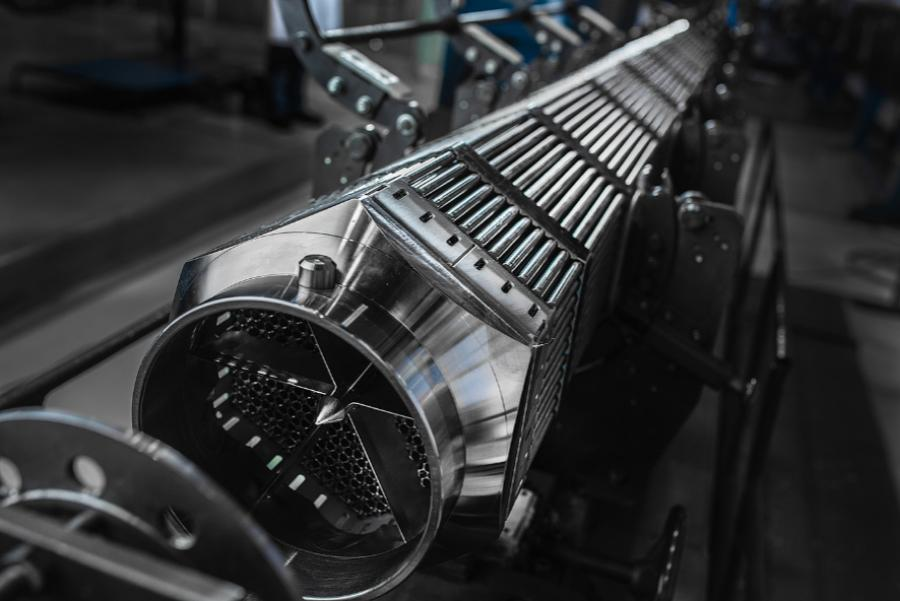
Germany wants independence from Russian nuclear fuel, using Rosatom as a bridge
Europe’s effort to break its dependence on Russian nuclear fuel has a paradox in Germany: making Russian-designed fuel without buying it from Russia ...
News

Publish date: January 31, 2008
Written by: Charles Digges
News
Environmental activists and members of parliament (MPs) said the costs of decommissioning – likely to reach £73 billion – were now out of control. They called for an urgent clean-up at the Sellafield reprocessing plant in Cumbria after Wednesday’s report by the National Audit Office (NAO).
The NAO reported that decommissioning costs for Britain’s existing 19 nuclear plants had risen by 18 percent – about £11.7 billion between 2005 and 2007 – and are expected to reach £73 billion but could go higher. Part of the reason for the rise is that previous plans failed to include the cost of cleaning up the ponds and silos at Sellafield, and the method of decommissioning was changed from manual to remotely operated work to reduce risks to staff.
In Bellona’s opinion, the NAO office shows the staggering cost of safely storing Britain’s growing quantity of radioactive waste, while Britain’s energy needs, and investment in combating climate change, could be met by relying on more readily available renewable energy sources.
Cost of new storage facilities still not included
The British Government is still working out the best way to store future waste but has been advised that deep storage under the sea is probably the safest method.
Yet, the cost of building new storage facilities is not included in the latest estimates.
Of particular concern is the fact that the cost estimates for work about to begin are still on the rise.
The NAO said in a statement that the increase in costs partly reflected "a more complete assessment of the range of work that needs to be taken forward, including the action necessary to address hazards at some of the legacy facilities at Sellafield.”
"Our analysis of the plans also indicates, however, that cost estimates on work expected to be undertaken in the near to medium-term, which might be expected to have stabilised by now, have risen significantly. Between 2005 and 2007, the estimate of likely costs for the first five year period covered by those plans in a consistent manner – April 2008 to March 2013 – rose by 41 percent."
A growing proportion of the UK’s nuclear facilities have reached, or are nearing, the end of their operational life. By December 2007, 14 facilities had shut down and were in the process of being decommissioned, which included cleaning up the sites.
Prime Minister Gordon Brown has made clear that he wants to address that shortfall by not only building new nuclear power plants, but, in some circumstances, by extending the life spans of soon to be decommissioned nuclear reactors.
He has defended his new plan for expanding nuclear power across England by saying it will reduce the country’s dependence on oil from the Middle East and cut the country’s carbon emissions.
Europe’s effort to break its dependence on Russian nuclear fuel has a paradox in Germany: making Russian-designed fuel without buying it from Russia ...
Nearly four and a half years after Russia’s full-scale invasion of Ukraine, July offered fresh evidence of how difficult it remains to disentangle Ru...

Just days after Egyptian nuclear authorities reportedly accused Rosatom of construction defects, poor management and vi...

For years, the Akademik Lomonosov looked like one of the nuclear industry’s more eccentric experiments: two reactors mounted on a barge and tow...