Rosatom faces pressure abroad as Zaporizhzhia’s nuclear risks deepen
August brought signs of growing pressure on several fronts for Russia’s state nuclear corporation Rosatom, from questions surrounding major construct...
News

Publish date: August 21, 2018
News
Russian scientists have taken to the seas in a research vessel as part of an effort to locate and map radioactive radioactive waste, nuclear reactors and other castoffs the Soviet Navy scuttled in the Arctic’s Kara Sea.
Mikhail Flint, head of the Russian Academy of Sciences institute of Oceanology, told the official Tass newswire the Akademik Mstislav Keldish research ship left Arkhangelsk Friday for the waters near the Novaya Zemlya Archipelago, a former Soviet nuclear bomb testing range around which Russia’s nuclear Navy routinely shed its radioactive waste.
Flint, who is heading the expedition, said the crew would scour inlets along Novaya Zemlya’s craggy coast to measure possible radioactive leakage from what he said were thousand of containers of nuclear waste, as well as entire reactors that were sunk while still loaded with spent nuclear fuel.
“There is a huge number of dumping sites in the bays of Novaya Zemlya,” Flint told Tass. “The sea is a mobile environment, and any leakage could lead to an uncontrollable transfer of radiation.”
Such expeditions, Flint said, are undertaken on a yearly basis. As yet, he said, no major leakage has been detected.
The expedition will continue for the next month and a half and encompass not only the waters surrounding Novaya Zemlya. The vessel will conducted additional research mapping radioactive hazards in the White Sea, and then progress to the Laptev Sea some 2000 nautical miles to the east.
Beginning in 1955 and continuing until the early 1990s, the Russian Navy dumped enormous amounts of irradiated debris — and it one case an entire nuclear submarine — into the waters of the Arctic. It was not, however, until 2011 that the Russian government admitted this on an international level.
That year, Moscow shared with Norwegian nuclear officials the full scope of the problem. The list of sunken objects was far more than had initially been thought, and included 17,000 containers of radioactive waste; 19 ships containing radioactive waste; 14 nuclear reactors, including five that still contain spent nuclear fuel; the K-27 nuclear submarine with its two reactors loaded with nuclear fuel, and 735 other pieces of radioactively contaminated heavy machinery.
Moscow routinely promises to lift the submarine, but actual plans to do do have yet to materialize.
August brought signs of growing pressure on several fronts for Russia’s state nuclear corporation Rosatom, from questions surrounding major construct...
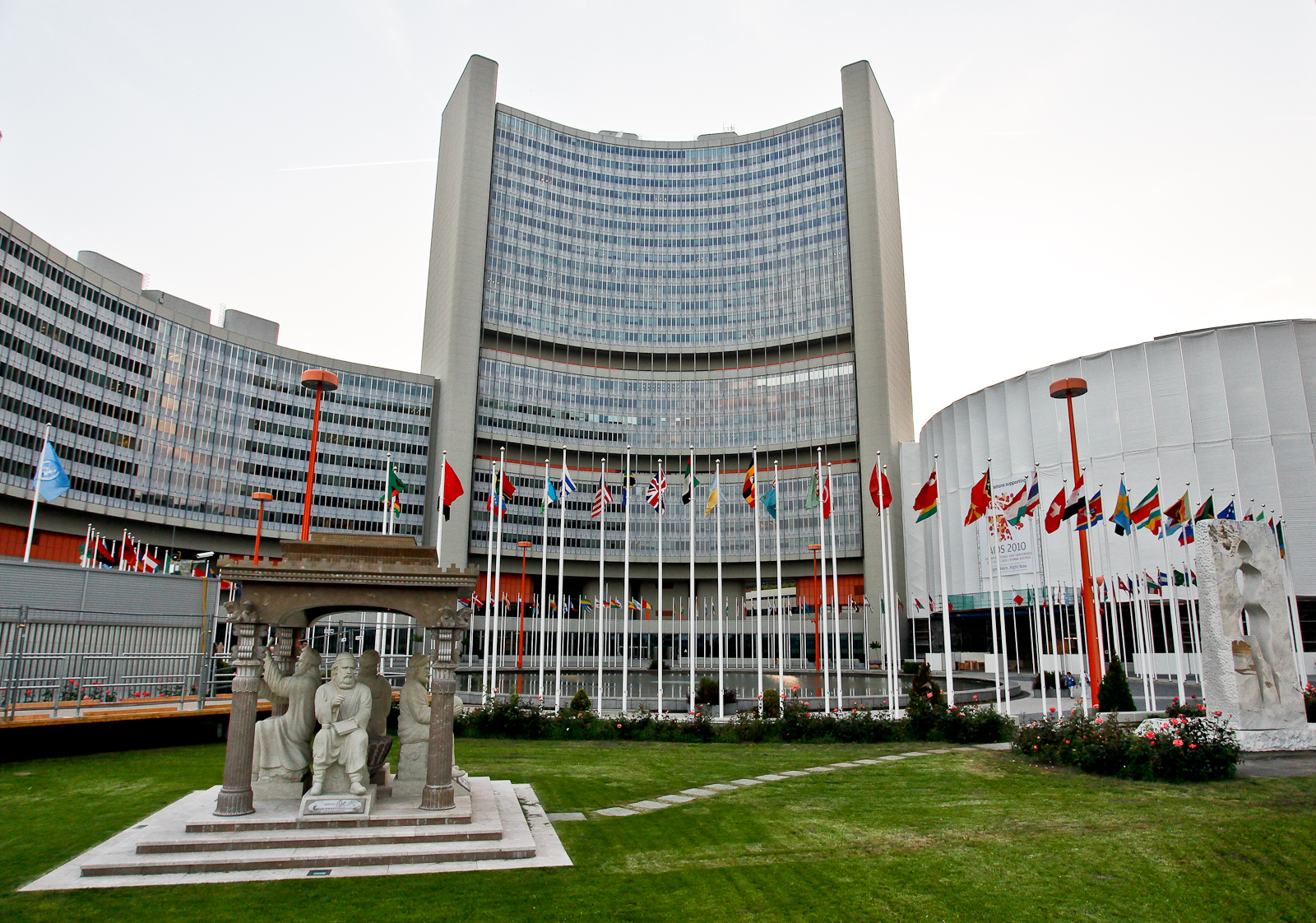
The International Atomic Energy Agency has suspended one of its most senior Russian officials — but for reasons largely unrelated to the questions ab...

Europe’s effort to break its dependence on Russian nuclear fuel has a paradox in Germany: making Russian-designed fuel without buying it from Russia ...
Nearly four and a half years after Russia’s full-scale invasion of Ukraine, July offered fresh evidence of how difficult it remains to disentangle Ru...