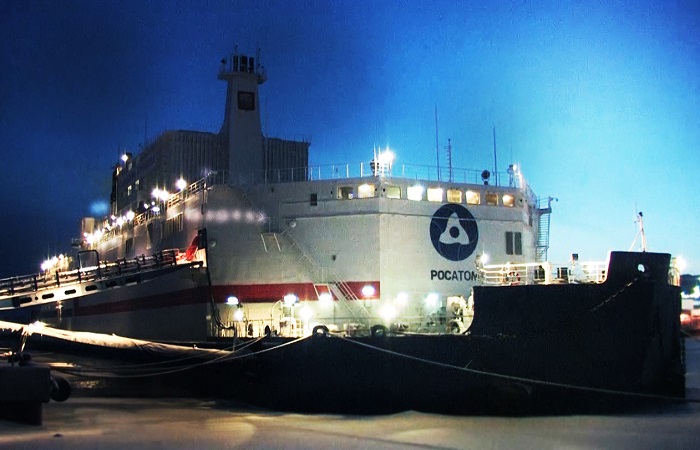
Floating nuclear power was a Russian curiosity. Now others want to give it a shot
For years, the Akademik Lomonosov looked like one of the nuclear industry’s more eccentric experiments: two reactors mounted on a barge and tow...
News
Publish date: September 14, 2008
News
By so doing, the share of bio-ethanol flowing to the European Union transport sector will be 5 percent. It was earlier assumed that the share would be raised to 10 percent.
The deputies also called for governments of the European Union to limit the production of fuel from corn and concentrate on electric and hydrogen energy, Oil.ru reported.
According to the United Nations, the spread of bio-fuels is a major cause behind the world-wide spike in food costs because the amount of arable land that could be devoted to food production is being used to grow fuel products.
For years, the Akademik Lomonosov looked like one of the nuclear industry’s more eccentric experiments: two reactors mounted on a barge and tow...
Russia’s war against Ukraine continues to reshape the global nuclear industry in ways that extend beyond the battlefield. Western governments a...
Despite sweeping Western sanctions, Russia’s ambitions in the Arctic continue to advance—albeit in increasingly different ways. Novatek’s...
Even as the war grinds on, Ukraine continues to expand its civilian nuclear ambitions. Britain has tightened sanctions on Russia’s nuclear sect...