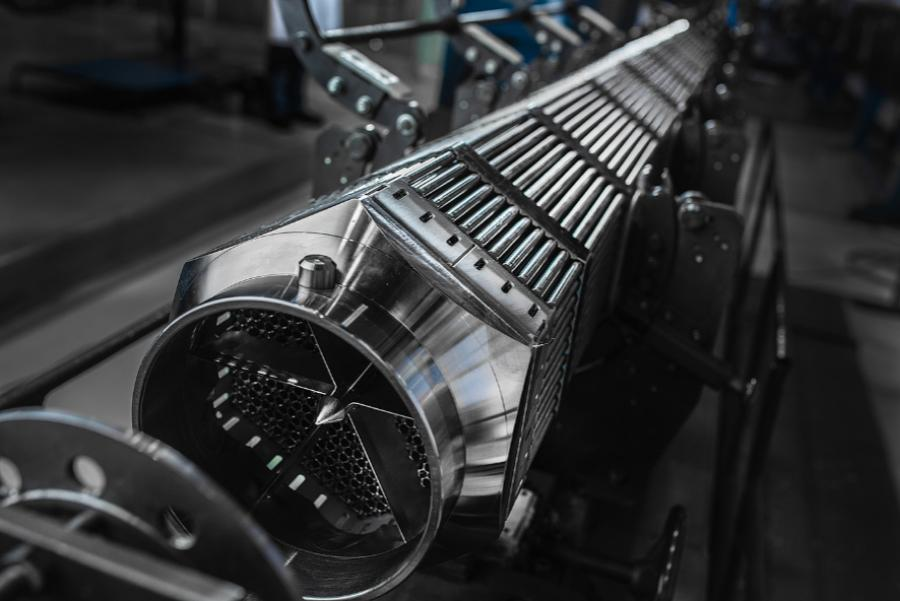
Germany wants independence from Russian nuclear fuel, using Rosatom as a bridge
Europe’s effort to break its dependence on Russian nuclear fuel has a paradox in Germany: making Russian-designed fuel without buying it from Russia ...
News
Publish date: October 5, 2006
News
"China is prepared to give us the right to build from six to eight power generating units," said Kirienko, who recently returned from talks in Beijing, according to Interfax.
The estimated cost for building a reactor is some $1.5 billion, thus Russia stands to gain a $12 billion windfall – if it can come up with the materials, resources and know-how to fulfill China’s demands.
China has rejected fast turbine reactors, which constitute the first and second reactor units that are already being built by Rosatoms foreign construction wing Atomstroiproekt at the Tianwan power plant, opting instead for slow turbine reactors. The sticking point, said Kirienko, is that Russia does not produce slow turbine reactors.
"They need slow turbines which are not made in Russia," Kiriyenko told the cabinet.
China is also one of the largest sponsors of Rosatom’s floating nuclear power plant programme and has lent it several milion dollars in hopes of being a repeat customer for these environmentally questionable mobile off-shore installations. At the same time, China has also invested millions more in alternative energy strategies, which, coombined with nuclear power, will help it meet its Kyoto Protocol requirements.
Rosatom is considering several ways of solving the slow turbine problem for the Tianwan NPP, Interfax reported. "We are in talks with all of the world’s manufacturers of such turbines," Kirienko said.
The production of slow turbines in Russia would allow Moscow to reap an additional profit of $800m to $1.6 billion. The cost of one turbine is estimated at $100m to $200m, the Gazeta.ru news website reported.
According to Kirienko, several foreign firms have already expressed interest in helping Russia get its slow turbine production on it feet. “They have all come to us and we are in negotialtions,” he said, according to Gazata Ru.
Kirienko has laid out strict conditions for any joint ventures with foreign or domestic slow turbine producers, said Gazeta.ru. First, production must take place in Russia. Second, potential partners must have technology that Rosatom has not already mastered, and third, production of the slow turbines and their spare parts must be as localised as possible in Russia.
Kirienko said that one especially promising prospect was a joint venture with the Russian firm Heavy Machinery, which already produces fast turbines, but it is unclear if they are able to build the required slow turbines required by Beijing.
Another variant under consideration is a partnership the Kharkov, Ukraine Truboatom, which does produce slow turbines. Other companies further a-field that have the necessary technology include Siemens, Westinghouse, BNFL, Alstom and General Electric, Gazeta.ru quoted Rosatom officials as saying.
Europe’s effort to break its dependence on Russian nuclear fuel has a paradox in Germany: making Russian-designed fuel without buying it from Russia ...
Nearly four and a half years after Russia’s full-scale invasion of Ukraine, July offered fresh evidence of how difficult it remains to disentangle Ru...
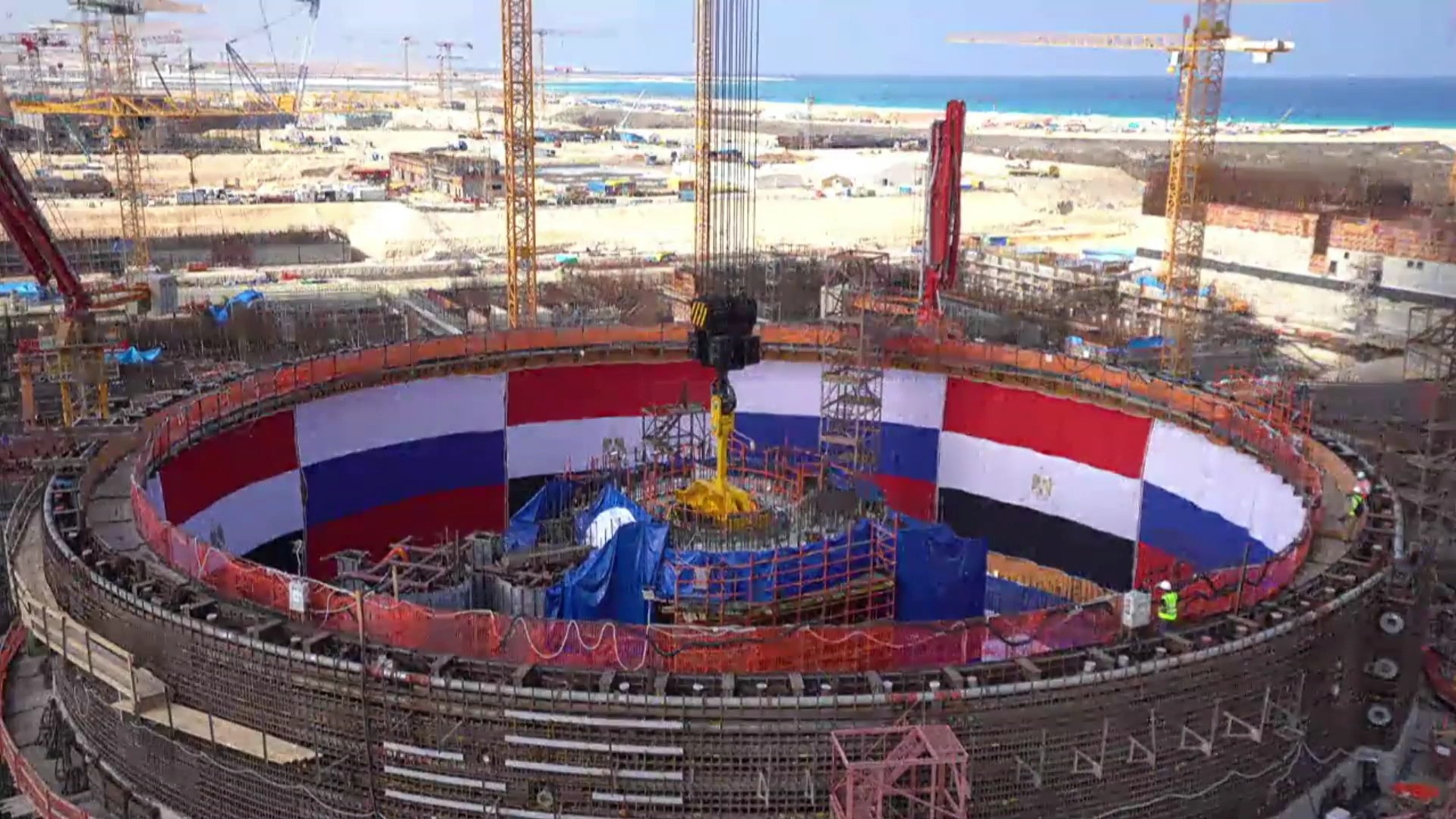
Just days after Egyptian nuclear authorities reportedly accused Rosatom of construction defects, poor management and vi...
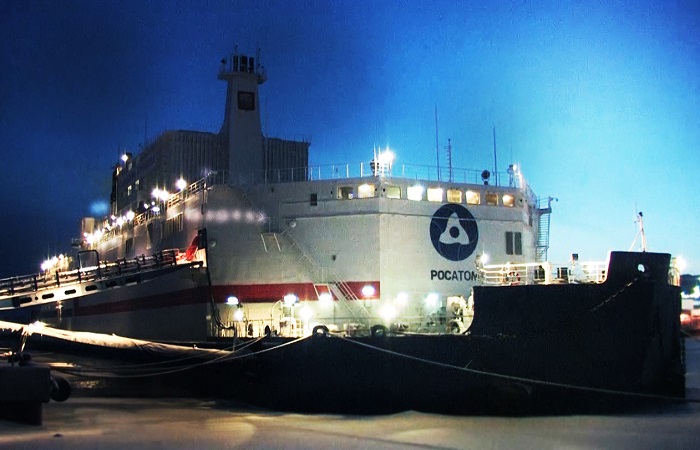
For years, the Akademik Lomonosov looked like one of the nuclear industry’s more eccentric experiments: two reactors mounted on a barge and tow...