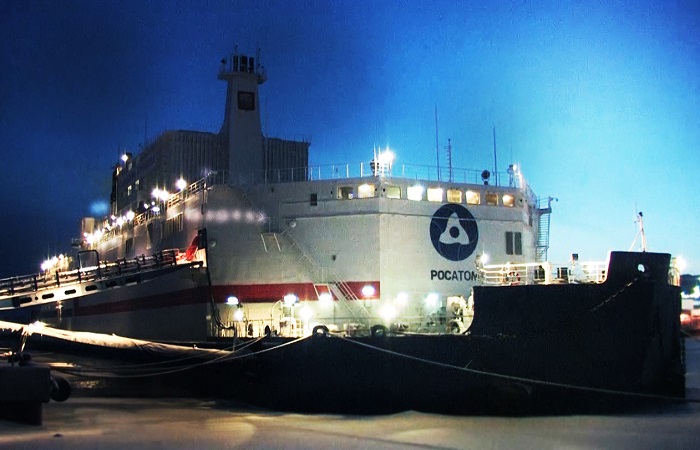
Floating nuclear power was a Russian curiosity. Now others want to give it a shot
For years, the Akademik Lomonosov looked like one of the nuclear industry’s more eccentric experiments: two reactors mounted on a barge and tow...
News
Publish date: July 10, 2009
Written by: Elena Kobets
News
Participants established a collaborative process for organizing regional anti-nuclear hearings in Europe, the US and Russia to lay the groundwork for a larger anti-nuclear movement.
An international steering committee with representatives from Russia, Germany, the US and the Netherlands was formed as well as three regional committees (US, Russia, and Europe), to coordinate the international hearings and continue the Global Nuclear Legacy Project.
Some of the organizers came from regions affected by nuclear complexes and nuclear power plants such as Hanford, La Hague, Sellafield, Chernobyl and Mayak who have seen first hand the environmental damage and human health effects of the nuclear legacy.
After the end of the Cold War national nuclear industries began to increase their wealth and influence in the global market, resulting in international corporations controlling both civil and military nuclear production from uranium mining to waste disposal.
For years, the Akademik Lomonosov looked like one of the nuclear industry’s more eccentric experiments: two reactors mounted on a barge and tow...
Russia’s war against Ukraine continues to reshape the global nuclear industry in ways that extend beyond the battlefield. Western governments a...

Despite sweeping Western sanctions, Russia’s ambitions in the Arctic continue to advance—albeit in increasingly different ways. Novatek’s...
Even as the war grinds on, Ukraine continues to expand its civilian nuclear ambitions. Britain has tightened sanctions on Russia’s nuclear sect...