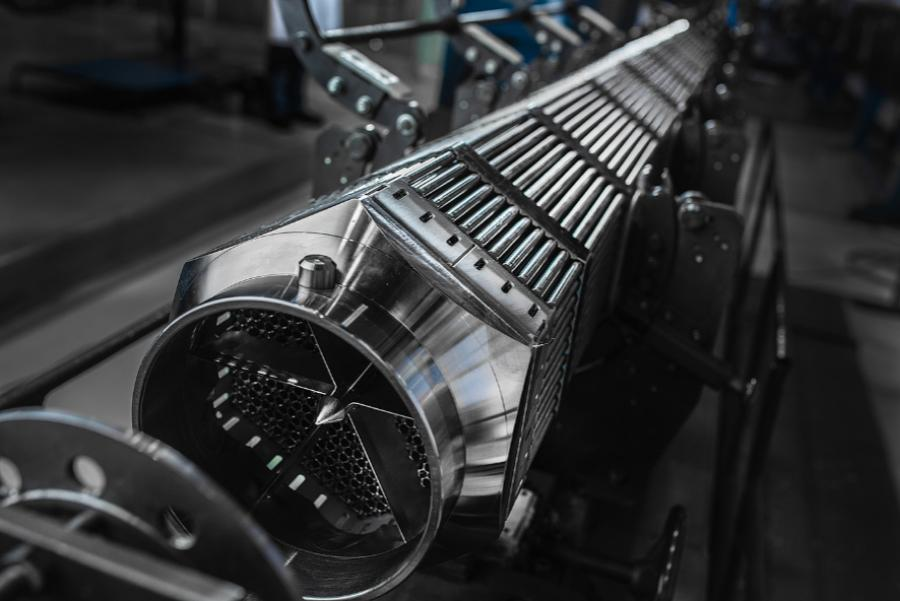
Germany wants independence from Russian nuclear fuel, using Rosatom as a bridge
Europe’s effort to break its dependence on Russian nuclear fuel has a paradox in Germany: making Russian-designed fuel without buying it from Russia ...
News

Publish date: May 26, 2015
News
The Aberdeen-based Pale Blue Dot will be commencing the project this month, and will over the next year aim to drive the appraisal and progression of five significant offshore CO2 storage sites. The contract has been awarded by the Energy Technologies Institute (ETI) and is funded by the UK Department for Energy and Climate Change (DECC).
The project is required to aid the deployment of future CCS projects beyond the current DECC CCS Commercialisation programme, in the mid-2020s. The availability of safe and permanent CO2 storage capacity is the most crucial step in preventing millions of tonnes of CO2 from entering the atmosphere. In addition permanent CO2 storage is the only current method to achieve large scale carbon negative emissions, such carbon dioxide removal (CDR) plays a central role in achieving the IPCC AR5 2oc scenarios.
“This will put the UK on track to permanently store decades of emissions from many of its major power stations and industrial emitters. This will significantly de-risk and encourage the deployment of CCS technology in the years ahead” said Den Gammer, ETI’s CCS Strategy Manager.
Urgency to deliver a CO2 storage industry
Bellona, who strongly welcomes the undertaking of this project, sees the availability of CO2 storage as the linchpin of CCS deployment. “A lack of storage capacity could render CO2 capture futile, and in the worst case could discourage investments in CCS projects. A CO2 storage industry that can match the scale of oil and gas sector will therefore be necessary to enable the necessary scale of CCS deployment” – explains Keith Whiriskey, Climate Technologies Policy Manager at Bellona Europa.
In its recently published report entitled “Scaling the CO2 storage industry: A study and tool” Bellona finds that annual investments in the range of €500 million will need to begin by 2020 in order to provide the injection and storage capacity needed to effectively reduce emissions from energy and industry.
“The climate challenge is huge, concerted efforts are needed on all fronts from renewables to efficiency. But investments in CO2 storage cannot be overlooked; low carbon cement, steel and chemicals will all require their CO2 to be permanently stored in order to prevent irreversible damage to the atmosphere, oceans and climate”- further adds Whiriskey.
Europe’s effort to break its dependence on Russian nuclear fuel has a paradox in Germany: making Russian-designed fuel without buying it from Russia ...
Nearly four and a half years after Russia’s full-scale invasion of Ukraine, July offered fresh evidence of how difficult it remains to disentangle Ru...

Just days after Egyptian nuclear authorities reportedly accused Rosatom of construction defects, poor management and vi...
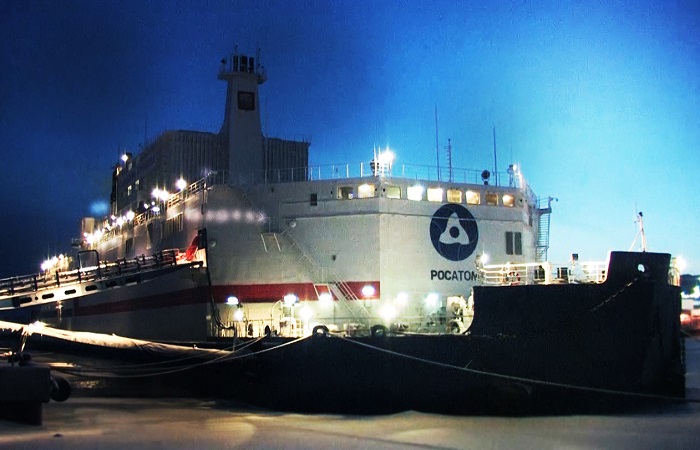
For years, the Akademik Lomonosov looked like one of the nuclear industry’s more eccentric experiments: two reactors mounted on a barge and tow...