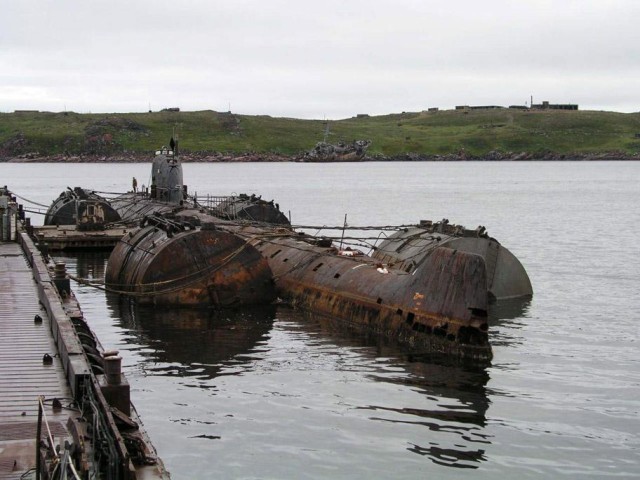
The system built to manage Russia’s nuclear legacy is crumbling, our new report shows
Our op-ed originally appeared in The Moscow Times. For more than three decades, Russia has been burdened with the remains of the Soviet ...
News
Publish date: May 16, 2011
Written by: Niklas Kalvø Tessem
News
The NER300 is the world’s largest CCS funding mechanism; the European Commission will grant 300 million EU emission unit allowances (EUAs) – today worth about €4.5bn– to fund at least eight CCS projects and 34 renewable energy projects.
Majority of UK projects
Out of the thirteen CCS applications, seven are from the UK:
– Alstom Limited Consortium: oxyfuel new supercritical coal-fired power station on Drax site in North Yorkshire.
– C.GEN: new integrated gasification combined cycle (IGCC) power station (pre-combustion with CCS on the coal-feed) in Killingholme, Yorkshire.
– Peel Energy CCS Ltd: post-combustion amine capture on new supercritical coal-fired power station at Hunterston in Ayrshire, Scotland.
– Don Valley Power Project (formerly known as the Hatfield Project): new IGCC power station in Stainforth, Yorkshire. The project has already received €180 million from the EEPR.
– A consortium led by Progressive Energy Ltd; pre-combustion coal gasification project in Teesside, North East England.
– Scottish Power Generation Limited: post-combustion amine capture retrofitted to an existing subcritical coal-fired power station at Longannet, Scotland.
– SSE Generation Limited: post-combustion capture retrofitted to an existing CCGT power station at Peterhead, Scotland.
Six other countries have submitted applications for a single CCS project:
– Air Liquide is the applicant from The Netherlands. The Rotterdam-based hydrogen project, involves the capture and storage of CO2 that is released in the production process of hydrogen from hydrocarbons. Air Liquide is currently investigating, together with Maersk Oil, the possibility of permanently storing the captured CO2 in mature Danish oil fields, in combination with Enhanced Oil Recovery.
– In Italy, the post-combustion CCS project in Porto Tolle aims at capturing and storing parts of the CO₂ from a new 660MW coal-fired unit. It has already been awarded €100 million from the EEPR.
– The French candidate is the industrial project developed by ArcelorMittal at its Florange steelworks in northern France.
– In Germany, the Jänshwalde project, which also runs for the competition, has already received €180 million from the EEPR for an oxyfuel coal-based project.
– As for Poland, the Belchatow power plant consists of a 250MW capture plant at a new coal-fired unit, using an amines-based capture technology. It has already been awarded €180 million from the EEPR
– In Romania, the Turceni power plant, which relies on a post-combustion capture facility, plans to store the captured CO₂ from a newly modernised lignite-fired unit of 330MW in one of the deep saline aquifers in the area.
Our op-ed originally appeared in The Moscow Times. For more than three decades, Russia has been burdened with the remains of the Soviet ...

The United Nation’s COP30 global climate negotiations in Belém, Brazil ended this weekend with a watered-down resolution that failed to halt deforest...

For more than a week now — beginning September 23 — the Zaporizhzhia Nuclear Power Plant (ZNPP) has remained disconnected from Ukraine’s national pow...

Bellona has taken part in preparing the The World Nuclear Industry Status Report 2025 and will participate in the report’s global launch in Rome on September 22nd.